Marxist Labor Theory of Value

I am not that familiar with marxism and would like to learn about it more through dialogue; so, in an effort to do so, I would like to elucidate my issues with Marx’s Labor Theory of Value (LTV) and hear everyone’s thoughts.

As I understand it, the Labor Theory of Value holds that the true value of a commodity is equal to the labor required to produce it under normal conditions. For example, a pen that takes very little effort to make would have minuscule value; whereas, gold would have tremendous value (because we cannot remake it).

The central issue I have with this theory of value is that it neglects supply, demand, and the seller’s convenience in its calculation of value. Consider these counter examples:

  1. The pen is easy to make, but there are more people who want a pen right now than we can produce immediately (but we could make them easily if some customers had the patience to wait on backorder): the price for a given pen would thusly be rightly higher than normal, because more people are bidding on the pens than the number of pens available. If the labor to produce it solely determines its value, then it would be incorrect to increase the value due to higher demand here.

  2. It is easy for LEGO to start remaking limited edition lego minifigures, but they refuse to. The refusal to remake them is not the same as the labor required to remake them; and this refusal limits the supply, consequently, in a manner that isn’t due to labor shortages but, rather, intentional marketing practices. These intentional limited edition promotions are rightly valued higher when sold and especially when resold because of the limited supply without any labor restrictions causing it. This would likewise be a misguided valuation according to LTV because the labor to produce it has not changed.

  3. The person who is too lazy and impatient to sift through their huge bucket of LEGOs to sell each set or minifigure individually (to extract the most value out of them) will tend to willingly sell the bucket for pennies on the dollar to sell it quickly and without necessary hassles of selling it for more. The buyer rightly gets the commodity at a discounted rate because they don’t know exactly what the LEGOs are that they are buying and will have to sift through them themselves. Since the labor to produce it is completely unaffected, this, too, would be an unfair valuation according to LTV.

  4. Imagine example 3 but from a reseller’s perspective. The reseller buys the LEGO bucket for pennies on the dollar and resells each LEGO piece, set, or minifigure for their full worth. This requires the reseller to do the work that the original seller was too lazy to do; namely, sort through all the LEGOs, build the sets, lookup the minifigures, list them on eBay (or whatever), sit on them for a while until the right buyer comes along, etc. The seller is getting giving this discount in exchange for the convenience of quickly turning the LEGOs into cash; and the reseller is absolutely right to value the LEGOs differently between the lump of disorganized pieces in the bucket vs. put together and sold professionally on a site. Since the labor to produce it is completely unaffected, this, too, would be an unfair valuation according to LTV.

For any Marxists or those familiar with Marxism in the room, what am I missing here?
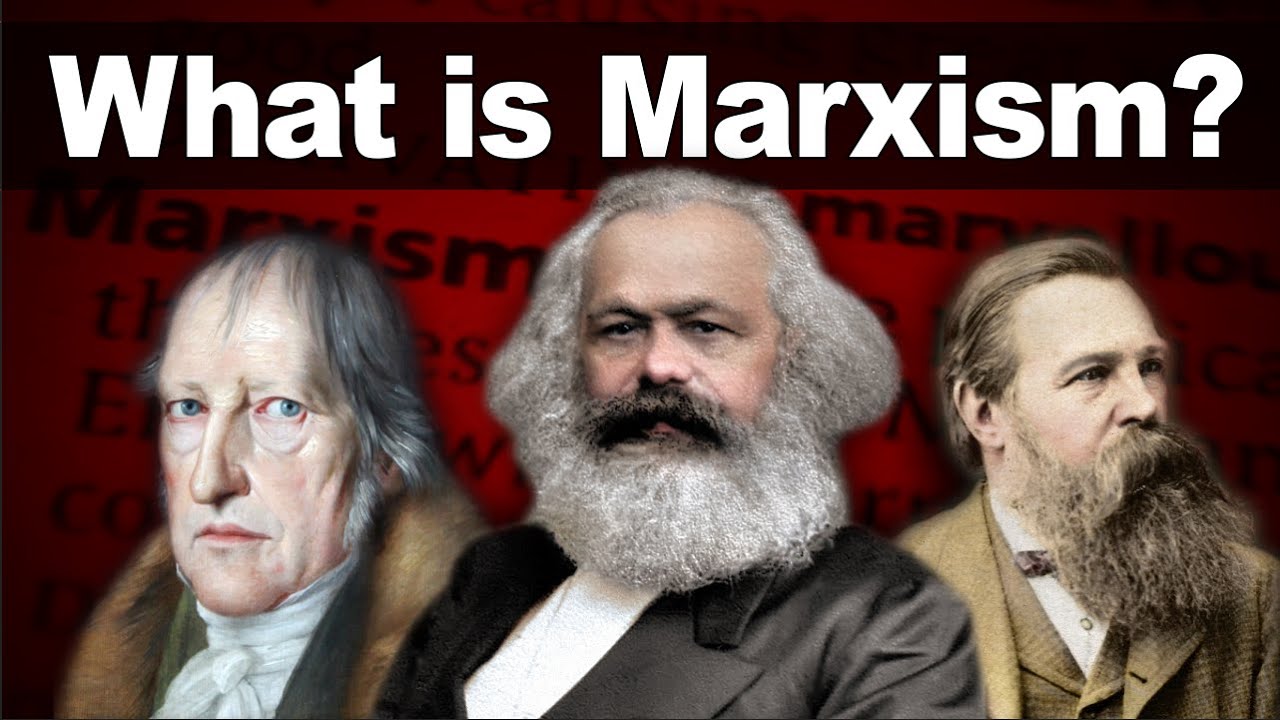
I dont want to cast myself as a defender of today labour theory of value because I am satisfied that ultimately its flawed (and because my economics is rusty)

However, Marx was a capable economist and he would I think have been able to respond to the OPs objections. It deserves more study.

Taking the 4 examples

1.There is a difference in all branches of economics between value and price. Value is based on labour (or if you prefer utility). Prices are determined by supply and demand. In the long term ( or at equilibrium) price is a function of value.

2 Marx does not dispute that in the absence of a free market, suppliers can influence price. In the labour theory of value Marx was looking at what determined prices in a free market.

3 is a weak refutation mainly because its is arguable that there is potentially an additional labour costs being incurred by retailer ( who sorts the lego) .

4 does not introduce any new objection.

As a coda, and in fairness, I do agree with the OP that people can add value to products by adding to their utility so a lego product that is well designed and presented has additional value which is not a consequence of the amount of labour embodied in the product.

1 Like

I appreciate the referral (and it was a good overview of Marxism), but merely citing a YouTube video (with no further elaboration) is not much of an engagement in the dialogue. How would you respond to my counter-examples?

I appreciate the response!

I am not well versed in economics, but to me it seems like price should be equal to the value of the commodity. Otherwise, one is paying for less or more than it is actually worth; which is unfair and unwise. I understand there is a conceptual distinction between them, but in reality they should always be identical in a truly fair market economy—no?

In order for this objection to work, you would have to argue that anything produced as limited edition violates a free market economy. Is that what you are saying? If so, how?

That’s fair. Let’s say the legos are already fully built but that the owner is too lazy to sit on them for a while on eBay to extract its true worth; so they have a garage sale instead and sell it for much cheaper. By my lights, Marx would have to argue that the LEGO was sold for less that it is worth; and thusly the reseller is exploiting the circumstances of the seller. However, I would say that the worth at the time of sale was that amount because we have to factor in the convenience of quick cash that the seller is opting into; and the value at the time of the eBay sale (by the reseller) is actually higher because they went the professional route.

That’s fair.

As I understand it, the labor theory of value provides a conceptual metric for understanding the difference between the value that labor creates vs what is paid for that labor. So not the value of the commodity in the marketplace as you seem to assume.

@TheEudemian (replied on the wrong post darn tablet)

I have some free time right now so thought i’d contribute to someones topic. I’m not a pure marxist, but will be arguing from that perspective. Your opening statement: I reject your premise. Until we can find common ground, their is no point to me moving forward with your four points.

From my stance, you seem to be missing two key concepts within marxism with your gold example. If a commodity has no use value, its value is zero. In your example, gold has use value. Almost always, tree leaves would be a commodity that has no use value.

Once a use value is established, its exchange value is determined strictly by how much time is required for its production. So if a pen took a necessarily long time to make, it can be worth more than gold, but not inheritely. There is a formula that determines how much time it took vs. how much you slacked based on that standard that you have to weigh it against.

The important part here is if it took a necessary four hours to mine the gold and you accomplished it in three, your boss is profiting off of that one hour at your loss. This was used as a framework to show how capitalists were paying for labor power to demostrate its flaws.

Your point is completely valid. Marx’s Labor Theory of Value depends on two key premises:

  1. Prices always remain within the vicinity of an objective value.
  2. The objective value of a commodity is determined primarily by the socially necessary labor embodied in it.

I reject both premises.

1 Like

I am not sure just now what to make of gold’s value. It isn’t priced by our inability to make more of it. We aren’t able to make more iron, aluminum, silicon, or carbon either, and these commoditities are far less expensive (by the ounce) than gold. If we decided to use gold more extensively in manufacturing–like in heat transfer applications where gold excels, we could use a lot more of it. Scarcity tends to drive up the price. It is difficult to determine how much labor went into a gold brick, because so much of the gold that was ever produced is still available – mostly inside deep under ground heavily guarded gold reserves.

Why isn’t silver more expensive than it is? Like gold, it can’t be “made” and there aren’t a lot of silver mines in operation, these days (because a lot of what there ever was has been dug up). Gold sells at $4,122 an ounce while silver is selling at $58. Silver is just as hard to produce as gold. Demand for gold is higher than for silver, currently. So that helps explain its price. But value? Tricky.

Right. It doesn’t take a lot of labor to make a Bic pen. More labor is worked into the machines that spew out the pens, and also on making the plastic, metal, ink, and packaging. Distribution and sales also requires labor. Still, on a per unit basis, little labor is represented by the ordinary Bic pen.

Bic pens (unlike $10,000 fountain pens) are clearly ‘commodities’ – like sugar beets, shoe strings, dental floss, etc.

One Lego brick has even less labor value than a Bic pen. The labor represented in the stupid brick includes producing petroleum, dyes, molds, injection machines, and the like. Lego ‘objects’ (special brick pieces to make a specific object – a dinosaur, for instance) require more customization in production (more labor) but the plastic is still cheap. A finished Lego object may require a lot of unpaid effort. So does a garden. That unpaid labor doesn’t give grass more value. It seems like the “labor value” of assembling a Lego object is illusory.

Lively markets existed in Marx’s day, though our markets (for shoes, for example) are much more heated than they were in Marx’s time. Markets have much more to do with demand and sticker price than labor. Most expensive running shoes are made by inexpensive labor working with complicated materials and designs. A lot of labor is represented in the shoe on your foot, but the price depends on the market.

It definitely makes a distinction between price and value; but I am failing to appreciate it. For example, if the pen has a value of $5 and you pay $10 because the demand was high; then either you overpaid by $5 or you paid its circumstantial value of $10: in the case of the former, you overpaid because it is really valued at $5 vs., in the case of the latter, it really was worth $10. What am I missing?

10 is the price. Thats how markets work but Marx didn’t dispute that. Labour theory is about equilibrium value

I appreciate it, my friend! Apologies for the belated response. I haven’t heard from @philosophim in a while: I wonder if they would also be interested in joining in.

Which premise are you referring to?

I agree, but:

Doesn’t gold have a use-value of investment (at a bare minimum)? If I buy gold to keep my money up with inflation; then that is a use-value for getting gold. It seems like anything anyone finds any interest in to buy would have a use-value. I suspect Marx is making a shady distinction between ‘use’ for mundane tasks (such as a hammer for putting in nails) and ‘use’ in the sense of broadly contributing to the person’s financial longevity (such as investing in gold to keep up with inflation or to put money into safer natural currency).

How would you respond to my four counter-examples, then?

We can’t reproduce Gold: we can reproduce pens. Thusly, pens can never be more valuable than gold if we are only evaluating this with respect to the labor it takes to produce it.

If you are comparing the labor to extract and purify gold as its value, then, yes, you would be right that a pen could, in theory, be more valuable if it takes much longer to make. However, we cannot properly produce gold, which makes it more valuable and is missing from your analysis.

On this note, I completely agree that capitalism can be exploitative; but it isn’t per se exploitative. If the materials for a pen cost $2 and it can be sold for $10, it does not follow that the employee that made the pen contributed $8 of value but will get less than that so the employer can make a profit. The employer is contributing value in providing the means to produce it and assuming the risks and responsibilities involved in maintaining and upgrading those means: this adds value. The profit is the representation of that value the employer is contributing in upkeep of and the initial means of production.

To use your example, if it takes a miner three hours to mine the gold instead of four; uses that extra hour to get even more gold; and their pay was estimated on it taking them four hours to mine the gold they are consistently getting in three, then that worker is owed more money in capitalism. Yes, the capitalist could exploit the worker and not pay them for their extra work (and that happens often); but the capitalist could be ethical about it and give them a bigger slice of the pie.

Capitalism itself does not contain an ethic (unlike marxism); and this is why any reasonable capitalist also believes in socialism (to some extent) in the form of governmental protections of the worker, preventions of monopolies, etc.

Well, the fact we can’t reproduce it contributes to its value; but, to your point, it isn’t the sole factor of value for it. E.g., how hard it is to mine it and is use-cases also factor in.

Silver is easier to mine, is substantial more abundant naturally in the earth, and it has more use-cases than gold. The use-cases arguably are because it is so much more common than gold; just like how copper is substantially cheaper than silver because it is even more common.

I agree that the value of a LEGO is largely from marketing (as knock-off LEGOs are substantially cheaper to this day despite costing similar prices to make [I would suspect]); but my examples were highlighting the labor difference between selling used LEGOs on eBay vs. at a garage sale to highlight how the difference in profit is justified. In LTV, it is exploitation for the reseller to by the seller’s LEGOs at a cheaper price just to sell it for more.

He isn’t disputing the price, but he is disputing the value. He would say it is valued at $5 but the price is $10; and this does mean that you are overpaying for it at $10. This is the whole basis of his theory that capitalism is inherently exploitative.

My point is that price and value are the same: if you paid $10 instead of $5 because, e.g., there was a bidding war to get it (despite the labor to produce it being the same) then the fair value of that product was $10 (and not $5). That means his LTV is wrong.

It is not. In a free market the price is set by the market not the supplier.

Marxs theory of exploitation concerns the behaviour of capitalists and wage labour

If the price rises because consumer preference for pens change there is a new equilibrium

Marginalists would argue that this determines the price which enterprises are willing to pay for embodied labour in the long run.

Marxist argue that labour has an objective value and exploitation takes place when the capitalist pay less than that.

This may be what you are heading towards

Not inheritely no but in application it can. A easier way to look at use value in my opinion is through history. You first strip away concepts like jewerly made of gold, gold that has been refined, and so on and look at the base product of what gold actually is - a pretty geological rock.

In more ancient societies, through barter and exchange, this was subjective. Once currency was introduced it became mostly objective. The value of a pretty rock was worth 10 bronze coins/per ounce whereas a pretty necklace made of whatever was worth 5. If the necklace was made of gold, then the value of the gold override the value of the art piece. How much time it took for the necklace to meet that standard was based on the evaluator.

Common ground, remember?

We cant reproduce x, we can reproduce y, so x can never be more valuable than y based on how much labor it takes to produce it.

This is incorrect. I’m not here to teach you why, but am open to doing so if you want that to be the case; we can negotiate a rate that works for the both of us if the rules are okay with that on these forums. Ive never bothered to look it up before.

Its not my example and scares me that your asking questions on marxism economics and haven’t figured this out yet. Im merely arguing from a marxist perspective. I don’t necessarily agree with these points on a personal note.

Mmm, you should stick to economics (and avoid metaphysics). That was nicely put

It must be nice to live in your world. The freedom to choose. (That is also being nicely put.)