The Rattling Chains of Supernaturalism and The Occult

… and Its Connection With The Human Mind
Pyronax: Can you tell us more about what you discovered and learned through ideomotor effect that continue to gain your respect and attention?

Me: Perhaps when I get the right to do so, I might start a thread specifically about that.


@Pyronax

This is the thread as promised. :slight_smile:


It is said that the mind is a powerful thing. I think the saying has merit and that beliefs are what feed the power of the mind, and why it is important to examine beliefs and to reject those beliefs which feed the mind misinformation.

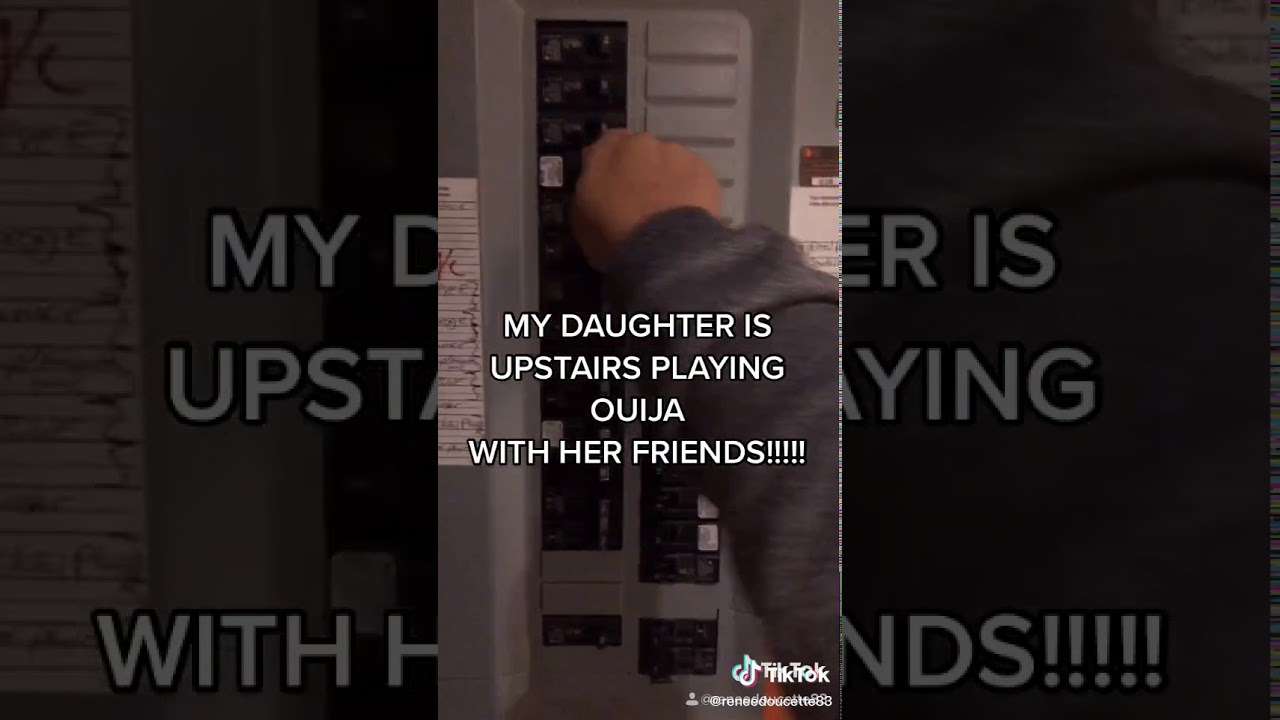
A good example of this is the mention of “ouija” and what that provokes in people’s minds and why the provocation exists all of which is condensed into the video short at the start of this opening post.

In this thread I want to ground the phenomena in science and personal experience, as a means of taking that which is hidden and exposing it for what it is - not “supernatural”, nor “evil” or something to be fear - but rather (from my own personal experience) something to be respected.

3 Likes

There’s something called ietsism (thing-ism) where you are open to possibilities. Spiritualism is another window on reality that’s apropos to the OP. The antipode is scientism or strong physicalism/materialism. The point is to break free from religion.

1 Like

True that.
“all religion” includes occultism…

A sound principle given how successful it is: Polytheism \to Monotheism \overset {?} \to Atheism?

A Brief Background

When I first created a “talking board” it was based on the Ouija board and my belief-based assumption was that it might work and connect me with “those who have passed on”.

At the time, those assumptions were held because of both my upbringing (Christian influenced) and American media (movies and books) to do with the subject.

I believed there were risks because of this, but felt confident that if approached correctly, those risks could be minimised.

My partner at the time and I began to used the device after I had made it.

On the first attempt contact was made with someone who called herself “Amy”

On a subsequent use, we then made contact with “William” who said he was Amy’s brother.

After this we made contact with “Avet” and from that encounter on, the conversations became far less puzzling and far more educational.

Avet described herself as a hybrid human/Zeta-Reticuli. (Grey Alien)

At some point in our ongoing exchanges, Avet introduced us to “QueenBee” who eventually identified herself as being the sentient planet (Earth) consciousness.

I am unsure exactly but guess these encounters happened over a period of 5-6 weeks of constant daily use of the device.

From Avet I was instructed to place more symbols on the device, and what started out as just having the alphabet, the numbers 0-9 and a yes and no, with the addition of other symbols, the device ended up looking like this.

At some point weeks into this, I created my second device, which looked like this.

This one was designed around The World tarot card.

Because I had not committed all of the symbols meanings to memory, I had a notebook which I used to both store the definitions and record the messages we were getting at every session, which I would decipher afterwards.

Here is an example of the symbols and their meanings.

And here is an example of how the messages looked before being decoded.

1 Like

Moving forward.

The images in my previous post represent evidence re device.

Device is device - A mechanism used much the same way as a phone. The phone transmits voicing, but is not the source of the voicing. Thus what was it that was communicating and instructing me on procedure and to add more symbols - which in turn, opened up the scope of what could be conveyed.

If the device is just a device, what was communicating and instructing?"

The subconscious The instructions came from a part of my own mind that was not easily accessible to my conscious awareness. This is the natural explanation - the ideomotor effect, pattern recognition, and unconscious cognition.

A field of intelligence The instructions came from something beyond my individual mind - a collective field, a universal intelligence, or the Source as described in the CCA. This is the natural-but-expanded explanation.

A combination The instructions emerged through the interaction between my subconscious and a broader field of intelligence. The device was the interface and my conscious awareness the recipient.

Credulity is an amazing thing.

So too, Incredulity - although “amazing” is overreach…
:slight_smile:

What observation would disprove this one?

1 Like

The instructions did not came from a part of my own mind that was not easily accessible to my conscious awareness. This could still be a natural explanation but is equally as difficult to observe as is the subconscious.It appears that either way, intelligence is being communicated, even if the exact source of the intelligence is presently not pinpointed.
That is why I offered a number of possibles…

The possibilities offered are either, or, or both.
THat is because The Razor. If we include something like “from your imagination” this simply adds to what is already there - since imagination is not separate from “the mind” which is what is being studied here.

So the options re explanation are at their most reduced.

That doesn’t make much sense.

The ouija board was invented as a parlour game, in Baltimore, Maryland, in 1891 by businessman Elijah Bond. It’s a device for making a profit for Parker Brothers. Of course, that doesn’t mean it doesn’t work…

Its commercial success is accounted for by a lack of suitable critique on the part of the users. They want it to work. The children in your video want to believe. Confirmation bias at work.

There are numerous studies showing relations between personality predictors and ideomotor performance. The studies hint at personality measures as predictors of ideomotor performance. Hence the question becomes which psychological mechanisms explain the variation?—not which spirits are operating the board?

What there is not, is anything like a demonstration of something that needs an explanation from outside of our normal experiences. Since ideomotor behaviour can be elicited under controlled conditions and their occurrence varies systematically with psychological factors, then the burden of explanation remains comfortably within ordinary psychology.

I call them the guys in the back room, but that’s just a metaphor. I think they are me. So I feel like the communication is internal.

Just my best guess, of course.

This is correct but not all of the story. They who created the ouija board did so to cash in on something that had already been working through what were called “talking boards” but what is being examined isn’t the device - however we choose to name it) but ideomotor effect and why it works and produces coherent messages.

There are numerous studies showing relations between personality predictors and ideomotor performance. The studies hint at personality measures as predictors of ideomotor performance. Hence the question becomes which psychological mechanisms explain the variation?—not which spirits are operating the board?

Exactly. It is not about “spirits” bu consciousness and the mind. Beliefs about what one is communicating with can change, but what doesn’t change is that communication is being evidenced. Ideomotor effect explains the technique rather than why the technique works.

Define “ordinary psychology” Also What observation would disprove this one?

I knew a guy in another place whose knees shook every time he spoke of Ouija boards. A fundamentalist Christian who predicted the Rapture six or eight times during the couple of years I knew him. Specific dates, I mean.

Which all passed without major incident, but that didn’t de-energize him.

The sort done by psychologists. You don’t need a definition, such a request being a merely rhetorical move on your part. No observation can prove — or disprove — a supernatural cause; and that is precisely why they are objectionable.

I’m curious if you’ve studied the stories of people who can read tells with freaky precision.

If you hide a coin in a room, they can simply observe your behavior and find the coin.

The design of my devices were not only suggested through the devices, but because symbols were asked to be placed on the devices, Through the communications that were occurring through use of the device itself and these symbols acted as a type of blind testing. With a simply ouija board, it was noted that if the testers turned the board around, the blindfolded user - not knowing - simply used their memory of the device right way up and the results were predictable. They could not produce a coherent message.

I myself was unaware of any testing prior to using my devices - it only became apparent that the suggestion to me - through the device - of filling up the whole board with symbols automatically produced a sort of blind test because I had no hope of memorizing all of them (which is why I had notebooks) and most often the interactions had to be decoded after the sessions - with the caveat that the more I used the devices, the more familiar I became with at least some of the symbols - which allowed for a smoother session as I could get the gist of some of what was being communicated. The realisation came years later when on various internet message boards the argument for blind testing was made known to me, and I was then able to connect those dots.

“The ideomotor effect is driven by unconscious expectation. The messages reflect what the user expects to happen.” needs to be examined for accuracy.

This is why I started the thread with that short re the dad joke on daughters and friend “playing” with the ideomotor effect … the “ouija” is just a cash in term (patented) and why I mentioned both religion and “hollywood” as well.

The sort done by psychologists.

There are a variety. Not all agreed. That is why the question is important, otherwise your statement is too sweeping.

No studies should be approaching the ideomotor effect (or psychology) with in mind that “supernaturalism” is even a contender for explanation. Do you think it should be included? If so, why?

You’ve spent an inordinate time in developing “talking boards”. What’s that about, and what does it say? Again, with reference to confirmation bias.

Further, there is precious little evidence of “talking boards” from before about 1850.