Some thoughts on the nature of death

For most of my life I have never believed in a physical heaven or a material soul. As such, I tended to think of death through the popular scientific and atheistic notion that once brain activity ceases, there is no further experience.

More recently, however, I realized that there are some fundamental logical problems with the “nothing after death” idea. First of all, if we make any statement along the lines of “X after death” we have already presupposed an “after” element. This is certainly a coherent idea from a third person perspective. After I die, it is probable that others will attend a funeral for me, and I will be burried or cremated. If I am burried, anyone who were to dig up my burial site after a long enough time has passed will find a fleshless skeleton.

Of course, this is all from the perspective of others who are still alive and can still percieve a flow of time after I am dead. If we consider “after death” in a subjective sense, it starts to become less coherent. True nothingess excludes time itself. If there is no soul seperate from the body and brain, then a person lacking brain activity could not percieve any flow of time. Nothingness without time cannot include fear, boredom, peace or darkness. Nothingness is the absence of experience itself, and the absence of any duration over which anything can occur.

From the subjective perspective, how does the process of death reach completion? As one dies, one must eventually go from one point in time where they are not quite dead to the next moment where they are dead. This time T2 cannot, however, be subjectively reached. There is no “after”.

When asked what it is like to be dead, the question is often countered with “what was it like to not yet be born”. Of course, being not yet born is as equally incomprehensible as being dead. If there is no you, then these are not states you can be in. As an alternative, consider the moment you are experiencing right now, then consider the moment immediately before this. What if I told you there was a point in between those two moments of T=0 where you experienced literally nothing. This nothingness is itself equivalent to what death is subjectively.

One might counter this point by pointing out “yes, but in the first case experience resumes after the nothingness. When you die, you do not have any further experiences after this.” It is true enough that nothing more can be experienced by you if you no longer have brain activity or the capacity for perception. What this further means, however, is death is meaningless to the one who dies. As Epicurus says: “Where death is, I am not.”

While we are alive, it seems to us that “I am having an experience”. We are saying a roughly equivalent thing if we say that “an experience is being had”. Thinking about experience in the second sense, however, allows us to better tackle the problem of subjective death. Because any athiest would admit that you have no more experience after death as you no longer exist to have experience. At the same time, what disturbs us about death, beyond the egoist recognition that “the universe will move on without me” is that no more experience will be had once personal death has occured. Permanent nothingess.

What I have come to think now is that there is probably some sort of continuation of experience through other beings. One cannot carry memories of past lives as nothing physically transfers from one person to another. However, the stream of conciousness, the “experience being had” continues through beings which can experience as only the living can carry experience. To put it another way, non-experience cannot be experienced, so as long as at least one entity having experience exists, that is the being that the stream of conciousness continues through.

There are other solutions to the subjective death problem. One of which is the quantum suicide model in which ones conciousness always proceeds down the timeline in which they continue to live, no matter what is required for that to happen. Another possibility is that, just as we inevetibly wake up after going to sleep or going under anesthetic, we will, after death, come back to our awareness some time in the far future through some entity which carries our memories. In a universe which will continue to exist on the order of billions to trillions of years from now, there seems to be ample time for, say, an AI created by a future society to at random replicate your exact memories, or for a Boltzman brain to emerge spontaneously. I propose this last scenario with minimal seriousness. It is a pretty fantastical notion. It also assumes that life will exist for a significant portion of the universe’s future, which may not be true given the rate at which the universe is thought to be heading toward lower entropy.

1 Like

Novelist Martin Amis once said that death gives us something to do, because it is a full-time job looking the other way. He’s dead now and has stopped looking…

I have generally felt that there are few activities more futile than trying to get definitive answers about what happens when we die. This speculative space is so saturated with antediluvian traditions, mysticism, scams, legitimate philosophical inquiry, and religious dogma that it becomes a kind of quagmire, full of competing narratives and wish-fulfilment fantasies.

In the end, all we can really do is respond to the issue personally. Usually how this plays out depends on what stories you believe.

My own view is that I do not want to live a very long life. Eighty-five will do. But should I die today, I’m ready. My father lived to hsi late 90’s, and, looking on, I am not convinced there was much benefit in that. I am not convinced that it matters very much what, if anything, comes next. We’ll either find out or we won’t.

2 Likes

An understanding of death will depend on one’s understanding of life, and/or an understanding of consciousness.

From my materialist perspective - conscious life is a process, one in which there is mental activity, stimulated by sensory access to the external world, and by our internal motivations and world-views. From this perspective, death is the cessation of all this. I’m sympathetic to the notion of reproducing the machinery of consciousness in another form, although I wouldn’t consider this a continuation of the identity of the original “machine”, because the renewed “machine” would not be identical to the original, and also because of the lack of continuity.

It is a widespread preoccupation of human beings - wondering what comes after death. For sure, it is hard to wrap our heads around the notion that we go from a place where everything matters to a place where nothing matters.

Seems to me a call to appreciate the time we have here.

2 Likes

Biological body cannot be regenerated once dead. Therefore there is no possibility of bodily survival of death. In order to believe in life after death or some form of survival after death, one must be a dualist like Cartesian or Platonian.

Every biological body has invisible alarm clock internally embedded and ticking in the structure. The body knows how many years it has been living in the world apart from the counted age from one’s birth.

We can only roughly read and tell someone’s biological clock looking at their facial wrinkles and bodily shapes. The owner of the body knows more on their bodily clock via their own intuition, but not for dead accurate. When the time for the end comes, the biological body stops functioning, which is one’s bodily death.

Death is eternal, and absolute. No one came back from death apart from the allegorical Gods in the religious scriptures. Whether one believes it or not, is a personal matter for his/her faith.

According to Heidegger, human beings are existences towards definite possibility of death, and death cannot be transferred to others. One will die his own death. Alone.

1 Like

The buddhists seem to believe in the principle that less you possess, easier to depart this world. Hence they give up everything in mundane life, and go up to the mountain or temple and meditate eating bare minimum mostly donated food for simple survival. They try to detach themselves from all the connections tied to human relations or social positions. Upcoming death for them would be relief from the profane world of suffering.

The riches and top political figures with billions and trillions may lead lavish life style while living in the world getting whatever they want and desire attracting envy and jealousy of the world media.

However they also must get old and die one day. Their thoughts on own death would be far more anxious and worrisome than the ordinary folks or monks due to amount of wealth and beautiful things they possess. When they die, they must leave all their trillions of wealth, luxurious possessions and hundreds of beautiful lovers, mistresses and partners behind to some other folks to take over.

According to buddhist, the riches and top political figures usually have more anxiety from their knowledge of nearing inevitable death and their knowledge of inevitable loss of the wealth, power, human ties and the social positions, than monks with no possessions and ties to the world, or ordinary folks just living average life.

To put some of my points more briefly, I agree that death would mean the end of existence for the specific individual. It also certainly destroys the body. The crux of my post is that non-existence is by definition, not a thing, and is also not a state that aything can either be in, nor go into. With regards to death being eternal, this is only the case in a third-person sense if the universe itself is eternal, which is still cosmologically debatable. If the universe eventually ends, then nothing within it can be eternal either. From a first-person perspective, one who is deceased cannot experience the passage of time and therefore there is no distinction between eternity and instantaneity/timelessness. Eternity, with reference to time, is difficult to comprehend, but I’ve always thought of it as a duration of time that is, at the very least, non-zero.

Who was it who said, “death is the undiscovered country”? Shakespeare? Anyway death is the cessation of life and from a materialistic/physical standpoint it occurs when the brain shuts down permanently. The gold standard for the diagnosis of death is the EEG although hypothermia and barbiturate poisoning are possible causes. There was a time when diagnosing death was error prone: gruesome stories of people being buried alive drove some folks to desperation, terrified if such were to be their fate. Hence the rule, the only certain sign of death is putrefaction.

Death is the end for most folks but I’ve seen how some cheat death by copying themselves onto others, a crude and disturbing form of brain hijacking. I’m surprised the OP doesn’t mention this. :thinking:

The way I see it, we humans are biological systems like every other being on this planet operating thanks to energy. Thus the law of conservation of energy states that energy can neither be created nor destroyed. And so the energy which once fuelled us when alive will simply be transformed into another type of energy. As for consciousness, Epicurus once thought that death is the end of bodily sensation and perception, so that should be gone too once the brain ceases to function (if we consider the “mind” as being a product of the brain as an organ and not a separate entity). To others alive we still exist as organic waste but the “personality” behind the dead body is only in itself gone, if we consider that the thought or memory of a dead person still means they exist through people who are alive.

I may be blabbering nonsense, I’m definitely not an expert in either philosophy or biology, so any corrections would be very well appreciated :)))

1 Like

Completely incoherent actually. Lack of subject renders subjectivity meaningless. A person lacking brain activity is by definition self contradictory. It cannot be a person. A person cannot be dead. A body can be dead, but that’s just third person object.

Nothingness is the absence of experience itself, and the absence of any duration over which anything can occur.

Don’t confuse death (absence of subject) with that which most humans intuitively fear, which is experience of nothing. Those that posit a non-physical experiencer of a person might fear the latter, but the scientific consensus does not recognize that.

From the subjective perspective, how does the process of death reach completion?

One cannot experience death, as you point out. But one can experience dying, and evolution seems to have little concession to making that pleasant since dying peacefully does not render one more fit than otherwise.

When asked what it is like to be dead, the question is often countered with “what was it like to not yet be born”.

Not yet to be conceived maybe. There’s plenty that it’s like to not yet be born. But as Mark Twain famously gets misquoted as saying: “I do not fear death. I had been dead for billions and billions of years before I was born, and had not suffered the slightest inconvenience from it.
I would not have used the term ‘had been dead’ since one does coming into existence is not a resurrection from death. But it’s a popular misquote, the original avoiding my protest:
"Annihilation has no terrors for me, because I have already tried it before I was born—a hundred million years."

consider the moment you are experiencing right now, then consider the moment immediately before this. What if I told you there was a point in between those two moments of T=0 where you experienced literally nothing. This nothingness is itself equivalent to what death is subjectively.

No, since my experience now contains memory of the earlier moment. That memory provides subjective identity. The experience of nothing in between is irrelevant if I don’t remember it.

At the same time, what disturbs us about death, beyond the egoist recognition that “the universe will move on without me”

Maybe. It being ‘the’ universe is a subjective designation, as is it ‘moving on’. Absent your subjectivity, it gets demoted ‘a universe’, with no first person subject to distinguish it from any other.

What I have come to think now is that there is probably some sort of continuation of experience through other beings. One cannot carry memories of past lives as nothing physically transfers from one person to another.

Now you seem to be positing identity outside of integrity of memory. That definitely defies the monist view. You seem to describe an epiphenomenal experiencer that can jump from one being to the next, all without influence.

Another possibility is that, just as we inevetibly wake up after going to sleep or going under anesthetic, we will, after death, come back to our awareness some time in the far future through some entity which carries our memories.

That works. Totally unclear how this entity is going to get to your memories, but it meets the subjective definition of identity (gets weird if there’s 12 of you), then ‘you’ go on.

there seems to be ample time for, say, an AI created by a future society to at random replicate your exact memories

If it’s random, it’s arbitrary fictional memories. The data is gone. No AI or any other entity is going to reproduce an exact state of an object from a billion years prior.

or for a Boltzman brain to emerge spontaneously.

There are exact copies of you all through the universe. Thing is, they all die the same death if it’s a copy of you latest memory. An exact description of you is encoded in the digits of pi. So what? A Boltzmann brain isn’t alive except for a tiny moment. But it cannot tell the difference.

I probably agree. My sister does not exist (as a legal human who was ever born), but I personally appreciate her nonexistence since I was conceived well before her due date.

Whether or not something can be in nonexistent state is likely contingent on how the language is being used. My point above was that a dead person cannot subjectively exist.

That goes on even while alive. Death doesn’t change that.

1 Like

Certainly does. Biological body keeps degenerating into old age, and then ceases existing one day inevitably.

Existence or non-existence is quality or attribute of a being. Socrates exists, whenever someone talks or think about Socrates. And Socrates is non-existence, when we talk about his death.

If one says, I saw Socrates, or there is Socrates, then it must have meant someone else who has the name Socrates, not the philosopher who lived and died in ancient Greece.

There is no first-person perspective after the person died. There are only third-person perspectives on the person who died. But those third persons will all die sometime in the near future too, becoming non-existing first-persons. Eternity is just a concept denoting unknown amount of time into future.

I fail to see the logical problems you mention. I’ll start here:

In one sense, this is true. After death you experience nothing.

But you’re forgetting here, I think, the time-bound nature of consciousness. We’re not just living in the here and now. We remember stuff, and project and predict. Thus, in a subjective sense, your death is a projection from the here-and-now: you know you’ll be dead one day, and you try to capture that state through the lense of what you know; at its most abstract: “experience”.

That is you can imagine what it will be like to be dead, and it makes sense to go the elimination route: you eliminate experiences one by one.

There are two ways to think of this process of imagining your own death: it’s a pointless excercise since after death there is no experience; or alternatively, when your imagining death you’re approaching the state of death assymptotically: you cannot reach death, but imagining not tasting the food you’re eating right now still is closer to doing justice to the state than imagining missing being able to taste stuff.

You seem to be missing this difference when you say:

I was honestly surprised to read this. Imagining your death as a future projection, you wouldn’t imagine emotional reactions to that state; you’d just imagine the state. I’m now typing this post and it comes with all sorts of experiences and thoughts? In death? Nothing comparable. Will I miss any of that? No, how can I? I’m dead.

And here? Well what if you die in your sleep? You’re not paying attention to being asleep to begin with, so the point of going from being asleep to being dead has occured entirely outside what you’re paying attention to. In fact, you stop paying attention to being alive every day, so what’s the difference - in subjective terms - between waking up again and not waking up again - seen from the moment when you cease living (if that is a single moment to begin with)? You’re in the middle of not paying attention to being alive anyway. At that point there’s no transition, no end, in the here-and-now (unless death comes with complications that wake you up very briefly).

That is, being conscious is a minuscle part of being alive. And death doesn’t complete in that minuscle part. It’s true you’re not going to say to yourself, “oh, now I’m dead.” But, well, did you ever expect to?

I mean, some of your cells die off every day, and as you age they don’t replicate so well anymore. You never experience this problem your alive body is having: does this create a problem of being alive from a subjective point of view?

You seem to overrate consciousness. You lose a hair and never notice. Your immune system fights off an infection, and you won’t ever know. Experiencing death certainly is a contridiction in terms, but why is this a problem to begin with? I don’t know what problem your solutions are trying to solve. It all seems like an unwarranted conflation of life and awareness on some level (though probably not all).

Of course, stuff like this can be viewed under a social lense. As you live you trace your way through other people’s lives and leave traces there. Those people continue to construe you as a person even when you can no longer participate. And as such you can be said to be dead even if, say, you fell into a volcano and left no body behind which could be said to be dead. You can easily anticipate this process of being an integral part of other people’s life (albeit through your absence), and you’re actually likely to do so, given that your identity, what you think you are, has been honed in exactly this process. That is, once you’re gone there’ll be a you-shaped hole in other people’s lives that they’ll live around. And clearly they’ll all experience that. Maybe some can’t stop crying. Maybe some will dance your grave. You won’t be able to care about the difference then, but you’re perfectly capable of caring about it now. That’s life - and death for that matter.

Consider the following two sentences:

a) If I die now, I’ll not be able to listen to my favourite song, and that’s horrible.
b) If I die now, I’ll not be able to listen to my favourite song, and that will be horrible.

I personally don’t think either sentence is true (well, the “horrible” part of it isn’t true). But if you connect the timelines differently, you can consider a future inability some kind of loss, and if you do, (a) might be true, but (b) won’t be.

The way I see it, if you don’t cross the streams here, there’s no problem. A subjective take on death is common but always occurs in life. It’s a what-if game, and the way human attention tends to waver, you could easily make a sentence-b-type of error here and imagine death as experienced nothingness. There’s no logical error here; your imagination just went down the wrong garden path and found out it’s lost.

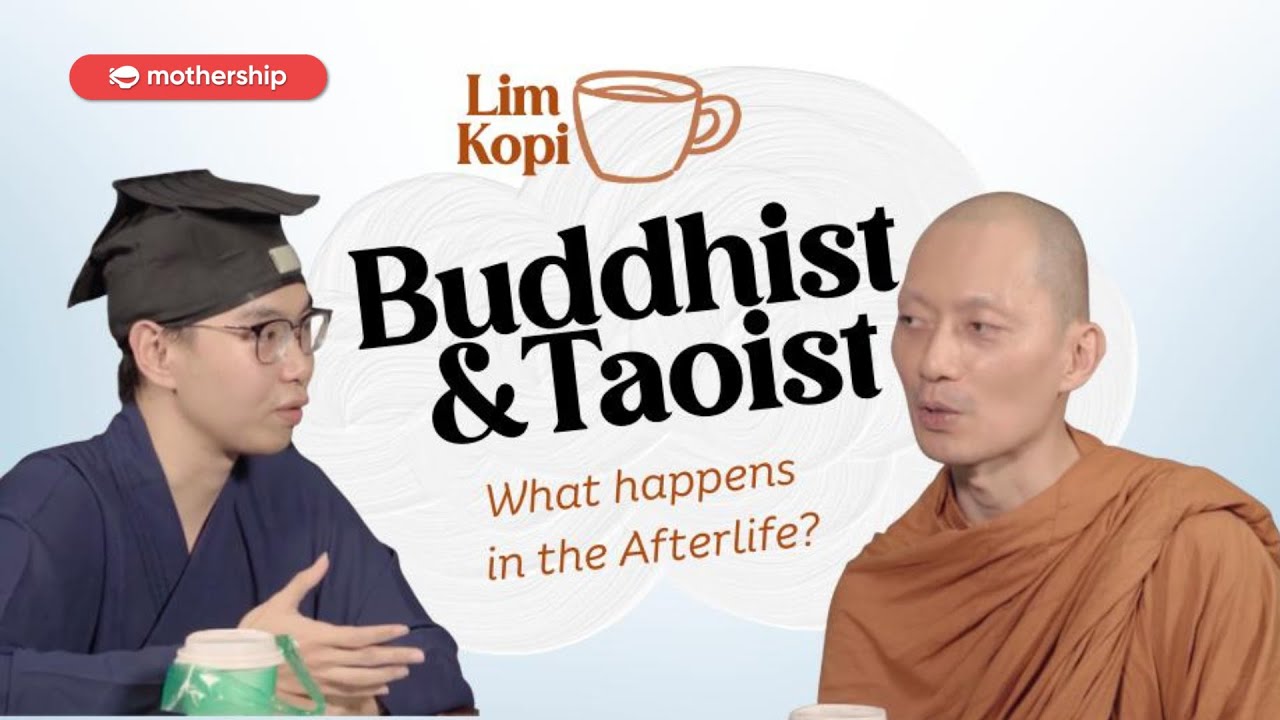
What Happens After Death? Buddhist Monk vs Taoist Priest

A friend of mine once said, “space-time has memory,” implying that things that have long died or gone extinct reappear later, granted sometimes in diffrent forms. Perhaps even the same. I’ve come accross some scientists who claim the same to be true about space-time.

Also, we have to bear in mind, the universe is vast. Even without a multiverse there may still, right now, be a creature or humanoid like us that has more or less the same atomic structure and similar memories.

I think as soon as we die in light of this, our consciousness may manifest in such a person or creature … perhaps consciousness can only occupy one individual at a time. This may agree with some of what you mentioned ?

It is a mystery where we go when we die to be sure. To me a soul is primarily our memories, otherwise what’s the point ? For too long we may have made the mistake that a soul is some kind of abstract thing … so in this, soul can be momories, which we share with others as you say. This makes art and naritive of prime value. Also, many things are words and naritive, even DNA and other inanimate molecular structures also have “words / narritive” that can influence us. At univercity we learned that even the location of where a society settle and evovle can have influnce on this, including their language.

Many curiousities indeed.