Should the US government fund critical theory research?

This question is about a uniquely American issue, but feel free to drop insights from wherever you are. The question is an earnest and politically neutral one:

What’s the reason that the US federal government should continue to fund any aspect of critical theory education and research at the university level?

An example of what we’re talking about is UC Irvine:

UCI Critical Theory is the institutional home for events, research, and study related to critical theory at the University of California, Irvine. Critical Theory at UCI has a long and celebrated history, which includes the original iteration of the School of Criticism and Theory (now at Cornell University), as well as the Critical Theory Institute, which was home to such luminaries as Jacques Derrida, J. Hillis Miller, Ngũgĩ wa Thiong’o, Jean-François Lyotard, Gayatri Chakravorty Spivak, and Etienne Balibar. UCI Critical Theory offers a graduate emphasis in Critical Theory and is often ranked as the top critical theory program nationally. Our core programming includes the Wellek Library Lectures, the Koehn Public Lecture, and the Critical Theory Mini-Seminars. Critical Theory | UCI School of Humanities

How is UCI funded?

  • All-Funds Operating Budget: UCI’s total operating budget for 2025–26 is $7.8 billion.

  • Federal/Grant Support: Non-core funds, which include federal contracts, grants, and private support, make up roughly one-third (approx. 33%) of this total $7.8 billion all-funds budget Financial Stability Plan // Budget Office // UC Irvine.

To fill out the question, I’m going to explain in the next post what critical theory is. The goal is to help with assessments of its value to the American public. I’m not going to address critical race theory, which has received very robust funding from the US government. I’m happy to leave that funding where it is, just because.

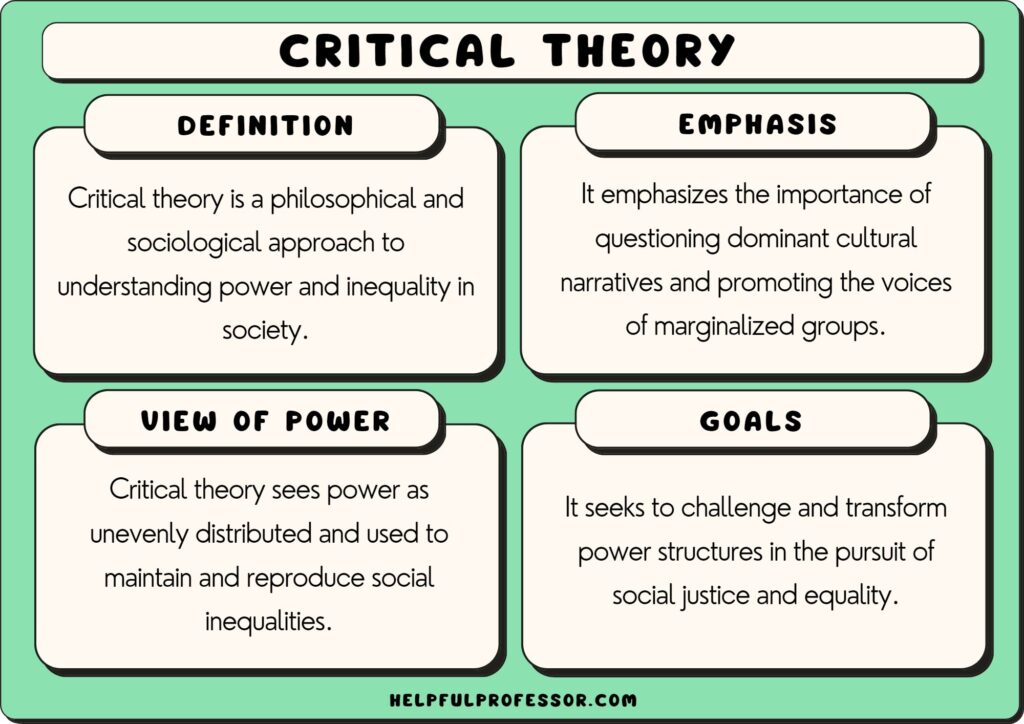
Here we have a nice summation of what critical theory is:

Is critical theory a type of philosophy? Not exactly. It’s vaguely kin to sociology, except sociology attempts to make objective statements about the world. A critical theorist is apt to be suspicious of objectivity, and the reasons for this are rationalist. We might say the old divide between empiricism and rationalism has reappeared.

And this touches on the primary character of critical theory. It’s a view that owns bias. It celebrates and seeks to animate bias as much as possible. We all want to understand power dynamics, but for the critical theorist, understanding is only to be sought for its value as a weapon for social change. In any science, soft or hard, starting with bias is anathema. If it happens, it’s considered to be disastrous and the source of pseudo-science. For the critical theorist, bias is not a bug. It’s a you-know-what.

In the next post we’ll look at some activities that come under the heading of critical theory.

The characterization of critical theory in your second post and diagram makes a lot more sense when seen in the light of this introductory comment. It describes a distinctly American, contemporary kind of critical theory, which doesn’t align well with all of the names you cited, nor with what is commonly understood by the term in Europe.

Deconstruction for Derrida was not a way of promoting the voices of marginalized groups or anything much like a progressive programme. He seemed to go out of his way to resist the political instrumentalization of his thinking.

For Lyotard, the idea that “understanding is only to be sought for its value as a weapon for social change” is anathema. Like Derrida (and Adorno, as it happens), he was very much against the demand that theory ought to be applicable as political practice.

And of course, the term “critical theory” very often refers to the Frankfurt School. But Adorno, Horkheimer, Marcuse, and the next generation including Habermas and Honneth, do not fit your characterization very well either.

All that said, as far as I can tell the other names—Ngũgĩ wa Thiong’o, Gayatri Chakravorty Spivak, and Etienne Balibar—do fit the description better.

And since, as you say, this is an American issue, if it happens to be the case that the term is now understood in the US in the way you’ve set out, that’s okay with me—but it does mean we have to do a bit of work to make distinctions. Otherwise, the kind of shallow politicization you rightly want to avoid will be inevitable. So I don’t think I’m just being pedantic.

EDIT: Actually, I shouldn’t have included Marcuse, because he fits reasonably well. Even so, the idea that he or any of these theorists “celebrate bias” is something of a caricature (meaning it exaggerates and distorts features that are there).

2 Likes

Those names were all associated with UC Irvine. That list is from their website, listing the people who have taught on their campus, so the conflict you’re noting is within the American critical theory community. I’ve found it to be pretty challenging to provide a nutshell suitable for reddit content. But as you say, since the topic is about where American public funds are going, I need to explain the kinds of projects and research those grants are actually supporting. The second post with the graph probably explains that better than dwelling on Derrida. If you have a better nutshell, I’d like to read it.

1 Like

That is fascinating and interested to learn more. I had no idea theory was taken seriously outside of academia or bullshitery.

How would one demonstrate that critical theory is of practical use to a culture? What would count as an evidence base for that claim?

is it only the Right who question critical theory in America?

That’s a good question. What I would love is if I could put this question on the critical theory subreddit and have them take a shot at explaining the value. I would be fine if they said it probably doesn’t affect the average plumber, but the contribution to the trajectory of the culture is in line with what Americans hold dear.

However, I won’t be putting this question there at all. There’s no point. It would have to go to a more mainstream political sub, which means I have to explain what critical theory is.

The general trend in the US is to back away from affirmative action, voter rights, government support for arts and humanities. What has saved grants for critical theory research so far is that nobody knows what it is. They cut support for critical race theory taught in primary schools, which means they have no idea what CRT is. It’s not taught in high schools.

But the day will come when any sort of education that doesn’t support the GDP or the military will lose funding, and the academic basis for critical theory in America will be gone. It will disappear overnight without any sort of defense coming from its adherents. That’s my guess.

I’m curious as to why. If you’ve explained why, I missed it. Why is there no point in asking the critical theory subredditors?

Because right now they don’t want to be Americans, so they don’t want to explain anything to other Americans. It’s pretty bad.

I’m getting mixed messages from your posts, and this could be a reason why you’re not finding much engagement with your questions among the critical theory folks.

For instance, this last comment seems to contradict your claim to political neutrality:

It’s very far from a neutral claim, and whether you mean it or not, it seems to align with right-wing talking points, that critical theory is unpatriotic and elitist, etc.

And if it’s the case that critical theorists have in some sense opted out of the conversation at the level of American public life, that’s interesting in itself—something that could be examined with a level head. But you can never get there if you start with “It’s pretty bad”, which is meant to throw the blame in one direction.

But you also said this:

Which makes it look like you’re sympathetic to critical theory.

The overall impression is not one of neutrality so much as of a split personality. Believe it or not, I’m saying all this to be helpful. You might get further with people if you are clear and open about your motivations—or if you really are neutral, try to avoid baking politicized judgements into your comments.

You’re probably right.

There’s neutrality that’s like Switzerland. It’s just a kind of silence. It could come from apathy for all we know.

There’s another kind, though. It’s when a person has psychological flexibility that allows them to rove around, seeing through this person’s eyes, and then that person’s. In terms of philosophy, a person like that can fully occupy either side of a conflict, whether it’s free will vs determinism, idealism vs materialism, rightism vs leftism. This kind of person would tell you the same thing Hegel would: that every story is made up of directly opposing truths, and if you only see one side, no matter how well you see it, you’re still only seeing half the story. Obviously, a person like that is going to have a native understanding of dialects and will occasionally appear to have a split personality. But it’s not a matter of being wishy-washy. There’s love for both sides. That’s me.

Then there’s another kind of neutrality that is very Anglo-American in a John Locke sort of way. The wisdom in it is about humility in the face of Nature. It’s the neutrality of science. Though it may seem cold and indifferent to a crusader, the devotion in it is serious business. It’s not apathy; it’s not flexibility, it’s sacred objectivity. From John Locke’s point of view, American-style critical theory is the opposite kind of sacredness. It’s zealotry. And if you look up the definition of zealotry, it’s this:

Zealotry is the fanatical, excessive devotion to a cause, belief, or goal, often characterized by extreme intolerance of opposing views.

So when I ask American critical theorists to defend their place in the American culture, it’s just a tad convoluted in the bias department.

1 Like

I agree with @Jamal that the theory under discussion has, at best, a family resemblance to actual Frankfurt-school-derived critical theory. But you’re right that it has a place in current U.S. thinking, a place I’m grateful for. So I’ll refer to it as the Theory, to avoid confusion.

When you dismiss the philosophical basis of the Theory, calling it “vaguely akin to sociology,” you seem to ignore the ethical dimension. (Unless you believe ethics can’t be genuinely philosophical?) The Theory is applied ethics. Its conclusions are meant to guide decision-making and behavior. This can be sourced in objectivity (that is, it needn’t “start with bias,” to use your phrase), but I think the distinction we want here is between “disinterested” and “engaged”. Any ethical pronouncement I might make, assuming I believe it to be true, will represent me as engaged, not disinterested. I can’t exempt myself from the call to action that my position prescribes.

So we shouldn’t fault the Theory in this regard. It’s doing what any applied ethics does: make distinctions and recommendations about good behavior. You may wish to question the premises, but that is not a theoretical defect.

Going through the boxes provided by HelpfulProfessor (!), we start with the definition: The Theory will look at “power and inequality in society.” I’m assuming (hoping) you’d agree that “There is inequality in U.S. society” is an objective statement.

Next, we have the emphasis on “questioning dominant cultural narratives.” Is this intellectually disreputable? Why should it be? Isn’t questioning always appropriate, especially when we’re talking about narratives that are so firmly entrenched in a society, and have resulted in so much harm? (Again, I’m assuming this is obvious to you as well. But if you believe, on the contrary, that our dominant cultural narratives have largely promoted justice and well-being for all, that would be a separate discussion.)

Next comes “promoting the voices of marginalized groups.” Here, I’m guessing, is where one’s political stripes begin to show – also, one’s depth of familiarity with U.S. history. Clearly, our forum is no place for a history lesson, so I’ll just say that the marginalized groups, in terms of cultural narratives, are not hard to discover if you do some reading, or if you’re old enough to remember how history was taught in grade school.

But what about “promoting” these voices? This is an ethical precept. It suggests that, if someone in the room has not been listened to, we ought to listen, and if that listening can only occur if others speak less, that we make the case for more silence from those others, including ourselves. By the way, it is not a for-all-time, forever-after precept. It’s describing a here-and-now response to a particular problem. I can’t find anything ethically objectionable here. Surely this is how we behave, and want others to behave, in our own communities?

The “view of power” comes next. I don’t know what concerns, if any, you have with this, so I’ll just say that it seems to me a statement of fact. Power is occasionally used to produce social equality, but U.S. history teaches that this is not to be counted on, and not characteristic of power structures.

Finally, the goal: “To challenge and transform power structures in the pursuit of social justice and equality.” I see nothing about bias and weaponry and zealotry here. The Theory argues that we have an ethical obligation to seek justice and equality for all. Would that it were so.

Are there those in the U.S. who use the Theory poorly, for unjust ends? Of course. But again, what ethical theory is ever free of this? You shouldn’t condemn the Theory based on its worst abuses, but rather praise it for its best successes.

1 Like

Suddenly it all makes sense: you were being a dialectician the whole time!

I think you’re being sarcastic, but it’s true. It’s a kind of non-binariness.

Maybe you could help me understand the extent to which this difference is between Europe and America, rather than within a common Critical Theory? Why wouldn’t you think of American critical theory as an extrapolation of the original for the unique conditions of America? So it’s basically the same theory?

I didn’t dismiss the philosophical basis of it. When I said it’s vaguely kin to sociology, I was thinking about how to explain it to a Republican. The grant funds that are being taken out of the American pay-check to support American Critical Theory are going to examine things like how boys and girls are experiencing public education differently. For instance, when a teacher asks, “Who can tell me what an irrational number is?”, the teacher is statistically more likely to call on a male student than a female one. How do we explain to the Republican that we’re focusing on how material conditions (events that actually happen) shape attitudes, rather than how attitudes (wafts of thought in people’s neurons) shape events?

This is something important, so I’m going to re-emphasize it. Critical Theory isn’t trying to scapegoat anybody. It’s not trying to blame people for the things they think. Rather, it’s looking at how the material world shapes what people think. It shapes who you are. If you’re a slaveowner with a whip in your hand, it’s probably not because your attitudes led you to embrace that role. It’s that your family inherited the slaves and you answer to powers beyond you in the market, in the church, in the courtroom, in the bedroom, everywhere, that are all creating a single end-product: the slave owner.

If the American version of Critical Theory (I’m going to push back on using a different word for the American version) says that if we look more closely at how the world is shaping us, we’ll find an opportunity to shape ourselves.

I very much disagree with this. I think you’re probably going to completely misread my tone if I explain what’s wrong with it though. I’m having a bit of a communicative crisis lately. I’d love to come back to your points at some time in the future.

Would you see any push back on critical theory coming from progressive sources or just the Right?

It’s difficult to answer this because I’m not sure what you have in mind when you use the term.

If we’re talking about the Frankfurt School, they were facing criticism from all kinds of leftists from the very beginning: for abandoning the working class, for being too bourgeois, for being too theoretical, for being too pessimistic, etc.

If we’re talking about contemporary American theory and associated movements like identity politics, there’s left-wing criticism from within critical theory itself (e.g., Nancy Fraser), and quite prominently from adjacent positions like that of Zizek, whose priority is to uphold subjectivity and universalism against the tendencies in continental philosophy that have de-prioritized them. Traditional Marxists and socialists continue to criticize the emphasis on cultural issues at the expense of class issues.

But I don’t know much about the American situation.

Thanks. I don’t have anything in mind because I haven’t read any critical theory. I just noticed the strands above about “challenging and transforming power structures in the pursuit of social justice and equality” which is standard sociological critical language from the left, surely. At least it was when I studied sociology. Even if it’s the framing of the cultural left rather than the reformist left, as Rorty might have it. Or as you have put it below.

I can’t imagine any version of the Right finding critical theory palatable, but maybe I’m out of touch. Thoughts?

What I had in mind was mainly that the critical theory of the mid-20th century was firmly based in Marxist analysis, whereas I see almost nothing of that in the descriptions of what I’m calling the Theory – that is, the U.S. doctrines you cite. I think the Theory is much less intellectually rigorous, and tends to address economic conditions almost as an afterthought.

The other difference you’ve already mentioned – the Theory is specifically attuned to U.S. problems that arise from the dual history of genocide and enslavement that characterized our founding. It’s worth pointing out that this is not U.S.-bashing; just about any nation or culture can probably locate a similar history. What’s different, and painful, for U.S. citizens is how recent the history is, and how poorly remedied, and therefore how strongly it still affects the culture and its narrative.

:slightly_smiling_face:

Sounds good to me. But I’d emphasize that the Theory is also an analysis of power relations, so it may not be enough to call for understanding, and shaping ourselves. I believe it also calls for an ethical commitment to changing the current unjust power structure.

Thanks for being open about this, and I sympathize. I too find it hard to strike the right tone when political theory touches on contemporary politics. I wish everyone on TPF was as careful and considerate as you are.

That kind of packs two issues together:

  1. Is critical theory development good?
  2. Should the federal government subsidize its development?

And if you are asking this question, what then do you mean by:

Are you asking if others agree with you that US government funding of CRT research and development at universities is a good?

I’m for learning about, debating and developing any and all theories, especially in the university setting. Critical theory is worth learning about.

But if we are being honest, and I’ve put three kids through three different US colleges, power structure critique is ubiquitous - kids are taught how find oppressors and the oppressed in every subject. And kids are told there is one right answer, one “right side of history”. CRT isn’t just a theory, it’s an ideology one can live by - from the dorms to the classrooms to the school functions and just as a way of life. CRT’s value and goodness and shortcomings are not up for much debate - certainly there are boundaries beyond which criticism is not tolerated. There is no “safe space” (an inequity solution) to say “all lives matter”.

Regardless, even if you didn’t mind the CRT-friendly bias that already has been institutionalized, or if you don’t agree that a bias exists, it is a separate question whether the federal government should take money from all taxpayers, pick winners and losers for research and development, and fund them.

To my mind, the federal government should only fund research and development of things that everyone agrees are good for the country - math, literacy, civics, logic, history, biology, chemistry, physics. The federal gov’t should keep strengthening these.

I wish universities were truly places promoting any and all ideas, in the spirit of true curiosity and skeptical critique. But they are not. CRT, it seems to me, does more to silence curiosity and critique.

CRT is just another idea. It doesn’t need more cash than any other idea might - certainly not from taxpayers who can’t read but who keep working and paying taxes (maybe we should make sure literacy is locked in first?). CRT needs critical analysis, debate, discussion, distillation of its wisdom, weeding out of its poison, like every other ideology. We have enough to work with, which is a reason the feds might NOT need to fund it so much.

The question is - what is the purpose of the federal government? 250 years ago, we pretty much agreed on that, and ratified a constitution. We don’t agree anymore. And the federal government goes on picking winners and losers without our agreement.

It’s taught on Sesame Street. We’ve all learned, since the 1980s in America, from early in our youth, that the knee-jerk morality, and baseline structure of society includes: “rich, powerful, white, male equals badness”. That is consistent with CRT. We all know what it is - power begets tyrannical power, and whiteness is power/maleness is power/richness is power. Clarifying the nuances for the university students is easy pickings. We have all learned what “systemic racism” is and “white privilege”.

That’s a logical product of learning what CRT teaches, don’t you think? America is not an example of “transformed power structures that decreased social inequities”, according to CRT. America can logically be hated once one learns CRT.

I think one measure is how many people schooled in CRT don’t like their countries. Is that something the federal government should continue to fund? Maybe the US (and Great Britain, and Australia, and white Europe) is a terrible blight on human history, but does it make sense for the US government to promote that? Sounds like the government funding a coup against itself. Maybe there is a better way to improve things, and spend our money for improvement’s sake.

But CRT has its wisdom. It has value. Just not sure we need to fear it doesn’t have enough life sustaining funding. Or that if it needs funding, that the federal government should be the source.