This thread is meant to discuss a collection of truth theories that reject the analyzability of truth. This means philosophers who hold these views don’t believe that truth can be broken down into smaller parts. An example of the type of analysis they might reject is correspondence theory, which identifies truth as a property of statements which correspond to obtaining states of affairs, or facts.
I’m going to use the structure of the SEP article on the topic.
I’m going to go with their way of distinguishing between the concept of truth (TRUTH), the property of truth (truth), and (truth terms).
The concept of TRUTH is similar to the concept of knowledge. There’s something mental going on. The concept of TRUTH is deployed when falsehood comes on the scene.
The property of truth is a philosophical fixture. When philosophers want to say something about the metaphysics of TRUTH, they tend to present it as a property of a truthbearer (a statement or belief usually) or as a relationship between truthbearers and facts.
Truth terms are just the words people use to refer to truth: true, truth, right, wrong, incorrect, insane, nuts, etc.
Per the SEP article, drawing the distinction between these three targets for “truth” will be helpful for categorizing different avenues of truth primitivism. I hadn’t thought of that before.
I found something in the linked article that intrigued me. It may even offer a middle ground with respect to our previous discussion.
Instead, Gaskin’s proposal is that true propositions are identical to obtaining states of affairs and false propositions are identical to non-obtaining states of affairs. This identity theory is meant to better reflect the lack of linguistic distance between our ways of talking about propositions and states of affairs.
Now I can read this in terms of " the cry is the eagle." And the human report of a situation is the situation.
Trivially, a “literal” reader will object. We can and do thematize the cry as cry as of course not “literally” the eagle.
But I claim that this “literal” approach misses the “life” of the sign. Just like Heidegger’s hammer, the sign vanishes into its function. Likewise, we look through the telescope — in two senses — to see the moon. “Literally” we stare at the end of a telescope. But the use or function of the telescope is precisely to show us the distant moon.
Approaching along this vector, we might suggest that “picturing” is a “primitive” operation or function. When the boy first cried “wolf,” his peers “suffered the presence of the wolf as near but out of sight.” But then his peers revised their sense of the situation and resented the abuse of this primitive function. When the boy cries “wolf” again, the villagers experienced the “dead sign” — and not its “blind function” or “life” as the nearby wolf.
The tale concerns a shepherd boy who repeatedly tricks villagers into believing a wolf is attacking his flock. When a real wolf appears and the boy cries for help, the villagers dismiss it as another false alarm, allowing the wolf to devour the sheep.
The tricky part is that perception is organism-local. We tend to forget this and “see from above” as if somehow liberated from our dependence on our own sense organs. This supports a personal use of “true,” which is not what most philosophers seem to prefer.
I will add an excellent Walker Percy quote on this later, as I have to run.
If you like. The “true proposition” Gaskin is referring to is not an utterance (marks or sounds). It’s more along the lines of content.
I’m not doctrinaire about any of this. I’m more fascinated by consequences. If you accept P, what do you have to accept on top of that? Frequently, with AP, you don’t notice the cost of a certain opinion until some logician lays it out for you.
If I apply limits, it’s just that I’m not going to accept P, but reject Q, when plain logic says they necessarily go together. That’s just sloppy thinking that philosophy was invented to prevent.
Hmm interesting. It seems to suggest the opposite to me. The It seems that your reading, itself, is a state of affairs which “the eagle” or “the cry” doesn’t seem to support.
But then we’re not actually talking about “truth” or veridicality at that point? We’re talking about efficient, or “tidy” reference. Which is great - and inthat other thread, I think i acknowledged that. The cry matters to the person hearing it, but an Eagle is a physical object. A cry is simply not.
Your Boy Cries Wolf analysis is brilliant, imo, though.
I prefer to approach “content” or “the expressed idea” in terms of the pragmatic role-equivalence of many different concrete-sensory expressions. It’s something like Sellars’ approach to the meaning of the word, and we find the same sort-of-equivalence-class structure in Saussure ( “sound-image” ) and Goodman (“character”) as well.
To me this has certain advantages over discussing elusive internal entities.
For me it makes sense to generally understand the “mental” in terms of the temporal like this. Numbers are roles enacted with numerals, and numerals are roles enacted with scribbles.
As you may recall, my own background is in math. So I wrote proofs for years. I also took a few logic classes. The formalism is good for more complicated cases, but I tend to find the most fascinating and difficult part the connection of the formalism with the rest of the world. Then whether,informally, P \implies Q is finally a matter of situated judgment that depends on the varying significance of the sensory signs for differing perceivers.
I’m very much “pro-rationality,” just to be clear, so my attitude toward the sign “true” is the result of serious wrestling with this issue. I’m generally a huge fan of Ayer’s LTL, but I found him wobbly precisely on this issue. How does Ayer, a phenomenalist in the style of J. S. Mill, plug this sign into the world ?
Personal “verification” looks suspiciously like Peirce’s settling of belief in perceptual terms.
I realize that I took too much context for granted. I was referring to a topic I started a few months ago. You may already grasp this, but just in case : I am suggesting that the eagle warning cry is experienced by its hearers “as” the looming eagle. I was more concerned about meaning-for-humans, but I thought using the simpler sign system of another species might make for a nice analogy.
My claim/pointer is inspired by phenomenology. Perhaps I can make it more plausible by asking you to consider your own experience now of reading this sentence. The more these black shapes on the screen “vanish into their function,” the more they become their “meaning,” which is their own self-referential situation, tacitly relative to you.
I see the cry as just as physical as the eagle. Why not ? Vibrations of air molecules, right ? For me the issue is how one public-sensory object can “indicate” another. We might understand the cry ( try to translate it ) as “an eagle is here.”
I see what I do as rational-critical investigation into inherited prejudices about rationality. I agree with Gadamer that “we are constituted by prejudice.” For Gadamer, “prejudice” is a neutral term. To speak English is to be “prejudiced” in an enabling way. Prejudice is expectation that might be called projection.
Ideally the same signs signify the same way for all of us, but the more we wander away from mundane statements about the arrangement of furniture, the more we drift even further from that ideal, which is a vague limit point not in the sequence. I personally see argument as relatively trivial. The hard part is getting a sense of where the other person is coming from and going. As in how do the signs they offer us signify for them ? What gives us a sense of this ? We are less and less ( unpleasantly, dissonantly ) surprised by what they say as the dialogue continues. Our initial projection, after many adjustments, settles into the “true” object. The “initial stranger” is split into “our hitherto unconscious projection” and the “revised stranger.”
The prejudicial character of understanding means that, whenever we understand, we are necessarily involved in a dialogue that encompasses both our own self-understanding and our understanding of the matter at issue…In the dialogue of understanding our prejudices come to the fore, both inasmuch as they play a crucial role in opening up what is to be understood, and inasmuch as they themselves become evident in that process. As our prejudices thereby become apparent to us, so they can also become the focus of questioning in their own turn.
Awareness of the historically effected character of understanding is, according to Gadamer, identical with an awareness of the hermeneutical situation and he also refers to that situation by means of the phenomenological concept of ‘horizon’ (Horizont)—understanding and interpretation thus always occurs from within a particular ‘horizon’ that is determined by our historically-determined situatedness. Understanding is not, however, imprisoned within the horizon of its situation—indeed, the horizon of understanding is neither static nor unchanging (it is, after all, always subject to the effects of history). Just as our prejudices are themselves brought into question in the process of understanding, so, in the encounter with another, is the horizon of our own understanding susceptible to change.
Gadamer views understanding as a matter of negotiation between oneself and one’s partner in the hermeneutical dialogue such that the process of understanding can be seen as a matter of coming to an ‘agreement’ about the matter at issue. Coming to such an agreement means establishing a common framework or ‘horizon’ and Gadamer thus takes understanding to be a process of the ‘fusion of horizons’ . In phenomenology, the ‘horizon’ is, in general terms, that larger context of meaning in which any particular meaningful presentation is situated. Inasmuch as understanding is taken to involve a ‘fusion of horizons’, then so it always involves the formation of a new context of meaning that enables integration of what is otherwise unfamiliar, strange or anomalous. In this respect, all understanding involves a process of mediation and dialogue between what is familiar and what is alien in which neither remains unaffected.
I’ve come to see ethics as first philosophy. But I don’t mean “official theoretical ethics.” I mean that rationality is essentially an ethical concept. “Nothing is more real than other people.” But I stop there for now.
But a high percentage of your posts contain performative contradictions. There doesn’t seem to be anything critical or investigative about it. In fact you don’t seem to even realize you’re doing it.
Even if you wanted to go full surrealist, you would be willing to at least admit: yes, that’s a contradiction. Yes, I abandoned rationality at that juncture, and here’s why I did it.
I can only invite you to re-read that Gadamer quote. Signs are empirical objects between us. In this case we have little black shapes on a white background.
While I don’t resent your candor as such, I think you are being naive about signification in your own favor here. The signs as they signify for you may register as performative contradiction, but you as a situated perceiver with a specified history are not in a position to understand how they signify for me over here.
From over here, it’s as if you take signifiers as a nomenclature for a system of atemporal luminous essences identically installed in every “pineal gland.”
So “truth” — sound-idol of the “rational” — is shielded from critique as God might be. It’s ineffable or absolute or [ random excuse to hide the material sign from its dependence on other signs and non-verbal conduct]. The floating system of marks and noises in all their perspectival ambiguity must be “grounded” in a vague metaphysical ineffable something.
I tried to meet you somewhere in the middle in a friendly spirit, so I am frankly disappointed. But this is what I was talking about : to be rational is not to cosplay as God’s calculator. It’s to try to understand the other person, to resist one’s leaping self-flattering prejudice, which for me too is easier said than done.
I could tell you this isn’t true, but I don’t think we’d get very far.
Honestly, I’m generally grateful if someone takes a second to give me feedback. It’s a sad state of affairs when people on a philosophy forum just get to the point where they’re just ignoring each other.
But we can lay my two cents worth to rest and get back to truth primitivism, the topic of this thread.
Continuing on, we’ll look at the views of Moore and Russell, but first, let’s look at the kind of philosophy they were responding to: British Idealism.
At the end of the 19th Century, British philosophers like Bradley believed British philosophy needed to be revitalized by the introduction of continental philosophy. It’s not that they turned slavishly to Kant and Hegel, but rather the influx of continental ideas created dynamism that formed the basis of analytical philosophy since Russell, though he struck out against idealism, never left Bradley’s ideas behind entirely.
Let’s next look at Bradley’s metaphysics and logic.
As I took a step into the rabbit hole of Bradley, I immediately thought it sounded like Adorno. Turns out, Adorno did read and quote Bradley. I think Adorno must have been the only person on the planet reading him because Bradley was bombed by Russell and Ayers, as we might expect, unfairly by cherry picking and quipping. Russell had a tendency to be unfair with his quips, which sucks, because he was really good at it.
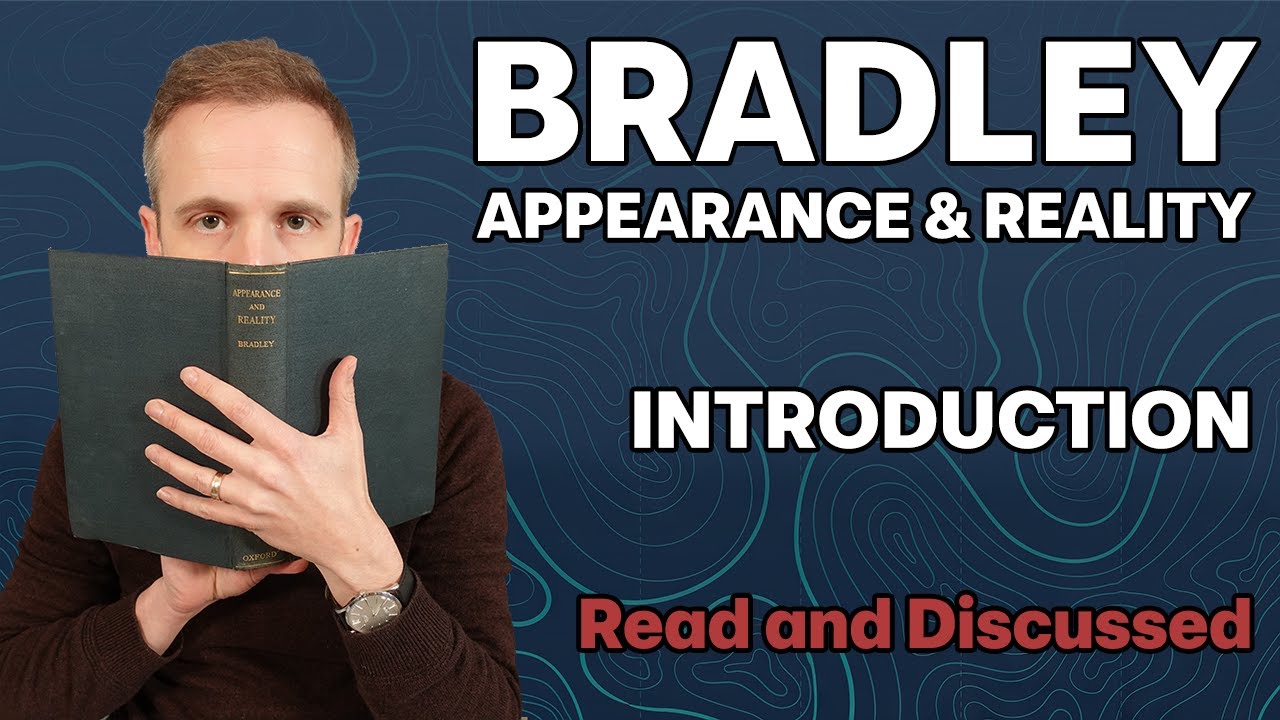
The introduction to Bradley’s Appearance and Reality launches a defense of engaging in metaphysics, even if the destination is skepticism. Apparently Kant also felt the need to defend metaphysics, and this was related to the success of Newton’s theories.
Idealist philosopher F. H. Bradley’s theory of consciousness is an Absolute-Idealist account in which sentient experience is the sole reality and phenomenal consciousness, at its most primitive level, is “feeling” or immediate experience: a pre-relational unity of qualitative diversity from which subject-object consciousness, judgment, body, self, and nature are abstracted, and within which finite sentient centers are partial appearances of one all-inclusive Absolute Experience (Bradley, 1883/1922, 1893/1930; Mander, 1994; Candlish, 2021). In this view, the relational, subject–object structure through which ordinary consciousness represents the world is internally self-contradictory appearance rather than ultimate fact, and that beneath this relational surface lies this pre-conceptual felt immediacy—feeling—while above it stands the Absolute, in which every finite center of experience is harmonized as a partial aspect; phenomenal consciousness is therefore at once the basic datum of his metaphysics and, transmuted and unified, the whole of what is real (Bradley, 1893; Candlish & Basile, 2021). Bradley’s Absolute Idealism
This view partakes of Hegel in that the Absolute and “partial truths” appear. It also has the marks of Schopenhauer’s views, with which Bradley was familiar, in that it places simple direct awareness as primary, the centers of which are like facets on a diamond (my imagery.)
But at the same time, Bradley took a deep dive into the ontology of relations. His approach is heavily logical and plodding in an analytical way.
So to sum up, Bradley was influential in the wider world because he contributed to an idealist phase of British culture. Within philosophy itself, Bradley was the ground Russell and Moore grew out of. Russell rejected idealism in favor of realism, but that didn’t diminish his intellectual connection with Bradley, with whom he had protracted public debates about the nature of relations and properties.
As it relates to the OP, Bradley and Moore’s rejection of the analyzability of truth grew naturally out of the fertile philosophical ground of the UK. When they rejected that same view and embraced correspondence, they were exercising their their freedom to explore. That set the tone for the very dynamic field of philosophy that followed: AP.