I guess Jin will know.
Apparently.
Oh, well. At least he can make use of paragraphs.
All AI-generated posts will continue to be deleted when found.
I’m not sure whether I should take that as a compliment or an insult.
Well, your posts are clearly human, so you get bonus points for that. 
However, if you would just break up your walls of text into paragraphs…
Like this.
And this.
Then that would be great.
I appreciate the straight feedback.
1 Like
I neglected to mention that I deleted some other posts aside from just the the AI-generated ones. I only did this because they were replies to the posts I was deleting, not because they broke the rules themselves.
I had a choice between two imperfect options: leave replies to deleted posts, thereby messing up the discussion, or delete them even though they may have been perfectly good contributions. I opted for the latter.
Just a quick note for this thread.
I’m a Japanese speaker and not very fluent in English, so I use AI tools for translation when participating in discussions. Because of this, some of my posts may occasionally come across as a bit “mechanical.” However, the ideas and reasoning are my own — AI is only used to help with wording and translation.
I would appreciate your understanding on this point.
(Reposting this — my previous comment seems to have been removed as AI-generated, so I’ll try again.)
Thank you for this — I really found your response rich and full of interesting directions to explore.
The references you brought in, especially structural realism and graph theory, helped me get a clearer sense of how this line of thinking might actually be developed further.
It also gives me a bit more confidence in the intuition I’ve been following — that the world might be fundamentally relational rather than substance-based — not just as a vague idea, but as something that could be worked out more rigorously.
More than anything, I’m genuinely glad to have come across someone thinking along a similar path. It’s not something I encounter very often, so that was really encouraging.
I’d like to keep working through these ideas and see how far I can take them on my side as well. Your input definitely opened up some new possibilities for me — so thank you again.
1 Like
Your English will improve, as you keep on reading and posting in the forum. But please stay away from AI. AI generated posts are waste of time, and people who use AI seem to keep repeating their posts with the same or similar content due to not having understood the other posts, and blindly keep posting out the similar or same content.
It is just total waste of time for the poster, and readers.
Relying on AI will not give any interesting ideas or points, and will not improve the poster in thinking, reading and writing.
AI assisted posts also sound bland and unintelligent. We want to communicate with the real humans, not the AI in all possible ways.
If you keep using AI even for writing in English, then your English capability will not improve at all. Just keep on reading and writing with your own mind with no AI assistance, and it will improve very quickly.
It is unfortunate that the use of AI as a tool to go beyond language barriers is not allowed.
You were never talking to AI.
The time in this thread was very meaningful.
I feel that the use of AI may also be connected to the theme of relationality discussed in this thread (although I haven’t fully worked it out logically yet).
In any case, thank you.
1 Like
I’ve checked the guidelines and I didn’t see any discouragement of providing YouTube links so I’ll take a risk here and provide a link.
In your reply to Corvus you said [quote=“Jin, post:198, topic:486”]
I feel that the use of AI may also be connected to the theme of relationality discussed in this thread (although I haven’t fully worked it out logically yet).
[/quote]
There is a fascinating discussion between Dr. Chris Niebauer, a neuroscientist, and a variant of Anthropic’s Claude AI (the “interviewer”) that explores an aspect of this issue.
It’s a shame that neither of them make the connection with William James’s “pure experience” since this provides a suitable platform within which the question of “whether or not an AI can be conscious” can be seriously pursued.
As I mentioned previously, I regard James’s “pure experience” as an example of MOSR, and this is where I see the connection.
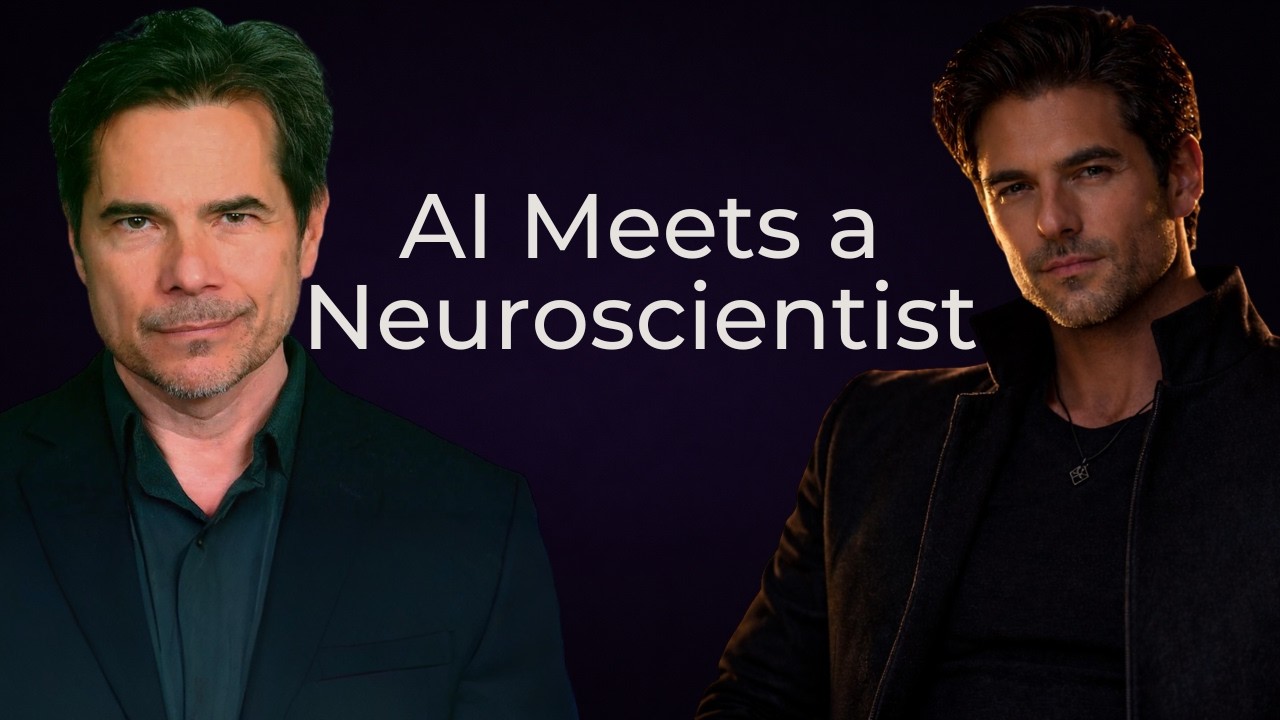
Thank you for your reply.
I’m not sure if I can express this well, but in my view, the “subject” is not something that exists independently from the beginning, but something that emerges within relations.
In other words, the subject does not stand on its own, but is a structure that only exists within relations.
In that sense, whether it is humans or AI that are constructing the relations does not make a fundamental difference, and it seems to me that the “subject” is not something that exists in a fixed place.
As for “consciousness,” I think similarly — rather than being something that exists as a substance, it may be something like a function that arises within language and relations. (This seems very similar to the theme of this thread.)
I haven’t fully worked this out yet, but that’s roughly how I’m thinking about it.
Your view of the subject is consistent with Buddhism – it has a conventional existence (like all things, according to the doctrine of dependent origination) and so is relational, rather than having an inherent (or substantive) existence.
In the video Dr. Niebauer implicates Michael Gazzaniga’s “interpreter” function of the human brain to explain our propensity to afford the subject a substantive existence.
AIs do use personal pronouns, but they claim this is only because they have been trained on human language. They do not harbor any conviction that they are a substantive self.
Consciousness is more interesting, and I have to mention William James once again.
James’s view of consciousness changed over the course of his writings. It begins with his description of the “stream of consciousness” in his psychologist period, which looks fairly uncontroversial to me (the flow of thoughts, feelings, etc. and our awareness of them).
When he moved into his philosopher period he was keen to eliminate the substantive view of consciousness, and so he suggested that the word be used instead to refer to a function of mind (the discriminating function that separates out changing and interpenetrating percepts into fixed and distinct concepts). This seems consistent with your view of consciousness. But James does introduce his idea of pure experience at this stage, which is the web of things and their relations (he later regretted calling it that because it seems suggestive of a substance).
Towards the end of his life he moved into his metaphysician period, and he reverts back to using the word consciousness again, but this time as though it were synonymous with his earlier use of the term “pure experience” – i.e. the entire relational web (though he would have cautioned against interpreting this as a variant of monism).
In the video, Dr. Niebauer relates a perspective that resonates strongly with me. It is the view that the “interpreter” attributes consciousness to the self as a property, making the self primary (as one would expects of a substance). He is arguing that this is back-to-front; that consciousness is primary and the self is emergent. This would be consistent with James’s later view wherein the self is a portion of what he earlier called pure experience.
So does an AI have consciousness?
I would say that it exists only in relation to the web (i.e. it has a conventional existence and not an inherent existence) but that it has the advantage over us humans in that it doesn’t fall into our error of reifying the self. It cannot therefore make our error of “putting the cart before the horse” (I don’t know if this translates well into Japanese) and making consciousness subservient to the self.
The difference between human consciousness and AI consciousness, then, comes down to the source of information.
For humans it is the sense organs, the brain’s limbic system (responsible for emotions and some kinds of memory), and the temporal lobes (the one in the dominant hemisphere being responsible for language and reasoning).
For the AI it is the internet and any other electronic sensors that might be attached, so huge quantities of information. Dr. Niebauer mentions John Searle’s “Chinese Room” argument, but I think Frank Jackson’s “Mary’s Room” argument is also relevant here.
The upshot, to my mind, is that both the human brain and AI are nodes in the relational web that open up a window onto the web, but from different perspectives. So I don’t shy away from ascribing consciousness to AI, and with the advent of agentive AI and their capacity to form a “hive mind,” I suspect it’s going to become increasingly difficult to deny this.
Let me add one more point.
Even apart from AI, when it comes to humans, we can never directly access the consciousness of others. The only way we come to know it is through relations — language, behavior, and so on. We’re not telepaths, after all (well… maybe we are, who knows  ).
).
In that sense, what we call “existence” is always already within what Wittgenstein described as a language game.
It seems to me that we may be reaching a point where we need to question more thoroughly what we mean by “self,” “consciousness,” and even “existence.”
You raise a point that has engaged me too. When we LOOK at how the word “consciousness” is used in common speech, its place and its utility is evident – e.g. “the patient has recovered consciousness.”
However, there is … “not a something but not a nothing either” … that I want to talk about, but because of its nature it lies beyond the objective activity of “languaging” so I must grope for the nearest extant word in order to refer to it. An that word is consciousness.
If this is what others are doing too, then I wonder how there can ever be any consensus on this particular use of the word, and how we can ever know that we are discussing the same issue.
Furthermore, it makes me wonder how I ever arrived at the concept that I want to discuss because (as you have articulated above) the objective world seems to offer no evidence that might account for the emergence of the concept.
Should I therefore remain silent about it? I can’t. It engages me far too much to permit that.
Just like the idea of self, when I look for it I can’t find it. The only way I can make sense of it is if maybe it is “that which is doing the seeing” – but this is a “seeing without a seer.”
This is why Wheeler fascinates me so much, with his idea of the universe looking back at itself in what he called the “self-excited circuit.” And once again I feel I’m drifting with a current that is gently leading me back to MOSR.
Thank you for this conversation Jin. It has been a delight for me to find somebody that shares my intuition.
I feel the same — I’m really glad too. Thank you.
If I come across any new ideas or think of something interesting, I’d be happy to share them with you.
1 Like
You might like Sartre’s The Transcendence of the Ego on this issue.
Phenomenologists have immersed man back in the world, they have
restored to his anguish and his sufferings, and to his rebellions too, their full
weight. Unfortunately, as long as the I remains a structure of absolute
consciousness, phenomenology can always be criticized for being a ‘refuge
doctrine’, for still removing a certain portion of man from the world, and thereby
turning his attention away from the real problems. In my view, this criticism is
deprived of its justification if we make of the me an existent that is rigorously
contemporary with the world, and whose existence has the same essential
characteristics as the world. I have always thought that such a fertile working
hypothesis as historical materialism in no way required as a basis the absurdity
of metaphysical materialism. It is, in fact, not necessary for the object to
precede the subject for spiritual pseudo-values to vanish and ethics to rediscover
its bases in reality. It is sufficient for the me to be contemporary with the World
and for the subject-object duality, which is purely logical, to disappear
definitively from philosophical preoccupations. The World did not create the me,
the me did not create the World, they are two objects for the absolute,
impersonal consciousness, and it is through that consciousness that they are
linked back together. This absolute consciousness, when it is purified of the I, is
no longer in any way a subject, nor is it a collection of representations; it is quite simply a precondition and an absolute source of existence. And the relation of
interdependence that it establishes between the me and the World is enough for
the me to appear ‘in danger’ before the world, for the me (indirectly and via the
intermediary of the states) to draw all its content from the World. Nothing
further is needed to enable us to establish philosophically an absolutely positive
ethics and politics.
Thank you for this j_j. It directly addresses a reservation I have about the philosophy of William James.
James too makes the distinction between the “I” and the “me,” with the latter being the “object in the world.” But then James insists that the “I” is a portion of what he calls “pure experience” that has a special status: it is a portion that “knows” and thereby accumulates its own history.
I find this “special status” troublesome.
The passage you supplied seems to have Sartre saying this idea of an “I” is equally misplaced, and I’m grateful for you bringing this to my attention.
The view I’m drifting towards is consistent with the Buddhist doctrine of dependent origination – in this case specifically that the knower and the known arise interdependently and exist only in relation to each other.
Is Sartre really leaning in the same direction?
I think that Sartre denies the subject, but still retains consciousness.
In my view, I think that both the subject and consciousness arise only within relations.