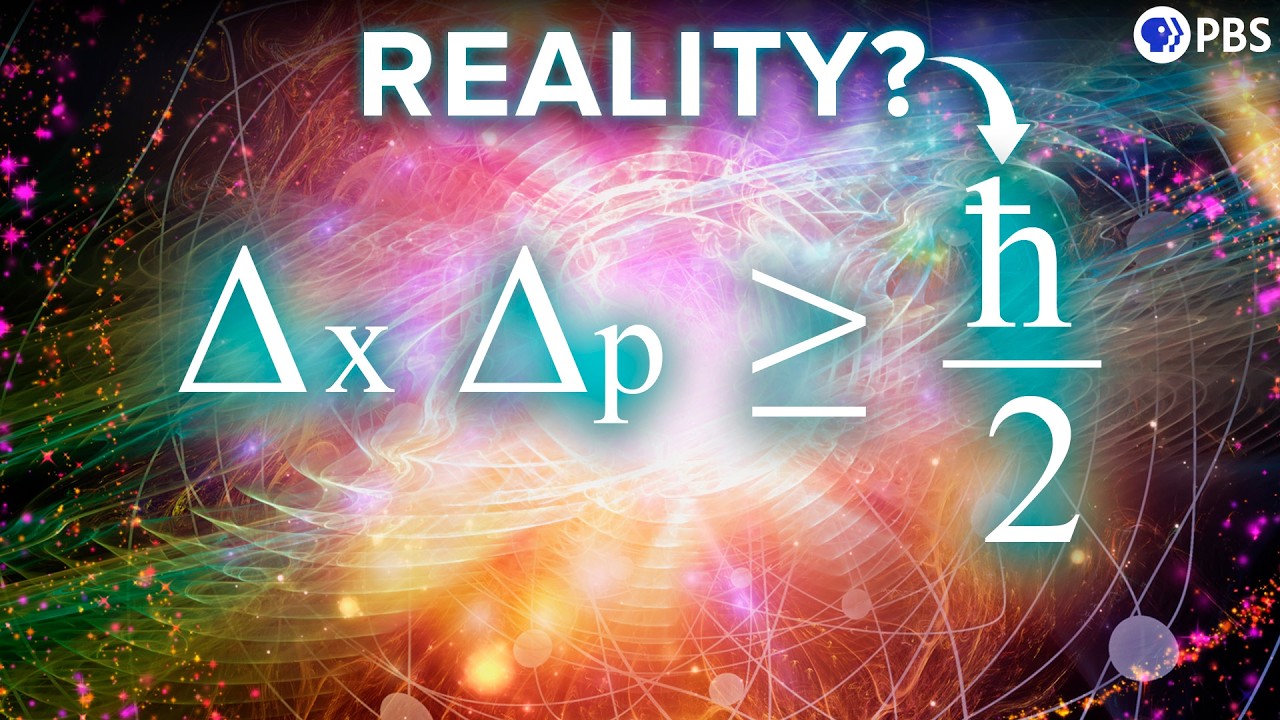
I do think that, for instance, some kind of ‘holism’ is present in entangled systems and I am open to the idea of some kind of nonlocality (e.g. I am sympathetic of de Broglie-Bohm interpretation). However, I can’t stand people that try to justify beliefs in the ‘paranormal’ by appealing to QM. I mean, scientific education should teach us to respect scientific knowledge and also be careful about our claims.
Yeah, I agree with this. However, I do accept the idea that many ‘entities’ we take as real are more like mental constructs we impute on reality. For instace I do not think that a table is a truly existing entity. It is more part of a way to describe reality. At the same time, without positing an independent intelligible realiry how can we explain our ability to predict, navigate in daily life etc?
To borrow a phrase of St. Paul we know “like through a mirror, darkly”. How ‘darkly’ is a good question…
“Right”, “correct”, “doubt”, “belief”… These are different concepts with different meanings (even if we for some reason pretend it wasn’t glaringly obvious that the comment wasn’t serious).
The point I’m making is that you don’t doubt physics. For you it is right all the time ever. You never drop a cup and find it doesn’t fall, you never hit a nail and think “that didn’t transfer as much force as the acceleration and mass should have”… It is ‘right’ all the time and you don’t doubt it.
The ‘science’ of it all is about theories, how the things came to be the way they are. Nothing changes the predictability, the ‘rightness’ of the things actually being the way they are.
My counter here is that people are reading way too much into a scientific model. Reality is the same as it always was - cups, gravity, trees,…
Finally we should take into account the subjectivity of everybody and the limitations in the attempt to model reality with “universal” objectivity.
I don’t know if it’s too simply, but I guess the reason of the measurement affecting what is measured brings us to the curious realm of QM. But once we understand just how important this is and just in how many occasions the so-called “measurements” do have this effect, we could finally put aside the idea that these problems are limited Quantum Mechanics.
Starting from facts like we are part of the universe, so the externality needed in objectivity isn’t there for us to achieve. Interaction is unavoidable.
I didn’t much like Anil Seth ‘controlled hallucination’ reference either, I posted a criticism of it by Evan Thompson a few posts in. The basic point is, however, rejection of the ‘blank slate’ view of the mind, and recognition of the positive role of cognition in the construction of experience.
Still no cigar, I’m afraid. The laboratory, the apparatus, the recording of the results - all of these are constructed and performed by agents/observers. Cameras are built by observers to capture images, and until the recorded images are interpreted, they mean nothing.
Agree! But those who appeal to science to support an overly inflated view of its capabilities are equally egregious. And our culture as a whole has a tendency to radically overestimate the role of science in the determination of belief.
This is not really true. There have been two ‘scientific revolutions’, and both have had massive impact on society and culture. The first was ushered in by Galileo and the demolition of the geocentric universe, with all of its associated mythology and cultural infrastructure. We’re still living in the consequences of that. The second was the discovery of the uncertainty principle by Werner Heisenberg on Helgoland in 1925. It played an analogous role to Galileo’s discovery, except that the model that is challenged by it is classical scientific realism.
PBS SpaceTime published a great retrospective on Heisenberg’s discovery in honor of its 100 year anniversary. The presenter is reputable and balanced, and not at all skewed towards ‘quantum mysticism’.
A “correct measurement” is derived from an act which carries out a process as prescribed by accepted standards. The measurement is the result of that process. A “correct measurement” is not the result of a process which determines a preexisting relation between the thing measured and a quantitative value. The measurement produces that relation.
And therefore, an unfalsifiable sense of reality.
Of which I am not a fan.
One, it doesn’t advance our knowledge in such a way that theories can be proven wrong by subsequent discoveries of new evidence. Rather, narratives are adjustable depending on how we see things, so evidence becomes alter-ego that are adjusted to the reality, and not the other way around.
And yes, another danger here is mentalism in which empirical observations that are checked against a benchmark or standard, are now just an agreement between observers.
Why don’t we just admit, for example, that we still don’t know much about the universe because we haven’t spent enough time on Earth and we haven’t constructed the technology to probe deeper into the cosmic phenomenon. There is, after all, something called suspension of belief or disbelief until further advancement.
You need to remember where falsifiability applies. It was devised by Popper to differentiate empirical science from metaphysics or other kinds of beliefs. It was never intended as a universal criterion of what is true. Philosophical materialism is itself not falsifiable in an empirical sense, because the notion of what ‘matter’ is, can be and has changed considerably in response to new discoveries in physics.
The article in question is a synthesis of the implications of quantum physics and cognitive science. But it is overall a philosophical rather than an empirical argument.
Probably an unneccessary point, but the ‘observer effect’ is also known in classical mechanics. However, before the advent of QM it was always assumed that real measurements could always be well approximated by ideal measurements in which the effect of the measurement was taken to be negligible.
So, in a sense, yes the ‘founders’ of QM just emphasized something that had been neglected. And, indeed, the fact that we cannot neglect the ‘disturbance’ of the measurenent apparatus on the measurement object implies that our empirical knowledge is always mediated.
However, the ‘innovation’ of the epistemic variants of Copenaghen interpretation, QBism etc is their refusal to assert that we can describe mathematically the state ‘before measurement’, which is left undefined.
The QM measurement problem is much more significant. Light energy is known to travel as waves. We see interference patterns, refraction, etc.. However, that same energy, can only be measured (in current practises) as a specific quantum of energy, because this is how it interacts with electrons (photoelectric effect) and other particles.
The existence of the photon therefore is simply a product of the measurement process. Current instruments only provide the means for measuring light energy through it’s interaction with other particles, and not as it exists in transmission as waves.
Therefore the measurement problem is not a “disturbance” to what is measured, it creates what is measured, the photon. The actual wave activity which is disturbed by measurement is not itself measured. What is measured is what is created by that disturbance, photons.
While I can perhaps agree with that, it is useful to remind that there are various interpretations of QM.
However, the fact that non-disturbing measurements are, in fact, approximation even in QM should suggest us that an unmediated empirical knowledge is impossible. Empirical knowledge seems always to be a mediated knowledge. This suggests that you can really never consider the content of empirical knowledge as totally independent from the ‘knower’.
Actually you hit the crux of the matter: it was assumed that real measurements could always be well approximated by ideal measurements.
Basically this above is a way to deny that the problem is a show stopper for us.
Because… for starters, there exists a correct measurement, a correct model of reality, right? If there exists reality. And if we have a problem where the ‘observer effect’ comes up, perhaps we then ought to change the situation where we start with premises that don’t give us the problem. For me this is denial. With QM these kind of assumptions didn’t fly because the problem is unavoidable. But unfortunately, in other subjects we do have this denial.
The more I have thought about this, the theoretical and philosophical problem here is really about subjectivity. Here our traditional dichotomy between subjective and objective isn’t actually what I’m talking about.
Here the definition of something being subjective would be that when we cannot give an objective model, the model is subjective. Subjective means simply non-objective. Hence subjective doesn’t here mean a subject as a conscious agent etc. Note that this also doesn’t refute objectivity itself, there indeed can be an objective model, but we cannot model it for various reasons!
In my view, when we bring up QM, we often do it in a reductionist way. Because everything is made up of small particles that QM models, then QM has to impact also in the macro-level. I would insist this is a theoretical problem, not because we are made of small particles. QM simply cannot avoid the problem, but in other subjects we attempt do avoid it all the time. And many times, this particular problem isn’t a problem and we can make objective models.
As I studied economics and economic history, the problem of objectivity is immediately in your face. The first issue is of course that we cannot do scientific experiments. Even if humanity can be said to have done social experiments (like attempting communism), these still are unique events and simply cannot be viewed as scientific experiments. Yet the problem is even more simple than this.
I don’t remember in which book on sociology someone put the very aptly and in short: “The problem with sociology is that it itself is also a subjective in the field that it attempts to study objectively”. This can be said actually about every social science, actually. The simple fact that when we try to learn from our mistakes even on the collective level (like let’s try to not have another World War), this already creates this “loop”.
This is simply because our understanding of how people and the society works, influences our behavior with people and what decisions we make in the society. If our understanding has anything to do with economic / sociological theory, the problem exists.
Assume you get the best economic or sociological model explaining just why something is happening in the present and what will this cause in the future. After thinking about it, you agree with this model and opt do something, for example with your investments. Assume then that one tenth of people learn the same model and come to the same conclusion as you did. If so, wouldn’t then this model itself be the reason, a causal factor, for you and others acting the way you did? If this model explains the aggregate choices that people do, how could it do this objectively? Again, do notice that here subjectivity isn’t at all similar to someone being a conscious, sentient subject.
Some might argue that nobody takes any sociological or economic model so seriously, but it’s still a real problem. If I ask “is gold money?”, some people might say that it’s not and refer to our present currencies. Before our fiat system gold was actually seen as money and if our fiat system collapses, we might possibly at least partly go back to the old idea of gold being money. At least central banks value the metal as they are main buyers of gold now. If enough people believe that the chemical element is money, it is that.
OK, it might seem for many that I’ve gone well away into my rabbit hole far from the actual subject, but just think for a moment the descriptions given at the start of this thread and what @Wayfarer wrote about the pluriverse in the OP:
a reality not composed of fixed, observer-independent facts, but of inter-related first-person perspectives shaped through interaction.
The result is a picture of reality as a dynamic, evolving “meshwork” of agents and interactions, rather than a pre-existing objective universe which individuals apprehend with greater or lesser degrees of accuracy.
The article also links this to enactivism, where organisms and environments co-emerge through action. The upshot is a vision of the cosmos as continually coming into being—a “living community of nows”—in which observers are not passive spectators, but active participants in the ongoing formation of reality. (Think the Great Barrier Reef.)
Wouldn’t that above describe well our “economy” and our economic thinking and behavior, that creates in the aggregate the economy itself? I think it would.
And I think that these kind of ideas like ‘pluriverse’ will finally end the sidelining of these problems of objectivity and subjectivity, when we attempt to model complex reality with a simple, objective models like in classical physics.
The uncertainty principle describes why QM measurements are approximations. The energy must be measured at a point (position), but the energy measured is attributable to the motion of the particle (momentum). Therefore by the uncertainty principle, some degree of uncertainty is inevitable and the measurement is necessarily an approximation to some extent.
This is a complex issue, because momentum is traditionally the product of moving mass, and movement is relative to a rest frame. However, to understand the energy of a photon, as the energy of a particle, requires that the particle has momentum, even though photons are massless, and they cannot have a rest frame. This required a reworking of the concept of “momentum” under the precepts of special relativity (as relativistic momentum), in order to maintain the law of conservation of momentum.
Unmediated empirical knowledge is indeed impossible, as “empirical” implies that the knowledge is mediated by sense observation. The requirement of sense observation as mediation, is actually a significant problem with relativity theory. Sense observation is the grounding of empirical knowledge, and as such it serves as the proper rest frame. But relativity theory proposes that we can assume other frames as “rest frames” even though we cannot verify them as true rest frames through empirical observation. Therefore relativity makes assumptions about empirical observation which cannot be verified, i.e. that observations would be the same in different frames of references. They formulate the concepts (such as relativistic momentum) to ensure that the math works, rather than to be consistent with empirical observations, which cannot be made.
An interesting feature of qbism is that it denies mechanistic determinism. Even if setup A reliably leads an agent to expect outcome X with high probability, QBism insists that the outcome is not fixed in advance by hidden variables or deeper laws. The world is not a machine unfolding deterministically; it is, in Fuchs’ phrase, still “under construction”.
I can see why QBism is seen in this way. But to me the great advantage of QBism is that it is neutral on how ‘the world really is’. It doesn’t deny a particular worldview in order to affirm another. In some sense, QBism is pyrrhonism made scientific theory.
Thanks for your interesting reply. I believe that you’re onto something. There is indeed some kind of analohy between the ideas here despite the two quite different contexts.
Anyway, I believe that the common feature is the idea that the ‘agent’ that measures/acts cannot disregard their own contribution. Even in physics, at the end of the day, measurements are interaction and an interaction changes all the parties that interact. So, both a pure ‘objectivity’ and a pure ‘subjectivity’ are approximations. Reality is far more complex.
I see your point. There is also the time/energy uncertainty relation. However, note that the deterministic interpretations of QM can explain the uncertainty relations as well.
This isn’t something that only relativity proposes. It is basically what has been proposed since classical mechanics and it is still true even in some interpretations of QM. Others, of course, give consciousness an epistemic role*. Notice that ‘reference frames’ can be thought as frames in which a given object is at rest. So, all you need to imagine is thinking that a massive object is at rest for you (i.e. its velocity is 0) in order to share your frame.
That inability to disregard one’s own contribution is for me a limitation in objectivity. It’s just another way to say what you said above. Hence agent’s subjectivity matters. How much that subjectivity does matter depends just on what we are trying to model. My point is that this isn’t about just physics, it’s about logic and a philosophical question. That’s why we can see a lot of analogies popping up in totally different fields and phenomena that otherwise don’t have much in common. We simply try to be logical in our reasoning.
Once there is no interaction or the interaction has an extremely tiny effect, we do have the capability to use that ‘classical objectivity’. Our measurement of the motion of Jupiter and it’s moons surely doesn’t affect the motion itself much and hence the future positions of these celestial bodies is easy to predict decades from now (for an astronomer). After all, we don’t have to take into account some future satellites that get a gravity boost from Jupiter in the forecasting. Just where a gas planet starts and stops isn’t a question of millimeters.
Yet once everything is dependent on interaction, then the role of subjectivity is obvious and it would be funny to even try to model the interaction “objectively”, as our models wouldn’t give anything as precise as in forecasting Jupiter’s movements and the planets future position in the night sky.
So let’s say the model wouldn’t be about where Jupiter and it’s moons are in the night sky 50 years from now, but a model on how this thread will develop: Who will write something on this thread, what is going to be discussed and what the replies will be exactly?
In that case a lot less can be said. We can make only rough models, like using probabilities. Those continuing this thread after my reply surely have to be PF members, for starters. Likely those that have already participated in this thread might continue this thread, yet naturally someone new can come and participate too. The other likely issue will be that people will probably respond to the replies that they have gotten. And likely what is written depends on what earlier already has been written, even if threads can stray far away from the original topic. Some statistical forecast on how long these threads are active can be made from past similar threads.
Yet if this thread is closed or simply nobody continues it, then there is a perfect model of the discussion on this thread, namely the thread itself. Then we have a perfect history just what was discussed (and what wasn’t) and who participated on this thread. And someone can argue, that the perfect model of this thread, the finite replies which there will be here, had to at least theoretical exist.
Unfortunately that doesn’t give us any real information about the future of this thread.