I hope it’s not missing your point that a poet or lyricist or even prose author might object strongly to that statement, and discuss its (the word’s) cadence, timbre, rhymes and connotations?
Right, but for identifying the word, speakers are indifferent to semantic variations based on how it sounds.
In music, listeners are not indifferent to variations in how a chords sounds. It’s the same chord, but the way it’s played by Herbie Hancock, or by Keith Jarrett, or Aaron Parks etc or in a concert hall or some intimate speakeasy etc matters.
And when we speak to each other, we are not indifferent to tone, emphasis, cadence and a whole host of other ‘musical’ aspects of speech which tell us volumes about what the speaker really means. Are they speaking ironically, metaphorically, allusively? Do we hear deception in their voice, or lack of conviction? Are they joking with us? These attitudinal cues direct us to particular ways or interpreting the sense of their words.
Their speech breaths life into dead marks on a page, just as a musician brings to life the notes of a score. Two performances of a poem or lines of a play are never the same. Are Wordsworth or De Niro any different that Herbie Hancock?
1 Like
Not at all, it’s a good thought. It helps me notice that, by saying “word or term,” I was trying to have it both ways. The word “sadness” has a sound (and tristesse a different one, in French); the term “sadness”, as I meant it, is propositional in that it’s the same in any language, at least theoretically.
Fair enough. I was going to grant you the distinction, but… Goodman’s scepticism about synonymy (identity of propositions) is relevant to his theory of exemplification and expression. It helps justify the idea that art-works refer to words. Along the same lines that it’s uncontroversial to say that art-works cause or elicit subtly distinct associations and connotations. Just slightly more concrete, by implicating the words instead of their corresponding abstract concepts.
I guess I mean by that that the composer’s intentions are unknown and don’t feature in my listening. This doesn’t rule out that I might be able to apprehend something of that intent unwittingly but I wouldn’t know.
Yeah, one of the many problems about non-verbal artistic expression is that it doesn’t seem to be paraphrasable or translatable. (Many would say the same of written artworks.) This circles back to my questions above about meaning. Two sentences can mean “the same thing,” at least denotatively (in English and French, say), but can two musical events mean the same thing?
OK, makes sense. I tend to think I often can figure out, in some very broad way, what a composer intended in a work. But as you say, I couldn’t claim knowledge; that’s much too strong. But I can go as far as ruling out ridiculous or unhistorical interpretations, I think.
Does it much matter to you?
When I discovered classical music as a kid, I had friends and teachers who would bore me with composers’ backstories and try to explain what they were doing, and how radical (or not) a particular composition was. I’m not someone who finds that frame useful. For me, music is for listening to. Thankfully, I don’t teach music or need to have a theorized view of it. Other people seem to want a form of mastery over their interests to “appreciate in full and as intended” or something more rigid like this.
Not in the sense of sharing the same truth-value, no.
But, by denoting (by exemplifying) the same (or equivalent) English and French descriptions, yes.
Right, that’s a kind of ground-zero impossibility. Musical events don’t have truth-values.
Strikes me that denoting and exemplifying are going to be different, in this context. Could you maybe give an example of how either would lead to “meaning the same thing”?
Yes and no. Not much, in the sense you’re describing, where some expert gives their gloss on what Schubert was up to. (I had a music teacher who used to talk sarcastically about “people who’ve gone to RJU” – Record-Jacket University.) But yes, it matters in that I regard music as a communicative act, and I feel that part of my role as a listener is to be a partner for the composer’s creativity. That means I try to bring myself to the work, not ask the work to stretch to fit me. And inevitably, I find myself asking if I am understanding – perhaps not the single meaning, but at least the broad intentions of the composer as they speak to me through their music.
The role of musicology here is complicated, isn’t it? Knowing if Debussy was radical may not be too important to the listener. But if you don’t have some grasp of the musical times in which Debussy wrote – the conversation in which he was taking part – you’re going to miss a lot. How much does that matter? Each listener is different, I’m sure.
I listen almost entirely to classical music, and while I find the early Classical period a bit dull, I’ve made almost no effort to understand music theory or how revolutionary, or not, Beethoven and others were in their own time. I struggle to care about that side of it. I studied classical violin when I was young, and I think that experience put me off classical scholarship.
Nice. Yes, I struggle with a kind of pretentious, mid-century “I’m a connoisseur of all culture” types who always seem to feel the need to give you a history lesson whenever they talk about something they like.
1 Like
The indifference I refer to is a theoretical requirement for the possibility to preserve the identity of a chord (or word) while being played (or said) in many different ways, attitudes, contexts etc.
Character-indifference ensures that a B-flat-minor played in one performance is a B-flat-minor played in another, or that the word ‘sad’ is the same word regardless of when, where, or who, or why, or how it is said.
In music, variations in how a chord sounds is perhaps more significant than the chord itself. The various ways Hancock makes a B-flat-minor sound can together with other chords form a use-context in which the sound means ‘sad’, for instance.
The various ways a word sounds can certainly direct us to interpret its meaning in various ways. But paying attention to various ways it sounds when someone says it (e.g. accent, dialect) or diagnosing attitudinal cues etc is nowhere near as significant as identifying the word regardless of the accent, dialect, attitude etc. What’s significant in speech are the words and their composition in sentences. Music, however, thrives on sounds and their variations in compositions.
We can find shared properties across their different works and genres, but there are also significant differences between words, gestures, and sounds.
Words don’t exist outside their context of use, just as musical sounds don’t exist outside their context of use. Having said that, I appreciate that words can produce meaning in ways that music doesn’t, but that doesn’t mean that it is possible to cleanly separate what a word is from what a note is. Words can describe abstract philosophical ideas, concepts in natural science, emotions and poetic allusion, and we can also use words to describe what a piece of music sounds like.
What happens when we shift from an attempt at a verbal description of a song, note by note, moment by moment, to transcribing that song as a score in musical notation? Is there an all-or-nothing difference in kind between these two descriptions? If we describe a painting in words and then show the painting itself, is there an all or nothing difference in kind between the verbal symbols and the perceptual markings which make up the visual image of the painting? What I am suggesting is that a note is already a kind of word.
So to your claim that “…paying attention to various ways it sounds when someone says it (e.g. accent, dialect) or diagnosing attitudinal cues etc is nowhere near as significant as identifying the word regardless of the accent, dialect, attitude etc.”
I would respond that it depends entirely on what kind of words we are talking about, what genre of discourse they are being used in.
I would prefer to say that the difference between musical notation or pictorial representation and the use of words is , like the difference between words used in poetry vs science vs philosophy, one of degree, of moving from the more impressionistic, felt , loose and inarticulate to the more concrete and tightened. They are kinds of words, all points on a spectrum of creative expresssion, and even what constitutes the musical or the painterly or the verbal is subject to change over the course of cultural history.
As @jkop said, exemplifying is a just a special (but widespread) case of denotation, where the denoted item itself (the referent) returns the favour, and denotes the word or other denoting symbol. By being a good example of that word.
You might reasonably object that it’s an exemplar not of the word but of the kind or class of things denoted by the word. Goodman is happy to cash it that way, as long as ‘kind or class’ is understood distributively rather than collectively (in Lesnievski’s useful terms), i.e. meaning any and all of them, but not a platonic abstraction of them.
Denoting the same thing means referring to the same thing or situation or kind of thing or situation; exemplifying the same thing means being different exemplars of the same word, and thereby, indirectly, referring to the same kind of thing or situation. Elements of the above music very knowingly exemplify the French kind of things and situations, and elements of the lyrics mean exactly that same thing.
Obviously we could discern more carefully and narrowly more specific elements and their common and different references, at the risk of boring Tom! And me too, very often, don’t get me wrong.
1 Like
I followed your explanation very well up until this:
Could you explicate? Which is the “above music”?
Notes, words, and pictures have different syntactic and semantic properties, and to use them as kinds of eachother is not so useful, they are different kinds of symbols.
I tried it back in the day (as a draughtsman/architect): we used scores, drawings, literature, tools etc all collaged together in various ways. Sometimes beautiful, but I don’t think the method particularly improved understanding or communication (beside raising a few eyebrows).
Granted that it can be useful to combine the notes in a score with words as additional instructions. But they’re different kinds of symbols.
In a music score, a note is unambiguous. In a book (or speech), a word can have different meanings. In a diagram, a pictorial figure has one or perhaps a few select meanings (e.g. ECG, or pie chart). But in a painting (abstract or figurative) the pictorial composition is semantically dense (between two meanings there’s potentially a third). Quite the opposite of the notes in a score.
Also the sounds of notes are used in ways that differ from the ways the sounds of words are used. As I argue in previous posts, in music we identify variations in the sounds of notes (sometimes indifferent to what the notes are), and in speech we mainly focus on the sound for identifying the said word (indifferent to variations in how it sounds, e.g. because of dialect etc).
A picture doesn’t sound at all, but we can use its appearance(s) in any way a picture can be used, and for example interpret a colour or shape as if it was a sound or a text or an entire world.
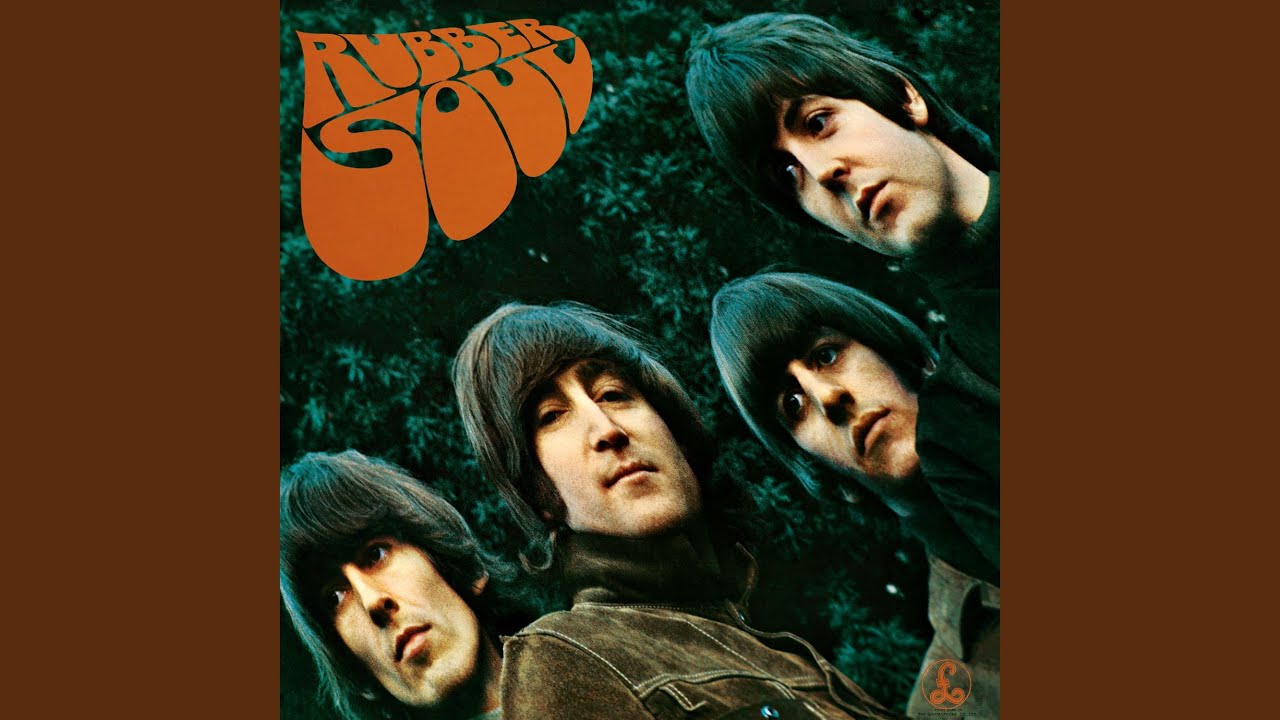
Beatles track, post 30!
In processing music, we need to separate what is intended as music from what is extraneous noise. Of course, a musician can deliberately make use of noise, but then it isn’t extraneous. Similarly, when speaking, unless we deliberately intend an accent, the accent or dialect is extraneous to our words and must be filtered out by the listener. But both musical sounds and words are conventional, both are normative and conceptual, which allows us to separate accidental sound and verbiage from musical sound and intended speech. At the same time, the conventions don’t exhaustively determine what the actual note or utterance means.
Words are said to be either literal or metaphoric, but even literal language is metaphoric in that context redetermines how it is meant.
Ah, I’ve got you! I guess both the words and music of “Michelle” could be said to exemplify in that way. But the “French kind of things and situations” is a bit vague for my taste. If we have lyrics that are partially in French, does that really exemplify something called “Frenchness”? I know what you mean, but I’m not sure this is the best way to think about it. As for the musical elements, that’s an even trickier question. Certainly Paul drew upon his knowledge of popular French song clichés. Is that really the same as using French in the lyrics? Can either be an instance of meaning? I dunno, I’ll have to think about it.
1 Like