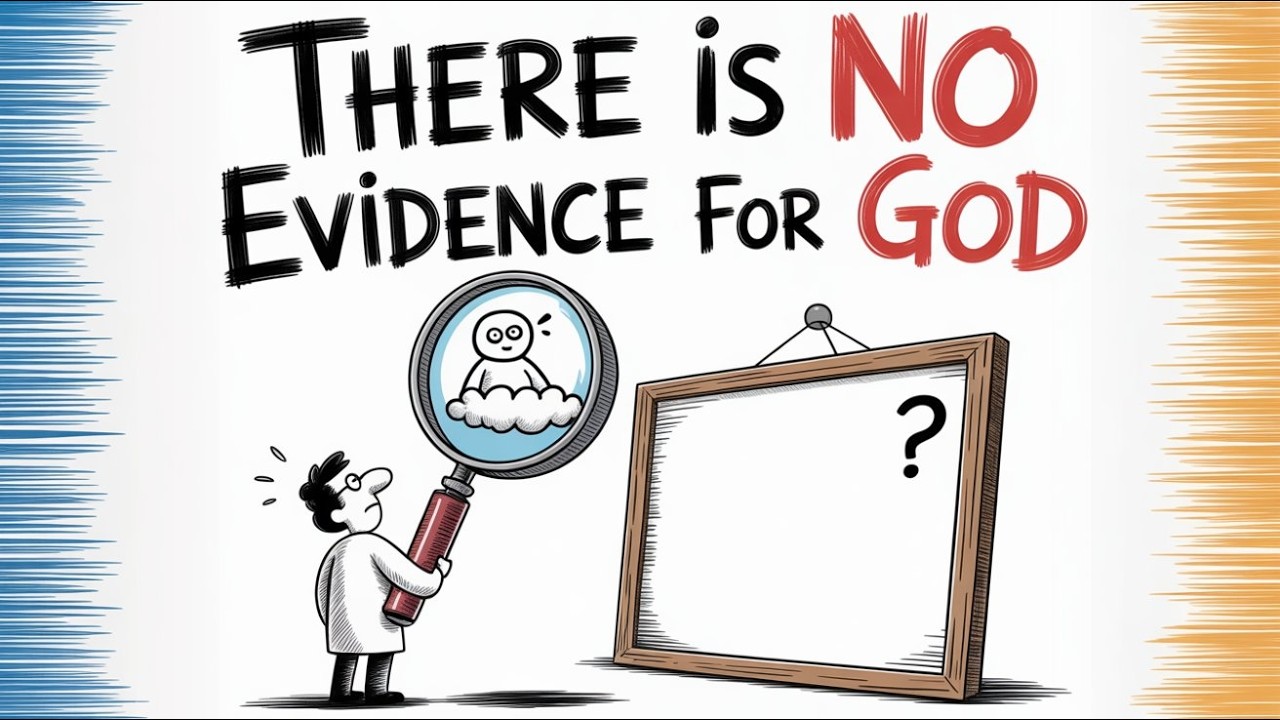
Ah. You seem to be playing with a vague notion of intentionality. In some cases it is the intent that makes it so, the classic case being the difference between a piece of paper and a dollar note.
No. The rules are only that an opinion is chosen, and an opinion identifies a decision-maker. There are no more rules to subjectivity.
The logic of subjectivity is simpler than the rules for tic-tac-toe.
And there is no other problem with comprehending subjectivity, except people desperately wanting choosing to mean selection of the best option, instead of correctly explaining choosing in terms of spontaneity, in terms of that a decision can turn out one way or another in the moment that the decision is made.
The science confirms the gap of freedom, in which both the ordinary human spirit, and God the holy spirit, can choose. But this requires having at least rudimentary understanding of how subjectivity functions.
If I say someone is a loving person, then the opinion is chosen by me, and the opinion applies to that person as being a decision-maker.
Doesn’t mean I created that love. Doesn’t mean I fantasized the love.
Now instead of saying this person is loving, I can also choose the opinion that this person is divine. Which is what Christians do with Jesus. Still the exact same underlying logic as saying a person is loving (and the exactsame logic as saying a person is hateful for that matter).
The name God is defined same as all other subjective terminology is defined, which is in terms of doing the job of choosing things.
Emotions are subjective, because emotions are on the side of choosing things, belonging to a decision-maker.
Personal character (like courage) is subjective, because personal character is on the side of choosing things, belonging to a decision-maker.
The name God is subjective, because the name is defined in terms of being on the side of choosing things, being a decision-maker.
So really you can straightforwardly be an atheist by simply not choosing the opinion that the spirit in which any decision is made is divine. Not choosing the opinion that there is a deity in this part of reality that does the job of choosing things. That is proper atheism.
But of course in practise there are 0 atheists who comprehend choosing or subjectivity. Which is a conceptual disorder, and not proper atheism.
The only thing atheists have in common is that they don’t believe in gods. It says nothing about how they came to that belief or what versions of gods they’re even aware of. You might be an atheist who’s only familiar with a cartoon version of fundamentalist Christianity. It also doesn’t say anything about how vehement that lack of belief is.
Some atheists say there is/are no gods; others say it doesn’t matter. It seems to me that many atheists are simply people who cannot find a way to make the concept of God useful in their lives, and that any arguments provided to them have not been convincing. Lack of belief is not a “choice”. But as we all know, there are people who change their minds on this issue, just as there are people who change their sexual preferences. We can only guess at the factors behind such changes. Oh, and many atheists believe in all kinds of other “supernatural” claims, such as reincarnation, astrology or ghosts.
I have responded to your argument, by pointing out that I am not creating or fantasizing the love, in saying someone is a loving person. So I am not creating or fantasizing God either, in saying I believe in God.
Subjectivity depends on decisions, because only a decision-maker is subjective. And subjective means that it is identified with a chosen opinion. A decision-maker is identified with a chosen opinion, that is how subjectivity functions.
But this logic can only function, if choosing is defined in terms of spontaneity, in terms of that a decision can turn out one way or another in the moment that the decision is made.
Because if choosing is defined incorrectly in terms of selection of options, then the decision refers back to the values that were used to evaluate the options with, and not back to the subjective decision-maker doing the job of making one of alternative possible futures the present. All the elements in a selection procedure are objective.
But every atheist defines choosing in terms of selection of options. That is always the problem.
This thread is a perfect example of how insane it is to rationally argue of “God” with a believer: he chose (LOL) to quit reason for faith: having a rational arguing with them is contradictory in the terms.
There are matters of fact, and matters of opinion. Each valid in their own right. You obviously have no comprehension, on the intellectual level, of matters of opinion.
You have made no rational argument about how subjectivity functions, whatsoever.
I still think the statement " I am an atheist" does not convey much even in its negative format. There are so many different conceptions of God or the divine that I doubt it is possible to meaningfully or intellectually exclude them all with a simple four word negative statement.
Maybe it would be better to indicate what you do believe. Is the universe just some accidental, chance ultimately meaningless and purposeless event? Or exactly what other world view is the proponent of atheism putting forth as a positive as opposed to a negative worldview (gestalt)?
I don’t believe in an afterlife, I don’t believe in heaven or hell as traditionally presented. But more interesting may be what do you believe happens when you die or do you believe there is any form of final justice in our existence. Positive affirmations tell us a lot more than negative assertions about a person and their pattern of thinking.
I suggest that “belief” needs to be defined before defining “atheist”.
A belief is a psychological attitude toward a propostion. A categorical belief is one with 3 possible values: true, false, or judgement-reserved.
IMO, most of us have relatively few categorical beliefs, because that entails certainty. We often say we “know” it to be the case, in a colloquial sense (it may or may not be knowledge in the strict philosophical sense).
Most of our beliefs aren’t categorical - there is some degree of uncertainty or acknowledged contingeny.
I regard myself as an atheist because I believe naturalism is true: everything that exists is natural; the natural world is not grounded in intentionality; intentionality is grounded in blind nature.
None of those statements are categorical beliefs. They are contingent on my other beliefs about the world and my personal experience. If a god exists and chooses to convince me of this fact, my view would change.
“Lacking a belief in gods” sounds to me like reserving judgement- having no belief attitude toward the proposition “gods exist”. I question why anyone who calls himself an “atheist” if this is their attitude. It sounds like agnostic to me. But that’s because I apply the above epistemoligical framework. So…I’m not arguing I’m objectively correct- because it depends on one’s semantics and on his epistemological framework. If you want to understand what some individual thinks about god(s), it will require a conversation,not a word.
Pardon the interruption, but fidei universalis (faith is universal). Scientists have faith in science, philosophers and mathematicians have faith in logic, you get the idea.
That claim depends on a definition of “faith” that departs from the way many believers use the term. A scientist has justified beliefs. Typical adherents to a religion embrace some beliefs that lack rational justification - and call this “faith”.
The trust we all have in logic is another matter worthy of a long discussion, but it’s certainly quite different from the blind faith many have with respect to passages in scripture.
It looks like you listen to atheists more than theists. Fidei is pistis in Greek, which means, inter alia, trustworthy, evidence. You may be talking about blind faith. And by the way what evidence/proof do you have for science and logic? These are well-known epistemological problems.