What you don’t say explicitly here is that the latter is presumably an emergent behavior, and you might even say that it supervenes on the former.
This seems to be an ongoing problem in all of these discussions: those on the naturalist side are constantly arguing for the dependence of the emergent phenomenon, because the “anti-naturalist" side outright denies this; but in doing so, naturalists tend to lose track of the autonomy of the emergent phenomenon, which the other side continually points to. Without intending to, the naturalist in effect joins in the denial of emergence (but in the opposite way).
I think this is the issue your post is highlighting. Have I gotten that right?
(I’m trying to distinguish something like the substance of the disagreement from the form of the argumentation around it, if that makes sense.)
Pat, yes – that’s basically what I’m getting at. The naturalist ends up over-claiming in the reductive direction and effectively concedes the anti-naturalist’s implicit premise that if something genuinely depends on the physical then it can’t be genuinely autonomous at its own level. What ends up happening is that both sides accept, in different ways, that dependence and autonomy are in tension, and the dispute then becomes about which way to eliminate that tension.
My thought is that taking emergence seriously means accepting real dependence and real autonomy. The higher-level organization isn’t something over and above its physical realization, but it also isn’t eliminable without explanatory loss. Emergence seems to require the acceptance of both of these claims.
As for supervenience, while I agree that it captures the idea of dependence well enough, it’s usually silent on the question of what generates the higher-level organization. That is, it doesn’t seem to answer why these lower-level conditions give rise to this kind of emergent structure. That generative question is where I think the more interesting work is happening, and it gets lost when both sides focus on the dependence/autonomy dichotomy.
Absolutely, and what we see from the “anti-naturalist" side is a constant demand for explanation, exactly how does A give rise to B, and why, an issue I wasn’t really trying to address with my casual use of the word "supervene”.
I think you also make a good point about the (ahem) complexity of adaptation. There are known issues there, for instance that natural selection cannot reward genes directly but only the entire organisms carrying those genes. And of course the whole process seems to target emergent properties (fitness, adaptation, desirability to the opposite sex, and many more), but operates at the lower level of the genome, so here we are again. Natural selection, you might say, expresses a sort of faith that what emerged before will reliably emerge again. – That’s a mess, obviously, but it’s one way of noting how ubiquitous these issues are.
One other point I would raise is that the “anti-naturalist" always stands resolutely at the level of the organism, and at that level you only have to be attentive to phenomenology. (We all experience free will, intentionality, and so on.) The naturalist has to see the organism as a hierarchy, which is what emergence is really trying to get at, I think. Some of the preceding paragraph can be rewritten to make more sense just in terms of hierarchy, rather than emergence.
Throughout you’re wishing to explain consciousness in terms of succesful adapatation. Sure, you say, given successful adaptation, then all kinds of possibile modes of being emerge, which are interesting in their own right — but adaptation is the driver.
This is what I mean by the emptiness of evolutionary thinking as an explanatory mode. The theory itself is a theory of the evolution of species - a biological theory, not directly a philosophy of mind or consciousness per se. And the kinds of explanations it provides are, then, generally instrumental, couched in terms of the contributions that ‘faculty X’ - in this case, conscious awareness - can make to the essential and only real aim of existence, which is to survive and propagate the genome. But
if reason is a product of natural selection, then how much confidence can we have in a rational argument for natural selection? The power of reason is owed to the independence of reason, and to nothing else.
That ‘problem of recursion’ is also the origin of the well-known ‘hard problem of consciousness’. It’s a problem specifically because the natural sciences operate solely in terms of objective fact, and the nature of our own existence is not an objective fact. In this case, the object and the subject are the same. Not seeing this, naturalism will attempt to ‘explain’ the nature of consciousness (or mind, or being) in objective terms, usually in terms of biology or neurology, thereby giving it the apparent impramitur of scientific method.
I agree that it isn’t eliminable, but uneasy about the degree to which it can be understood in terms of its ‘physical realisation’.
You will find that I’m a pretty staunch critic of evolutionary naturalism as a philosophy. I’m not at all an ID advocate, although I’m familiar with the literature. My criticisms are based on objections to what Thomas Nagel, Mary Midgley and others, see as an over-reliance on evolutionary naturalism as an explanatory paradigm. I’m generally critical of ‘naturalised epistemology’ and the adoption of scientific method as the paradigm for philosophical enquiry.
The kind of ‘Consciousness Studies’ approach that is mentioned in the OP is thoroughly grounded in evolutionary biology. But it’s also sensitive to the possible shortcomings of biological analyses of existential realities, you might say.
My interpretation is that during the course of evolution consciousness goes through distinct stages of development. These are not usually a subject for mainstream evolutionary psychology per se, so much as anthropology, cultural studies, and history, among other things. Culturally, evolutionary theory has stepped into a vacuum caused by the collapse of the credibility of the creation mythology of the religious tradition. As such, it is often serves as a kind of secular creation mythology, and thought to explain everything about the human condition. But I maintain understanding of consciousness is not reducible to biology or evolutionary theory, in the sense that zoology and botany are, even though evolutionary biology is obviously an important factor.
So I would hope not to present any arguments which are in conflict with scientific fact, but at the same time, I maintain there are many issues proper to philosophy, which science is not equipped to address.
Pat, your observation about natural selection is a nice illustration of the general point – the process operates at one level while “Targeting” properties that only exist at another. And you’re right, that this isn’t a problem only for consciousness; it’s baked into how hierarchical organization works throughout biology. The demand for a clean, level-by-level causal story keeps running into the fact that the relevant properties aren’t always visible from the lower level.
Your distinction between emergence and hierarchy is worth pondering. I think you’re right that a lot of what emergence language is trying to capture can probably be reframed in terms of hierarchy. That framing may actually be less philosophically loaded and harder for the anti-naturalist to dismiss. That said, I’d want to hold onto something that “emergence” points to that I’m not sure hierarchy can cleanly capture: not just that higher levels exist, but that they exert real downward constraints on what happens at lower levels. In other words, the organization isn’t just a description we impose: it actually does something.
Your point about the anti-naturalist standing resolutely at the level of the organism is apt, and I think it explains a lot of the dialectical asymmetry. Phenomenology can’t be ignored, but if you never leave that level you never face the hard question of how it fits into a broader picture. The naturalist’s commitment to hierarchy is simultaneously their theoretical strength and rhetorical disadvantage: it opens up explanatory resources, but also opens up the gap the anti-naturalist keeps pointing at.
What I’d add is that anti-naturalist’s residence at the organismal level isn’t just a rhetorical move – it reflects a genuine methodological intuition that something is preserved there which hierarchical decomposition risks losing. The question is whether that intuition requires non-naturalism to honor it, or whether a sufficiently sophisticated naturalism can do the same work. Personally, I’m inclined toward the latter, but think the burden is on the naturalist to show it concretely rather than just asserting that emergence handles it.
I find myself in sympathy with your critical impulse, even if I’d locate the problems somewhat differently than you do.
The Nagel and Midgley objections are absolutely worth taking seriously – both are pointing at something real, which is that evolutionary explanation, when treated as a complete account of mind, tends to smuggle in reductionist assumptions that haven’t been earned. Nagel’s complaint (on my reading) isn’t really about evolution per se, but about what he calls the materialist “credo” – the assumption that if you’ve given the causal-biological story, you’ve said everything that needs to be said. That seems to me correct as a diagnosis, even if I am not fully drawn toward his alternative.
But I’d want to distinguish two different concerns that sometimes travel together in these critiques. One is about reduction – the worry that giving a physical or biological account collapses the phenomenon into something less than it is. The other is about realization – the question of what physical or biological conditions make the phenomena possible at all. I’m resistant to the first, but find the second harder to deny.
Your point about evolutionary theory functioning as secular mythology is sociologically astute. I agree that it does get asked to carry more explanatory weight than it can bear, particularly around questions of meaning, value and consciousness. Where I’m less sure is on the inference from “evolutionary biology is insufficient” to “the issue is not amenable to naturalistic treatment at all”. I see the question of whether some form of naturalism is adequate as still open, and I think its worth keeping an open mind rather than treating the failure of reductive materialism as settling the issue.
I’m curious to better understand what you’re gesturing at with your reference to “stages of development”. Do you see it as being irreducibly cultural and historical all the way down, or do you see it as being constrained by the biological level in some way?
Perhaps this is the place to squeeze in the other idea that goes along with hierarchy, which is function. Each constituent of the car serves a function in some assembly, which in turns serves a function in some larger system, and so on. Even in the simplest possible system, something like a polymer, each link serves to connect the head of the chain to the tail (taking each as defining a head and a tail).
“Emergence” is in some ways an unfortunate term, because it feels a little too close to “side effect” (which has also appeared in this discussion), something that “just happens”. There may be some truth to that, but the logic of natural selection in particular is all about “capturing" what just happens as functionality; evolution loves hierarchy because it provides intermediate stability that can be built upon.
Well, of course we’re biological creatures. One of my favourite books on evolutionary development has been Your Inner Fish, Neil Shubin, which shows how the precursors to virtually all mammalian life can be found in this ancient proto-fish, Tiktaalik, from which all of our anatomical architecture evolved.
But, and here’s the ‘but’, through language, rational thought, tool-making, socialisation, and the many other things that characterise h.sapiens, we have also in some fundamental way ‘transcended our biology’. Not that we don’t still breed, bleed, age and die, but that we are able to discover horizons of being that are not perceptible to our fellow creatures. Among those horizons are ‘the transcendent’ - so yes, I take religion seriously, although I’m not evangelical about it. I think there is such a thing as ‘religious naturalism’, which is the understanding that religious awareness is a naturally-occuring phenomenon in human culture, and that it is the source of insights that are not obtainable through other means.
So where I’m averse to ‘naturalised epistemology’ is that it is inclined to try and accomodate the scope of philosophy within the bounds of the natural sciences, which become the arbiter for what can be considered real. That is fair depiction of Quine’s ‘naturalised epistemology’, isn’t it? Whereas my philosophical lexicon includes aspects of Platonism, Thomism, Buddhism, Hinduism, and other schools of thought that are implicitly or explicitly religious. As I say, not necessarily evangelical about it, so I try to remain with the bounds of reasoned argument. But I’m unapologetically anti-reductionist.
Your point about function is a useful addition, and I think it does real work that “emergence” alone leaves undone. Emergence tells you that something new appears and function tells you that it gets recruited into a new role that matters to the system’s persistence and activity.
What I find attractive about this framing is that it makes the hierarchy feel less like a static description and more like a dynamic achievement. The levels aren’t just there; they’ve been consolidated through processes that constrain which higher-level properties get stabilized and which don’t. The higher-level organization has been, in some sense, earned through selection pressure.
A question I find particularly interesting is whether “function” in the biological sense is sufficient to account for rationality. I tend to agree with the philosopher Thomas Nagel (as mentioned by @Wayfarer above) that it doesn’t. Functional organization gives you success and failure conditions relative to the system – a heart can fail, a signal can misfire – but it’s less clear that it can give you truth and falsity. Is there a difference between a system that responds differentially to conditions and an agent who can be wrong about the world and know that it’s wrong? I don’t think this undermines your point. It may just mark where the hierarchy has to add another level rather than where it breaks down altogether.
The “transcend our biology” framing is interesting. There are two ways we could read that phrase.
The first says that through language, reasoning and cultural transmission, humans have capacities that aren’t straightforwardly explained by pointing to their biological substrates, and that those capacities open up genuinely new domains - including Normative, aesthetic and, yes, religious ones. On that reading, “Transcendence” marks a real difference in kind of organization and capacity, but not a full departure from nature.
The second reading says that these capacities place us outside of, or only partially within, the natural order such that naturalistic frameworks are in principle inadequate to them. That’s a stronger claim and I think it’s where some interesting pressure points crop up.
Your characterization of Quine is fair – naturalized epistemology does tend to make the natural science the arbiter of the real and that does foreclose certain questions prematurely (in my opinion). But I’d distinguish Quine’s program from naturalism as such. One can hold that everything that exists is part of the natural order while rejecting the view that science exhausts what can be said bout it. Reason, morality and phenomenology – these may require forms of inquiry that aren’t reducible to empirical science without thereby requiring the existence of anything supernatural.
The reason I tend toward the second reading is that “Transcendence” risks becoming a placeholder that stops inquiry rather than advancing it. To say humans transcend their biology in accessing religious or normative horizons is evocative, but it leaves open the harder question of how – what kind of organization, what kind of capacity makes this possible for creatures like us and not others? That question seems to me both genuinely open and genuinely naturalistic – in a non-reductive sense.
I’m curious whether your anti-reductionism requires the stronger reading, or whether you’d be comfortable with a naturalism that takes the emergent capacities of the human mind fully seriously without treating science as their ultimate tribunal.
Only if you ‘take it as Gospel’ - as something to simply accept on faith. For me, it has always taken the form of a quest - a question to explore, territory to discover. I’m very much the Sixties type - came of age during that period, in which the quest for ‘higher consciousness’ was very much in vogue.
In fact I think much of the ‘Consciousness Studies’ movement was product of that generation. See for example the 20th Anniversary Photo of the Consciousness Studies conference in Tucson, 2014:
Most of the images are of participants, with David Chalmers at centre. (And yes, Dan Dennett features. Descartes in the back row.)
That is why ‘Consciousness Studies’ often incorporates elements of Eastern philosophy. (Deepak Chopra often features, but I’ve never been a fan.)
Of course - with the caveat that Western culture, generally, lacks a paradigm for what is beyond the naturalist worldview. Again, evolutionary naturalism views us as another species - which is, of course, true, as far as it goes.
I’ve made a nice poster copy of an Emily Dickinson poem, The World is Not Conclusion, which, to me, conveys the sense of yearning for a ‘beyond’.
But as far as philosophy goes, I’m drawn to a kind of synthesis of phenomenology and Buddhism, which is a vein of thought that you find in some of the recent literature on embodied cognition. (A Medium essay I’ve published on the topic.)
Exactly, and I think you’re no more willing than I am to say “adaptive advantage" and call it a day. (You don’t even need to go all Hoffman to consider that answer a bit panglossian.) I think it’s a real question, particularly for phenomenal consciousness, because it’s not obvious to me what its purpose is, what it enables that couldn’t be accomplished through the same sort of unconscious information processing that does most of the work.
(Although, here’s a thought that just occurred to me, meaning I am not aware of any such proposal, much less evidence for it: consciousness might be useful friction. That is, a kind of inefficiency–an added layer of instrumentation and reflection, something like a debugger–that proves useful precisely because it slows down the system. Oh, I guess I’m kind of flipping Kahneman around, suggesting that there is a layer that serves exactly the purpose of slowing everything down when the automatic solutions don’t seem well calibrated. But that friction could also enable the encoding of memories–roughly, way of freezing a continually updating process like perception and marking its current state.)
I want to say, no, there really isn’t, updating is updating. But for your second point, the reflective awareness of updating, or even of the need to, I think we have to be really careful. The model we tend to reach for, having reasons for the beliefs we hold and can produce on demand, or the judging of the reasons others offer for their beliefs, reasons why we shouldn’t continue to hold our beliefs, and so on–I don’t think the mind functions much like that, even though discourse does.
I might even go so far as to say that true and false, though they play an enormous role in discourse, may have no role at all in our psychology, where instead you’d only find “somewhat reinforced" and “somewhat inhibited", or something like that.
I guess I’m saying that I think Hume was fundamentally right, that when you look at the fundamental mechanisms of thought, you don’t find something that looks like what we’d comfortably call reason.
Yes, I agree with you that this would be far too glib. The interesting work starts where the easy Panglossian stories stop.
Your “useful friction” is a delightful turn of phrase and an idea that contains an important insight. If we look at contemporary predictive-processing or active-inference frameworks, there already is a principled role for something like strategic slowing. Systems that can flexibly shift precision weighting, inhibit fast policies, and recruit more globally integrated processing are better able to handle model uncertainty, novelty and conflict.
So I think you’re right – there is a functional story available in which conscious access correlates with the recruitment of slower, more globally constrained processing regimes.
Where I am less convinced is in the notion that “updating is updating”. It strikes me as (perhaps) an example of the over-claiming in the reductionistic direction that we discussed previously. I agree that it captures something important at the subpersonal level, but the worry is that it threatens to collapse a distinction that is explanatorily indispensible at the personal level.
A thermostat “updates”. A reinforcement learner “updates”. But I believe that once you have a system that can recognize its own states as representations of how the world is, you’ve crossed an explanatory threshold that can’t be neatly reduced to the level below.
For example, humans don’t just “update”, they can:
explicitly retract a claim because it’s false
criticize their own earlier belief as mistaken
defer to better evidence even when it conflicts with entrenched reinforcement histories
and treat others as accountable to standards of correctness
The question, then, is not whether the underlying machinery is probabilistic and continuously updated (it almost certainly is), but whether that machinery, once organized in the right way, gives rise to a genuinely new normative layer that is not well captured in purely reinforcement-theoretic terms.
Put differently: Hume may be exactly right about the microstructure of cognition, while still missing something about the organizational level at which agents become answerable to reasons.
I’m curious where you’d want to push back most: on the thermostat/agent distinction, or on the role of truth and error in mature cognition?
shows a clearly social origin, and a social function, which can then be to some degree internalized. (It’s a kind of extreme reading of Mercier & Sperber.) That step of internalization makes me pretty skeptical of introspective accounts (as if there weren’t enough reason already).
There’s the story (I have it from Joseph LeDoux) of the split-brain patient who is shown the instruction “Stand up” so that it is received in his right hemisphere, which is unable to produce speech. When asked why he stood up, he says, “I needed to stretch.” “Pure confabulation,” LeDoux comments. You could also say, rationalization. And you could also say, he was abiding by the social norm of producing an explanation for his action, but it’s entirely post-hoc.
The weak spots in this whole approach, I think, are (a) how do we account for the improved performance of groups that engage in rational discourse–the reasons we give and receive and the canons by which we judge them seem to work, even if they are not a representation of our own process of thought; and (b) what exactly does this “internalizing” amount to? That, of course, touches not only on reasoning, but, well, everything, since all of our first cognitive steps are mediated by others (and many after that, as well). We learn to see and understand and reason about the world as our caregivers do, and that suggests that this learning process can reach pretty deep. It’s certainly deeper than what “norm following” might connote, more than just saying “Gesundheit” when someone sneezes.
I suppose I’m saying I don’t quite think of our usual patterns of reasoning as emergent in the sense that the underlying probabilistic machinery “gives rise” to them. Reason would emerge–at least, so I speculate–via a detour through communal decision-making. True and false, for instance, are useful for the clash of opinions, sharpening the issue, turning the analog flows of partial belief into a digital and binary contest.
That’s a little weak: decisions will be like this for individuals as well; you place your bet or you don’t, whatever you think of the odds. If there is a difference that makes the social detour necessary, it might be that “holding yourself to account” after a mistake is not something humans show a natural aptitude for, nothing even in the ballpark of the aptitude for rationalization.
I will now reinforce my claim by allowing that you are probably better able to judge the merits of my regrettably handwavy position than I am.
I find the Mercier & Sperber framing genuinely illuminating as a genetic account of how reason-giving practices get off the ground. Their thesis that reason evolved primarily for social argumentative functions is evocative of Robert Brandom’s thesis that normative statuses like commitment and entitlement are instituted through social practices of holding one another accountable. So I’m on board with the idea that reason is socially constituted, but it seems like something still has to account for why some reasons actually track better solutions rather than merely winning the social contest.
The LeDoux confabulation case is vivid and I take it seriously, but I wonder if it proves something slightly different from what it’s sometimes taken to show. It demonstrates, compellingly, that our introspective reports are often post-hoc reconstructions rather than transparent windows onto our actual processing. But it doesn’t obviously show that the norms the patient is attempting to abide by are themselves confabulatory all the way down.
After all, the patient is still trying to meet a standard even in their confabulation – it’s the wrong story offered as if it were the right one. Even here normativity seems to be doing work in setting up the very phenomenon LeDoux describes, which is part of what makes confabulation a failure rather than just a different kind of success.
Your point about internalization touching “everything” seems to gesture toward something like what Vygotsky called the internalization of intersubjective tools. If that’s right, then “internalization” isn’t a minor addendum to the social story but its most demanding chapter. Because at some point, if internalized norms are genuinely operative and not merely mimicked, the individual becomes a locus of normative assessment in their own right, not just a relay point in a social circuit.
What seems less clear to me is whether your framework has the resources to explain that transition, or whether it ends up treating personal-level normativity as permanently reducible to its social scaffolding. I find Terrance Deacon’s teleodynamic framing helpful here precisely because it offers a way to think about how constraint structures, once internalized, become genuinely self-sustaining rather than just derivative.
Regarding your point about reason as digitalization – I find this a genuinely interesting hypothesis about why the vocabulary of truth is particularly well suited to social-epistemic functions. My hesitation is that it may conflate the utility of a representation with its content. The claim “it is true that P” seems to be doing something more than placing a bet or sharpening a communal contest — it seems to be an attempt to represent to how things actually stand, independently of what the community decides. Otherwise it’s hard to see how we’d distinguish communities that reason well from communities that merely reach confident consensus. Your own acknowledgment that group reasoning works seems to presuppose exactly that distinction.
I suppose a question to ponder is this: do you think the social-detour story is meant to replace the normative force of truth-claims, or to explain how creatures like us came to participate in practices that are themselves genuinely answerable to the world? If the latter, then perhaps the social genesis thesis and the normative realism thesis might be compatible rather than competing.
In any event, we may be derailing @Wayfarer’s thread now. I’m not sure of the proper etiquette, but perhaps I could start a new thread if you are interested in continuing the conversation.
I had the same thought, although you two seem to be drawing on a rich inventory of ideas (not to mention some prior familiarity).
However, it’s also interesting, in a meta kind of way, how quickly the discussion of philosophy of mind and consciousness got drawn into a debate on evolutionary psychology. And do start a thread on it, I’d be interested to learn more about your perspectives.
The distinction between philosophy of mind and philosophy of consciousness?
How is either, or what makes one or the other, anything but speculative metaphysics? Pretty easy to see distinctions in interpretations of what either one entails, but don’t both reduce to mere subjective analysis? So in effect, the distinction resides in the relative value each interpretation holds over the subject exposed to it.
So, I’m of the opinion there is a distinction, but both within a common ground.
It may have been that my text didn’t differentiate the different modes properly. Our experience of freedom is dependent on maintaining the illusion. When we study and break down consciousness, we begin to see how deeply deterministic it is, and how much of its operation could function with, in this context, simple conditions and functions. That much of the complexity we experience is formed by the interplay between these simple functions.
When evolution formed a trait of “change” and “adaptability” to function within the lifetime of an organism, rather than as genetic information changing into the next generation’s behavior, the trait spawned a behavioral complexity that produced far more change than just adapting to minor behavioral tasks.
It became a new system underneath evolution itself, able to “simulate change” before changing, rather than operate in a purely physiological sense. Rather than genes informing behavior and changing over generations, neurons informed behavior and behavior informed neurons. It became an interplay that was no longer bound to the lifetime of a generation and instead the lifetime of neural pathways. Evolution spawned a biological process that at its core simulated the essence of evolution itself.
Meaning, adapting to changing conditions in real time, rather than generationally.
The byproduct of this is an extremely complex web of adaptations to all conditions this life form faces. It may have been formed by the need to adapt quicker in order to survive, but it spawned an adaptation to any situation, including social dynamics, causing the formation of language out of the necessity to adapt to situations where communication needs to be easier and quicker.
It essentially became a form of hyper-evolution. This byproduct of this simple change in evolution is the reason for everything humanity has produced since.
Where I think the confusion in my text happened might be that it looked like I posed adaptability as being a conscious process of free will. What I meant is that the causal link between the world affecting us into adapting, and our adaptation causing changes to the world creates an illusion that we are in the driving seat when in fact we are in the passenger seat, only experiencing this process happening, not steering it.
We are just experiencing the process.
The most obvious example is our reaction speed in which we act before we are even directly conscious of what we are doing. The experience we have at any given moment is lagging behind reality itself. The automatic process is the one driving us, and the experience we have during that drive is a sampling method of gathering sensory information combined with emotional responses, to guide the changing conditions of our responses of a similar situation into better adaptability for future efficiency. Sleep is a consolidating method that forms better automatic responses, which is why we learn things better if we have sufficient sleep between training.
But what people underestimate is that even if this looks like a very simplistic map of how our consciousness functions, the compounding layers of thousands of these processes cause such a complex agent in nature that the behavior is almost impossible to break down into individual cogs of adapted behavior.
It is impossible to make a reductionist map over this chaos, and I think this is why we fail to find answers with scientific reductionist methods. And it is why the most recent theories focus on emergence, since an emerging behavior respects that chaos looks like chaos when just sampling a small portion of the totality, but the totality shapes into something other than the parts.
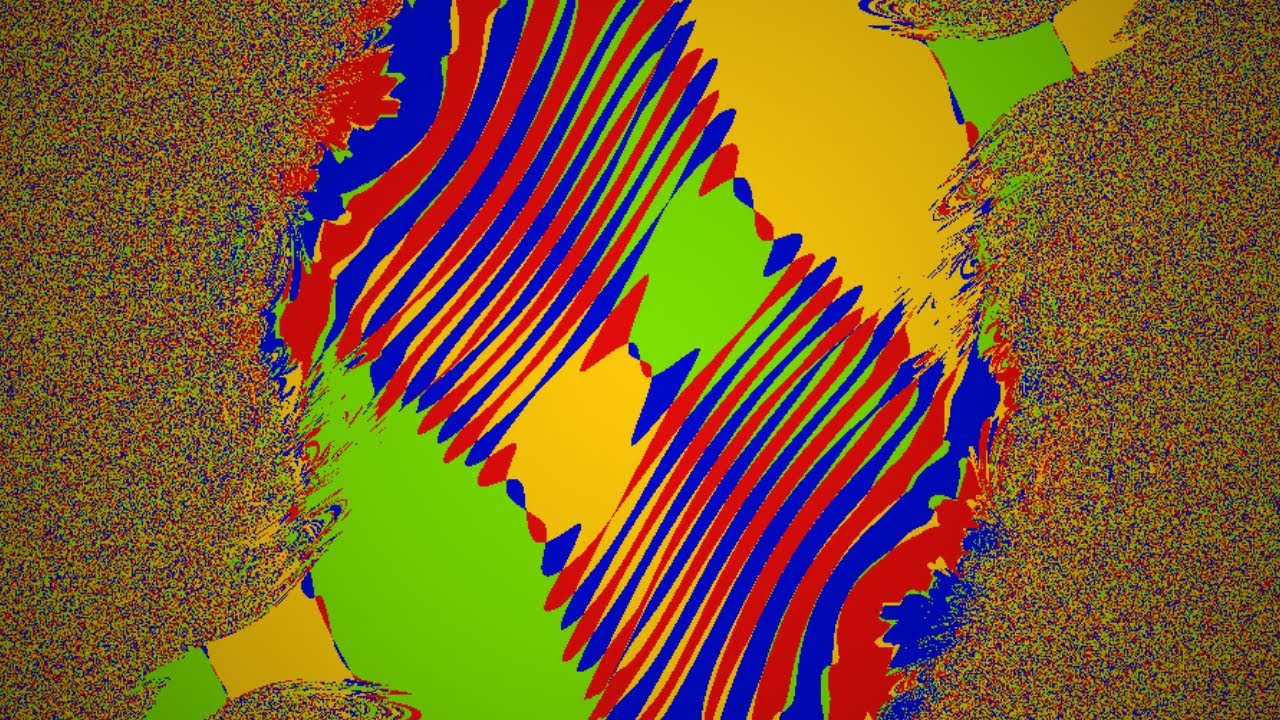
A good analogy for this is how we get predictable fractal patterns in chaos based on very simple initial parameters. Like in this, we have the famous double pendulum, which when looking at individual ones just behaves chaotically. We cannot draw any predictions or conclusions of what patterns might emerge from it. But we always end up with the same fractal outcome. It is an emergent pattern that requires the totality of the system to show the pattern.
The same happens if we are to break down an individual’s consciousness. We try to examine individual parts and find only incomplete concepts that don’t lead to how we experience consciousness.
But if we examine consciousness as a chaotic system, with underlying complex systems based on adaptability at their core, all behaving within the framework of the biological condition that is our brain and body, the experience and thing we call consciousness is more likely to be the resulting “pattern” of that chaotic system.
The final emergent byproduct is the sum experience of all of this, our qualia. If that result has its own function or is as meaningless as the fractal pattern of the double pendulum calculation is still unanswered, yet I’m leaning towards it not having a purpose as it seems to be just the resulting experience of the process, not the driver of that process.
But, the question posed is if this emergent experience, as a totality, can form its own operation of adaptability.
Could there be a further emergence happening beyond this highest state? Even if we are not free as individuals, could we map the resulting consciousness in a sociological sense and see emergence in the form of humanity’s culture, our creations and civilization?
I don’t look at these things in a reductionist way or presuppose and attribute some “magic” to us before looking for answers; I look at physical systems in nature and the universe. Most of evolution and organic behavior follow something similar to fluid dynamics and similar physical systems more than anything else. Zooming out, we’re no different from particles in a complex physical and chemical process.
And consciousness is part of this natural system, therefore, we should look at the similarities to nature and the physical world and extract the probable framework that is at the foundation of consciousness in order to explain it better.
If you only look at each individual pendulum, could you predict the fractal pattern? What I mean with adaptability isn’t just a person seeing the snow fall and adapting to the situation by putting on a coat. It is a web of interconnected adaptable behavior for every instant of cognitive processing. To the point of simulating the world internally and producing predictions of outcomes for any action. The key difference between a self-aware consciousness and an animal without it is that the animal is reactive while the human is active. And the human is active because it simulates reactive behavior until a path forward is made and this path becomes part of the construct of the internal simulation to simulate new situations.
If you think about the number of combinations of different simulated reactions that would be produced over time, it becomes so extremely complex that you quickly lose track of the individual parts of that processing. Just like the individual pendulum in itself looks too simple to form any complex shapes.
An infant is formed as the initial condition to grow this consciousness. Each moment in time for the infant is an exploration that fills the memory with information used to simulate better and better.
Why do children who haven’t been able to play and experience much in their first years of life tend to show signs of cognitive impairment? Because they’ve not been given enough sampling information to form a consciousness that simulates internally to the extent they function equally to others. They are not equally good at adapting to new conditions and situations, failing simple tasks and social cues.
Consciousness takes a long time to form from being an infant to adult. But when we look at each moment in time of behavior, such a long time forms an almost infinite amount of information and relation between information that was stored because of the necessity to adapt to situations over that same period. If we, as researchers have concluded, look at the brain as fully developed around 25-30 years of age, that’s a huge amount of time if almost all fractions of time within it, all moments of neurons firing, are part of constructing the “machine” to do this prediction operation.
And I think it is this inability for us to grasp this level of chaotic system that limits us to fully understand consciousness, because it does not follow the way we structure reality normally; we don’t have the capacity to understand it directly because it is too complex. We are always drawn to look at the individual pendulums and lose track of it all when trying to study the system as a chaotic one.
Check my answer to A.Rutledge above. I break things down a bit more in detail there, but what I describe there is a theory of the initial cause that formed consciousness. However, as I mention, the result of this formed us into a form of simulation organism, that simulates reality internally to adapt better to each moment in time. But this isn’t a process we are fully aware of, we only experience the process as it happens.
Why does conscious awareness have to be a separated entity here? If our experience of the process is us experiencing our adaptation process, we experience our existence adapting in realtime and it feels like change, like choices, like we are in control.
If the experience of being aware and the process itself are one and the same, meaning, if the process itself requires the sensation of awareness and our way of experiencing reality in the way we do, then there’s no separation between the two.
You don’t have the conscious awareness of the process, the process is itself the conscious awareness. They are one and the same.
I think what you’re describing is the urge to separate the two, that we are fundamentally unable to consciously sense that our automatic cognitive processes and our experience of those processes are one and the same, so we ping pong back and forth between acknowledging the automation and then feeling free in our experience, but that is the illusion.
I don’t agree that that modern science are blind in this way though. What I see is that there’s a lack of synergy between fields, because each field operates, as you mention, on objective facts, on reductionist methods. Neuroscience alone can’t explain consciousness, but that’s not where breakthroughs are generally made. Right now, the most dominant field of study is emergence and predictive coding for explaining how consciousness works.
And I’m extrapolating what that would mean for the nature of our experiences.
Regardless of the stance on science and biology, we can’t ignore that we are biological beings, with evolved traits. The likelihood that the entire nature of our consciousness is an evolved trait asks us the important questions; why did it evolve? And what are the consequences of this trait.
It’s here where I think what you’re aiming for and what I talk about intersect. I point to a likely reason for the development of consciousness and try to arrive at the experience we have, the conscious awareness.
And it’s in the implications of the massive amount of processing that comes out of the biological trait we developed, that I think we ended up in a chaotic system causing an emergence in the form of our experience. An illusion driven by the perfected trait of adaptability; in which for all behaviors a human do, there’s millions of predictions going on in an ever-updating form of interplay between reality and an internal simulation of reality.
This illusion is us experiencing this process. It is the illusion that we are in the driving seat, that we make choices, that we are in control. But in reality, we are a being that is operating automatically to adapt and fine-tune this adaptation constantly.
And this causes something larger to happen, an emergence of culture of information sharing. As a species, we’ve evolved from this internal processing to externalize it.
Why do we share information between people? What is driving me to learn, to share ideas, to write this text? We’re operating on the next domino in the chain of events, sharing for the sake of adapting as a species. It drives both the best innovation to the worst atrocities in society. A fundamental drive to collectively build a social knowledge.
The behaviors can be broken down into natural behavior, it’s just that the complexity of our behavior is not only much more complex than other species on this planet, we are also limited to think about it as we are using the tool to examine the tool itself.
But in conclusion, what I am trying to convey, is that just as mind and body are one and the same, so is the process of our automatic function to that of the experience we live.
It is not separated, the process and experience cannot be separated as they are the same thing. And the illusion of free will we have is just us experiencing our mind adapting in realtime, and this change in our mental condition feels like agency.
Just because it can be this “simple”, doesn’t mean it actually is simple or trivial. I actually think that it is rather remarkable that such an illusion functions as well as it does; even when I attempt to be aware of the underlying processes of my mind, I am unable to do so, like a barrier of sanity, crossing it would make me go insane.
It is in not being fully aware of the process that makes us function, that makes us be comfortable in our experience of reality.
To be aware of your actual being, is to stare into an infinite mirror. We are not equipped to handle it, even if the fundamentals are more basic than we believe.
It’s because of this I don’t see a difference between the scientific, analytical and the phenomenological. Because I don’t categorize our experience as separate from our process, we experience a physical process and we live in that illusion. Decoding our experience, trying to find something more than it is, is for me more of a religious craving for meaning rather than a true attempt to understand consciousness and our awareness.