Let's get physical

I was fortunate enough to travel with my sister and her two grown daughters to Italy in September. One evening, walking the narrow stone alleys lined with shops, we went into one and techno dance music was on full blast. It turned on my dancing-gene as I entered, and I started to boogie. The shopkeeper merrily joined in with me, and soon the two of us were full-out banging it, circling the displays, letting the music join strangers in a celebration of what we can do with our bodies in motion. Fun!

It’s not often you get to dance to techno music with a beautiful Italian woman in a shop in Rome.

But anyway, it reminded me of an account I follow on IG. This guy goes around with portable music and starts dancing in the street and strangers invariably, joyfully join in with him. Big smiles. It’s sharing happiness. Human connection.

I have always believed: We were born to move to a beat. It is an occupation that crosses all cultures and history.

It could be the result of years of practice which results in the art-form we call ballet, or it could be me boogying in a shop in Italy, improvised as I was. Was I being an artist?

Philosopher Susanne K. Langer holds that dance as art is a symbol-making endeavor. Was I symbolizing freedom?

Dance critic Marcia Siegel wrote that dance “exists at a perpetual vanishing point” which, to her, means that dance exists in “an event that disappears in the very act of materializing.”

Yes, it is ephemeral, but at the same time we enter a flow that connects all of time.

So, in this forum, we tend to concentrate on the cerebral side of humanity, but it’s worth noting that the physical side plays a dominant role, too.

Is it an escape from mental pressures?

I’d love to hear your thoughts, not just about dancing, but also about the draw of physicality to the human condition.

Also feel free to tell us about your dancing experience!

1 Like

What did Nietzsche mean when he said:

“Every day is wasted if you do not dance at least once.”

Thus Spoke Zarathustra

As John Locke said: “Dancing is… what gives graceful motions to life” – especially, he went on, “the jiggering part”

(Some Thoughts Concerning Education, 1693)

The two are similar some ways. Some Hindu invented yoga because he found that his students couldn’t meditate due to aches and pains. Stretching elongates muscles shortened by repetitive use and gives joints more room to move.

The exercises we do to give flexibility to the body have no value in themselves. In fact yoga is mostly pointless maneuvers. Philosophy abounds with pointless tasks that give flexibility and strength to the mind.

Just as the mind can become silent as the body dances, the body can become silent as the mind moves with flexibility and grace.

1 Like

thank you for bringing that up.

I have practiced yoga and was amazed at how it puts your brain in a good place.

that wasn’t my experience

Philosophers love to think for the act of thinking

But you know, when I am writing a story, if I get stuck, then getting up and pacing helps my brain to think of where I should take the story

1 Like

One night I paced back and forth for hours trying to figure something out.

Maybe if you’re a piano, physicality is the bass notes, emotion is the middle notes, and the intellect is the high ones. You are an ongoing song.

1 Like

I love this!

1 Like

I find dancing performative phoniness, engaging in a coercive act that violates my autonomy in order to achieve social conformity and sychronization despite my

2 Likes

lol, you must be a lot of fun at parties.

But, seriously, it seems like you are more concerned with what you look like than how you feel.

And I’m glad you brought that up.

To really enjoy dancing does require that you go inside yourself, shut out the outside, isolate yourself from the universe, and live in the fullness of who you are - mind, body, soul.

This I actually disagree with. I know very little, but what I do know is me. I listen to all sorts of music, but, even in the privacy of my own home, I don’t dance around.

You make an important point here, but one you don’t realize. It’s of the sort of comment "just go to the party, you’ll have fun when you get there. " No, no, I won’t. I’ll be nice, funny, charming even. I’ll even be the life of it for the first hour or so, but, after my set is over, I’ll be tired of the performance. I won’t complain or keep you from your carryings on, but what I will do is know what time it is, will be waiting for the first chance to disappear, will be thinking about the quiet that awaits in my car and back home.

The good news is that there is a whole world of people like me, who sneak off together, embrace, and say "finally, that’s over. "

2 Likes

I’m not much of a dancer myself. I love to watch great dancers. The only dance I’m really much into as a personal practice is "the dance from which all dances come’.

1 Like

All movement is dance to some degree. I once went on a date with a ballet dancer, in an art gallery where there was lots of space and not many people. Walking around started to flow and was like a ballet dance. Once I had started, I found it hard to stop, even though it was very subtle movements, barely noticeable. But my date knew as she was a professional dancer. Unfortunately her knees made a crunching noise and she had had to retire from dancing.

To someone who has learnt expression in dance, I suppose, every movement becomes an artistic expression.

2 Likes

I am going to ramble on about what I find particularly interesting here. It might not address the OP very effectively.

For some, it requires the exact opposite. Your OP was about the shopkeeper joining in, and strangers dancing with the guy on Instagram. That’s opening up to the universe.

I’m also suspicious of “mind, body, soul”, and this:

I absolutely agree with you that the body is neglected in philosophy. It’s just that I think we should see that the body is at work the whole time, and that philosophers just cannot always see this. I suspect your dualism obscures what’s going on. It’s common to think that a reluctance to dance results from the mind holding back the body, but in my view, such inhibition might be equally as bodily as the dancing itself.

I can illustrate this with an example from my personal life. I broke my arm in 2015, and found it difficult to work at my computer, but in interesting ways:

It is not that I know what to do—have it all planned out “in my head”—and feel frustrated that my body is not in a fit state to cooperate. This is not how it is at all. I actually cannot plan or think well without my familiar powers of movement. When I’m in the zone, I pounce on the computer and throw myself into a problem, and these words are not merely metaphorical—there is a real sense in which I move physically, however slightly, in postures of attack or careful exploration (it’s not just my hands).

— archive.thephilosophyforum.com

I was incapacitated by an injury, but I could feel how I wanted to move and think. Put differenty, the injury, in making the normally automatic integration of physical and mental activities unusually conspicuous, revealed the underlying physicality of thought.

This looks like the opposite of a reluctance to dance: the physical impaired the mental, instead of the other way round (a psychological inhibition, e.g., “thinking too much” in popular parlance, holding back the body). But I’d argue that in both cases what we see is a disruption of the same embodied comportment—not a mental cause acting on a physical body (or vice versa), but an engagement (or non-engagement) in which thinking, feeling, and moving are combined and inseparable. In the injury, the disruption takes the form of an inability to think and plan and act effectively; in a reluctance to dance it takes the form of an inhibition that is itself bodily: a physical withdrawal, not a mind holding back a body.

In the reluctance to dance, it’s an inhibition that incapacitates, not an injury. You might say that this inhibition is psychological and therefore on the side of the mental in a dualist framework, as opposed to physical. This is exactly what I would deny. Psychology has always been about much more than cognition: affect, motivation, mood, habit—all of which are thoroughly of the body. Inhibition is a bodily comportment.

The most applicable philosophers I know, the ones who brought the body into philosophy, are Nietzsche (as you mentioned) and Merleau-Ponty. I found an interesting paper, though I’ve only skim-read it so far:

Purser, A. (2011). The dancing body-subject: Merleau-Ponty’s mirror stage in the dance studio

3 Likes

If there’s one thing I absolutely cannot do, it’s dance. Yet, I’ve found my calling in team sports. I suspect there might be a connection—at the very least, in the way one can become completely absorbed in the act itself.

As I race across the ice with the puck, I have no idea why I chose one direction over another, or what reasoning led me to execute one feint rather than a different one.

This, it seems, is that precise moment of being fully immersed in the act. Later, when I watch the footage or look back, I evaluate my decisions and consider what I might have done differently. But that comes later; in the moment itself, I don’t know who I am, nor do I know what I am doing in any conscious, deliberate sense—I simply exist in the here and now, and the surface of the ice, hemmed in by the boards, becomes the space of my being. A state of being beyond conscious thought.

Perhaps dance is much the same. Unfortunately, I have never experienced that sense of dissolving into dance.


There is something else, too. In our legal system, there is a concept known as a “state of affect”—a moment when one is not fully conscious of what is happening, or is unable to reflect upon it. Such a state is always accompanied by the sensation that time is flowing differently.

I am no psychologist, but it seems to me that certain moments in life—whether in dance, a sports match, or even sleep—involve something similar. It’s as if the reflective layer of the mind switches off, and I simply exist. I’ve paid close attention to how time is perceived in these states: while in the thick of the process, time isn’t felt at all. Its duration—the length of a shift on the ice or the time spent asleep—can only be calculated indirectly, either by checking a clock or by noticing the fatigue that sets in afterward. It’s possible that all of these experiences are, in some way, connected. Perhaps the “sense of time” is, at its core, a reflexive process…


This is a very intriguing topic; thank you for bringing it up.

1 Like

I am as incapable of dancing as anyone you know. I might possibly have been the inspiration for that Seinfeld episode. :rofl:

1 Like

Enoyment from dance. What an enviable priviliage.

I find it brutish. The epitome of performativeness.

The existing theory is that music and language are linked traits in evolution. Most recent studies found that the active parts of the brain are different, but that’s no evidence for there not being any link between the two. Animals who communicate usually respond to music, but the complexity of musical structure seems to correlate with the complexity of our form of language. In essence, it could be argued that our ability to predict probable future states of reality is key to both our structure of language and how we perceive music.

So if language and music have a linked history like this, it could be argued that before we formed complex language, we communicated with each other using song (sounds) and dance, just like other animals (birds are the most common display of this). That it was the evolutionary gradient from primate communication into the complex language we know today.

But evolutionary traits don’t go away just because we transitioned into a more complex and effective way of communication. The reason why we like music and dancing could come down to being an echo of a past form of communication in our species, before our language capabilities formed.

And since the trait has its origin at the very beginning of our species, we share it across the world. Complex verbal language and culture developed locally after we spread across the world, but the core communication deep within us remains as an instinctual drive, much more emotionally fundamental than the complexity expressed through words.

Therefore, I’d argue that it’s not an accident that music, dance, and songs transcend borders and cultures, exposing something so fundamental to our species that we shed the superficial barriers our culture has built between people.

1 Like

Thanks for sharing. I apologize for my presumption.

Yes, often we do arrive to a place like that in our lives.

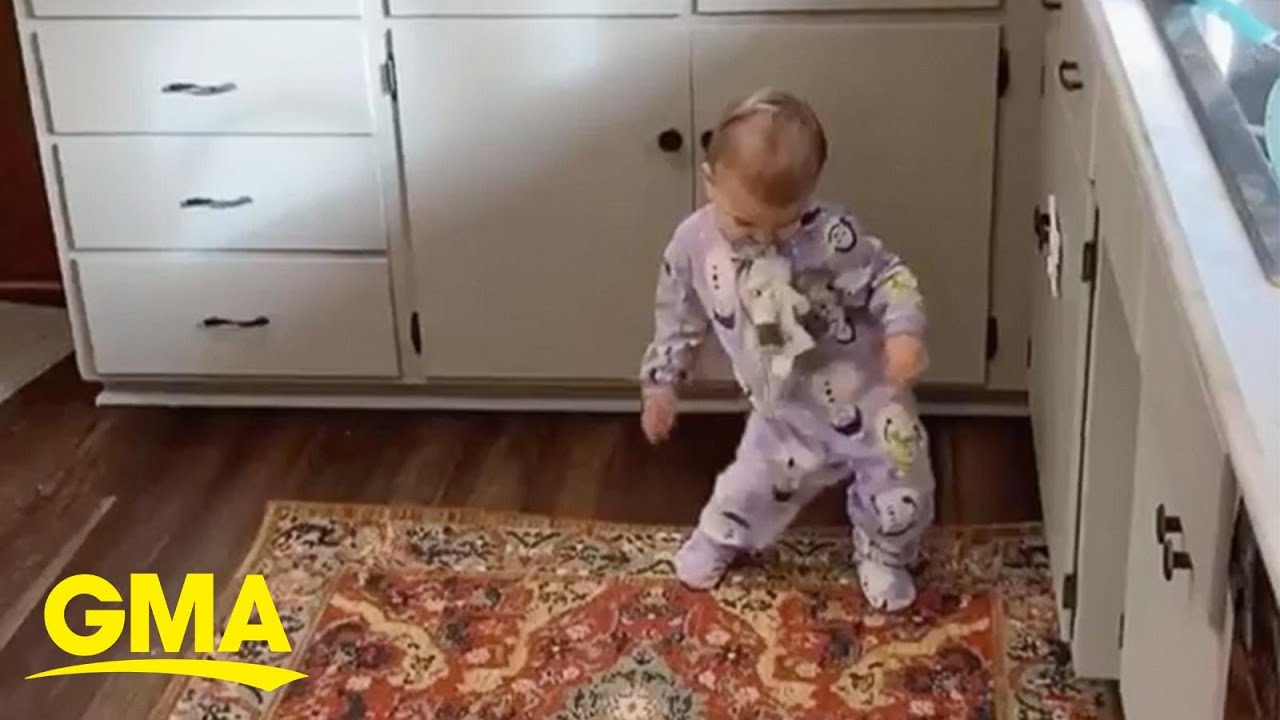
But back to something I said earlier - we are born to move to a beat. When babies hear music, they instinctively move to it, and dance (even before they can stand.)

Excellent point. Yes, dancing is definitely an important social ritual. It really connects us.

On the other hand, we’ve all heard the advice to, “Dance as if no-one is looking.”

So, the act of dancing is multi-faceted. Done full-out, it signals not only a release of inhibitions, but a trust in who you happen to be with.

I understand what you mean. I alluded to the same type of thing above when I mentioned that pacing helps me to think when I am stuck on what should happen next in the plot of whatever story I am writing.

You’ve reminded me of the concept of “the intelligence of the body” -

Recent research suggests that the whole body, and not just the brain, acts as a complex parallel processing system. If the whole body is intelligent, then intelligent processes normally attributed to psychology may occur in the non-brain body.

I think that’s an important word in this discussion - to become “absorbed” in the motions of one’s body

This is fascinating. And yes, I imagine the same sort of effect happens when one is “dancing as if no-one is watching.”

Higher, intellectual functions are shut down, and our more automatic, instinctual responses kick in.

And to “exist in the here and now” brings in ideas about our relationship with time itself.

Yes! You’ve given me a lot to think about and I will probably return to these ideas -

You’re welcome, and thank you for such a thoughtful response!

1 Like