As regards “Epistemic access to what is not at hand”, presumably we are talking about knowledge inside the mind about things that are outside the mind, such as tables and chairs.
If epistemology is about knowledge (Merriam Webster), I don’t think that it is logically possible to have knowledge about what is “not at hand”.
In other words, epistemic access to what is not at hand is a logical impossibility. We can infer what is not at hand but we can never have knowledge about what is not at hand.
We can never have knowledge about what is not at hand, things external to the mind, because of the nature of the temporal flow of information from the outside object to the inner mind.
In this sense, we can only know about things external to the mind indirectly because of the nature of the temporal flow of information from outside to inside the mind.
Unfortunately, this makes the definition invalid, in that it is a logical impossibility to have epistemic access to what is not at hand.
For example, as evidence and proof, consider a game of snooker. Suppose at one stage of the game the snooker balls are at rest on the table. Knowing the position of the snooker balls, it is possible using the laws of nature to infer the position of the snooker balls in the immediate future, but impossible to know the position of the snooker balls in the immediate past.
As there is an arrow of time, in that we can remember the past but not the future, there is also an arrow of information, in that using the laws of nature we can infer a certain immediate future but can only infer an uncertain immediate past.
We may infer that we are seeing tables and chairs, but because of the arrow of information, the directional temporal flow of information, it is logically impossible to ever know that we are seeing tables and chairs, to ever have epistemic access to these tables and chairs.
For example, using the laws of nature we can infer a certain immediate future of a snooker ball currently at rest, but can only infer an uncertain immediate past of the same snooker ball at rest. Epistemic access to what is not at hand is about knowledge of what is not at hand. However, given the laws of nature, whilst inferring a certain immediate future is logically possible, knowing a certain immediate past is logically impossible.
In other words, we can infer that there are tables and chairs outside the mind, but we can never know that there are. IE, a direct inference and an indirect knowledge of what exists outside the mind.
This is why Direct Realism, which proposes that we can know a temporally prior event outside the mind, is a logical impossibility.
I don’t think “event” is the right word. There is a normative aspect to insight that is not captured by the word “event”. You are right that we can’t execute an insight whenever we wish — sometimes we fail to achieve it despite our efforts, whereas other times it comes almost without any conscious effort at all. But we can try to achieve an insight whenever we wish, and this is enough for our purposes to consider it an act rather than an event, even if we often fail in the trying.
I agree. Assuming you already understand the relationship between the terms (rate of fuel consumption, amount of fuel, distance between A and B, etc.), simply performing the calculation to get an answer does not involve an act of insight.
The common thread running through all acts of insight is the “aha!” moment. This doesn’t imply anything about the content of the insight, or its implications. The joke may or may not be funny. The implications of an insight into a mathematical proof may take days, weeks or months to fully work out.
Perhaps the confusion arises from an ambiguity in the word “picture”? If by “picture” you mean “the markings on the paper”, that remains unchanged. If by “picture” you mean “the intelligible pattern that is grasped by an act of insight”, then the markings on the paper may afford many such insights. The answer to the question “what is it?” isn’t fully answered by saying “it’s a rabbit” or “it’s a duck”, but by something more like “it’s a drawing specifically designed to resemble a duck or a rabbit, depending on how you look at it”.
“Deduce” is the opposite direction from “explain”. Deduction is what you cannot do with emergent behavior, but you can always explain. This asymmetry is the defining feature of emergence.
If reductionism were defeated by the impossibility to deduce the higher level feature, or the reduced level being the wrong level of description, then reductionism would be totally hopeless. This is just the wrong concept of reductionism. For A to reduce to B means that every feature of A can in principle be explained by B. The “in principle” is crucial: B is never the right level of description. If it were, we would be talking in terms of B in the first place, not A.
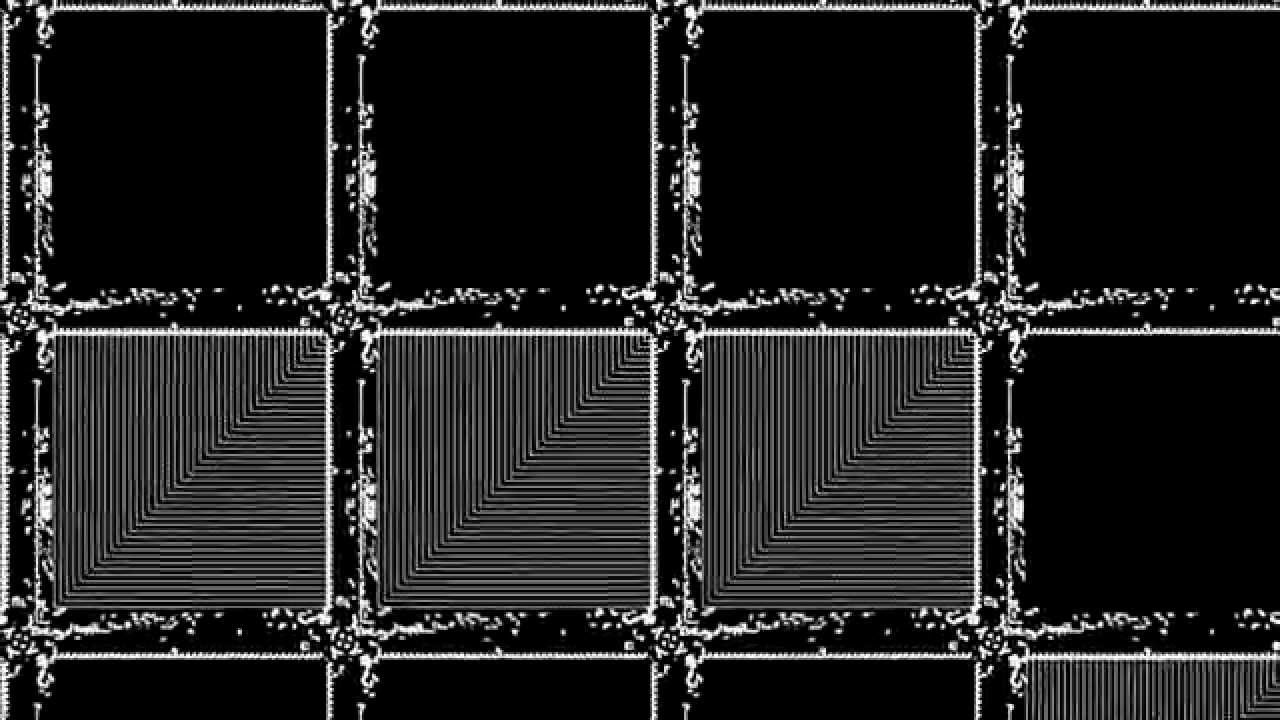
I think this can be illustrated vividly. You are also a computer guy, so you are probably familiar with Conway’s Game of Life. There are a lot of crazy structures you can build with Life, but to me this is the ultimate:
Here we have Life(2). Given a description in Life(1) of one of the states, you would never deduce that it is a state of Life(2). There are high level features in Life(2) (gliders) that would be horrible to describe in Life(1). Yet, Life(2) reduces to Life(1). Reduction means that Life2 is built from, is comprised of, Life(1).
Yes I do think so. I think most people think so as well. A simple test:
I could transplant my brain to a new body and retain my personhood. I would consider doing so, for someone else’s better body. Whereas replacing my brain with someone else’s smarter one would annihilate my personhood, I would never accept this offer.
Do you agree with these choices? If so, it is hard to understand why, unless you also believe in the reductionism of personhood to brains. Which does not mean that features of personhood can be predicted from brain structure, and not that brains are the right level of description for personal features. But that brains are what ultimately explains and comprises your personhood. That there is nothing other, such as a soul, that would remain of your personhood were your brain destroyed.
Unifying brain and mind is the hard problem, which is of course unresolved. But I have no doubt there is an answer.
No one is denying that perceptual content is not “just in the head”, it is a coupling between the brain and environment. This is exactly what saves it from being a “prison of models” as you seem to conceive it. While keeping in mind that this coupling happens “on the side of the person”. Just as a painting is a coupling between the painter and their subject. While the painting provides a degree of epistemic access to the subject, in no way does the mere fact that the painting is such a coupling establish direct access to the subject. The access is very much mediated by the painting, and ultimately the painter’s choices.
My move was to ask, “What can a brain do, given its fundamental limitation of being locked in its skull, other than model its environment?” Your response has been to appeal to emergent features, and their associated higher levels of description. I don’t deny these. But I hope I have shown that these do not defeat the reduction of the mind’s features to a brain in a bone prison. It is like a prisoner saying, “Look, I am not really imprisoned! I can imagine I am anywhere!” This is true, and it really does represent a kind of unlimited freedom. Yet, not so unlimited that it can transcend the fundamental reality: they are a prisoner in a cell.
The brain accesses the external world only by modeling signals. The mind accesses the world by experiences. The mind reduces to the brain. Therefore, the mind’s experiences can only be these same modelled signals. A model must be a model of something, and these are models of the world. The connection to the world they offer is real, not an illusion. But they are still models, not the world itself.
I would say 1, and moreover say that 1 is fully compatible with an IR worldview. Without providing a full account of how this works, we already know that it does work, that it is compatible. Fundamentally, it works because the models are causally connected to what they model: they are models of real features.
Take for instance particle physics. This must of the most indirect domains of scientific knowledge. The objects of study are far beyond direct perception, they must be inferred from signals which we do have direct access to. But crucially, we understand how the signals are causally connected to the particles. And so, it is possible to make world-governed, norm-answerable judgements. If it were not possible, particle physics would be a pseudo-science.
I think you have seriously confused the discussion by using “intentionality” language. Intentionality as I understand it is “aboutness”, and when the viewer watches the apple on VS, the perception is about the apple, not VS itself. VS, and its relation to the apple, might never enter their mind, and so it is unclear what “intentional acts” is doing here, nor is it clear to me what you mean exactly by intentional. I hope you agree that “aboutness” is not related to the epistemology of perception.
“Direct object of perception” here seems to accord with the standard usage in this debate. And to be clear, analogies such as VS are tools for clarification, for instance in examining how perceptual indirection works in a real world case. In themselves they do not establish that perception logically parallels them, as you say that is what is under dispute.
Right. It can be described either as two dyads, or a triad, as the middle term is the same between both dyads.
The lens metaphor is analogous to the direct realist view, just as the picture metaphor is analogous to indirect realism. The crucial difference is that the picture introduces representation, while the lens does not. The picture is a triad (or two dyads) between subject, representation, and viewer, while the lens is no more than a causal intermediary, and only causally enables the formation of the dyad between viewer and object.
Precisely because most physical interactions, for instance, the archetypical collision of billiard balls, do not introduce representations. Whereas, human touch most definitely does introduce one: the sensation represents what is felt, it points to what is felt, without being what is felt. You can examine the sandpaper at the microscopic level all you like and never discover the scratchy feeling. The feeling is introduced by the mind to represent the sandpaper in the modality of touch.
Without such a representation, the physical manner in which the sandpaper interacts with the skin is not accessible to the mind.
And note that there is a dyad without the representation: skin, and sandpaper. The representation, being neither, must be a third term.
If inference does not give us knowledge, it is not clear what inference is even doing. Moreover, the vast bulk of what we call “knowledge” would have to be thrown out the window.
I think you are massively conflating “knowledge” with absolute certainty. For instance science in its entirety would need to be discarded, or at least demoted from the status of “knowledge”, as it is never certain, always inferred. In short, what you are doing is merely redefining terms, and then making grand conclusions with these redefinitions.
I frankly call your view “naive indirect realism”. It is the strawman target of direct realists, just as naive realism is the strawman target of direct realists.
Knowledge may be defined as justified true belief, a belief that is supported by evidence and reason that happens to be true.
Inference, such as deduction and induction, does not of necessity give us knowledge. Inference is a justified belief, which may or may not give us knowledge.
Exactly. When the Direct Realist says that they know they see tables and chairs, they are in fact inferring that they see tables and chairs, which is not knowledge.
As you say, what people call knowledge is often no more than inference, and often not even true.
Knowledge of objects outside the mind is logically impossible because the information leaving the object, such as table or chair, is prior to being observed by the mind as thought or sensation.
We never know the object in the world in the present. We can only infer the object as it was in the past.
You are attaching a third condition: knowledge is justified true belief that we are certain is true. But we can never be certain that our beliefs are true, we only believe they are. Any empirical conclusion can be proven wrong. Even in logic, we only believe our proofs are sound, but we never really know if our reasoning is not flawed somehow. So really you are proving that knowledge isn’t possible. But then, the word “knowledge” certainly seems to pick out something; knowing the earth is round seems to be knowledge in a way that knowing that the moon is a giant egg is not. So really you are proving that your third condition does not work.
You’ve said B is weakly emergent from A iff B is “explained by” A. You then referred to the Game of Life as an example of what you mean by “explained by”. But you’ve left the most important question unanswered: is B real?
If yes, then you’ve admitted the possibility that direct perception of distal objects is a real pattern occurring at a higher level of organization than that of neural dynamics, and your argument collapses.
If no, then even neural dynamics aren’t real since they are “explained by” biochemistry, which is ”explained by” organic chemistry, etc., etc. Now you have a different problem, because you’ve undermined the reality of the norms that would make your own argument rationally binding.
Replying “B is real but reducible” won’t get you out of this bind. “Real” is doing no work if it carries no ontological weight independent of the base level. That’s just eliminativism in a friendlier tone.
Furthermore, the Game of Life analogy doesn’t even pretend to address the questions of normativity or qualitative experience. I don’t see how you can cash out truth, meaning and experience in non-normative, non-qualitative vocabulary without losing exactly whats being explained. The Game of Life shows that mechanistic reduction is possible in a simplified game-world. It’s silent on whether normative or qualitative reduction works the same way in the real world.
Appealing to brain transplants doesn’t help either. I’m not denying that personhood depends on the brain. I’m denying it’s reducible to the brain. Those are different claims and the thought experiment doesn’t distinguish between them.
On the fork I presented in my previous post — you say you accept tine 1, that judgment is genuinely norm-governed and world-answerable. But then you just assert this “must” be compatible with IR because… models are causally connected to what they model. That doesn’t answer the challenge, it just restates your position. I’ve asked how your framework accounts for normative authority without collapsing it into causal output.
On the particle physics example — I feel this actually helps my cause. You say particles must be “inferred from signals which we do have direct access to”. Inferred by whom? By persons exercising rational judgment — evaluating evidence, applying norms of inference, checking for coherence. The inferential chain bottoms out in acts of understanding and judgment that are themselves world-directed and norm-governed. If those acts are just more model-management, the whole inferential edifice floats free. If they’re genuinely rational, you’ve conceded my point.
Finally — to say that “aboutness” is not related to the epistemology of perception is genuinely mystifying. What is perception if it isn’t about something? I would argue that intentionality is the defining feature of perception. If you strip it away I honestly don’t know what we’re talking about anymore.
Consider the light from a house as it enters the eye.
Following Charles Peirce’s semiotics, there is the triad of 1 the Referent, an Object, such as a house in the world, 2 the Representamen, the light entering the eye whose form encodes information about the house and 3 the Interpretant, the concept of a house in the mind of the observer.
As regards the Representamen, as the light entering the eye from a picture of a house is identical to the light entering the eye from a lens facing a house, it is unknowable whether prior to the Representamen was a picture of a house or a lens facing a house.
Therefore, as the Interpretant depends on the Representamen, it must follow that it is logically impossible for the observer to know whether prior to the Interpretant was a picture of a house or a lens facing the house.
Information travels through time and space from the Object to the Interpretant as a Representamen. But we know that a subsequent position on the path of the Representamen, light as it enters the eye, cannot distinguish a prior position on the path, whether a picture of a house or a lens facing a house.
Generalising, any prior position of the path taken by the Representamen is unknowable to all subsequent positions of the path taken by the Representamen, with the conclusion that all that is knowable to the Interpretant is the ultimate Representatem on the path from the Object to the Interpretant.
In other words, all that is knowable to the Interpretant is the Representatem as it exists in the mind.
Yes, that was my question. So it looks you are saying that the representation is not nonphysical, therefore it is a physical object.
You need to clarify the difference between representation as the physical object and the house you are seeing.
Do you mean that the physical house exists in your mind when you see it? How can a house with bricks and roof can exist in your mind? It is an absurd claim.
Not really. Even though a representation is nonphysical, a representation, such as the word “house” needs a physical grounding, such as the letters house.
That is a contradictory claim. How can something nonphysical need a physical grounding? Why is it the case?
Surely a house exists without any letter attached or grounded under it? And if a representation is grounded on something else than itself i.e. letters, then it is not a representation anymore?
You may not know about the concept of a house, but that doesn’t affect the existence of the house. The concept of a house is not a house. Even if you don’t know the concept of the house, the house still exists.
So how physical brain generate mind? Physical brain doesn’t always guarantee mental mind. Does it? You need to explain what makes physical brain to have its mental mind, or generate mental mind. Without the explanation, the claim doesn’t tell us much.
“House” is a general concept, and as only particular things exist in the world, general things, including concepts such as “house”, cannot exist in the world.