A synopsis and discussion of "ontocubism"

Not sure if time shows itself. Would it not rather, we see temporality via the associated objects? We don’t see paintings, shapes or colour of time. Rather we see the rising sun in the morning, darkness descending at nights, seasonal changes via the falling leaves in the autumn, colourful flowers budding in the spring, babies getting born, growing up into adults and getting old, and dying for the tokens, signs, symbols or representations of time.

What we call and use as time is just labels of when-ness, nowness or window frame of the memorable events in history mapped into the calendars, watches and clocks. Problem is, even we stopped using the calendar system, throw out all the clocks and watches, days and season will pass and change, historical events will keep happening, and folks will be born, get old and die.

Then we want to know how time can be captured in the art such as the painting of cubism. It shows objects in the world from multiple point of views using various angles perspective. Could the flow or stream of time (not just frozen a moment of time) be represented in the painting?

I have not been able to spot the part depicting or representing the stream of time from the shapes, colours or forms in the painting yet. Could it be connotating the stream in some other ways?
1 Like

I meant that “time” shows objects by always also hiding them.

Time is a coin with two sides. Showing is hiding. Grab a coin. You can’t see the heads sides without not-seeing the tails side. You can’t see the coin as you-here-now without not-seeing it as someone else, somewhere else, and somewhen else.

“Time” is “consciousness” is “being.” Basically any object, as transcendent, is always only ever partially present.

Heidegger said that dasein ( existence ) is not in time but time itself. As “consciousness” I am “time” as the expectant situated revelation of world. But most people use “I” to indicate the primate that is “conscious.” This causes confusion. People think of consciousness as a stuff inside the ape. Instead the ape is inside a streaming revelation of the world.

1 Like

I think you are still thinking of the future as a future now. But what I am trying to point out is the structure of the now, the anticipatory coming-into-focus of the world now. Zeno’s arrow flies. The now is expectant revelation of world.

I completely agree with you here. We should collide in a friendly way, trying to enrich one another. It’s like we are together creating a cubist painting of foolosophy.

So I would instead say that arrival is from the “future.” An arrival may surprise me. Or it may be just what I expect. When the world is becoming, it is changing, yes ? It is in-progress and on-the-way. This is the continual penetration of the future into the now.

Existence is prejudicial disclosure, expectant revelation. This fits w/ Schopenhauer. Music is a metaphor for the world itself. The “care structure” of the world is “mirrored” by music.

Tension is raised and released, raised and released. The incoming pitch has its meaning in terms of the lingering of those that came before, but also in terms of the expectation ( desire and fear ) that structures the invested listening.

1 Like

I think it can hint at time precisely by showing objects from different points of view. It is trying to squeeze the transcendent object into the now. Which is not really possible, but philosophy and painting can “prove” this to us. Use words or paint to point. "See how strange every mundane object is! "

By pointing out the richness and transcendence ( overflowingness ) of objects.

1 Like

Does it imply that the painting has some underlying intrinsic significance than simply presenting a figure for the spectators to view and contemplate for its meanings and beauty hidden underneath?

Transcendence of objects sounds also interesting. It sounds like the figure could be signifying far more than what it reveals on the face or superficial level. What could that transcendence be, and what would be the underlying principle for the process?

1 Like

To me the “idea” of the painting is the “glue” that holds together an open system of its “manifestations.” This “idea” is not mental stuff. It is the “unity” or “identity” of the painting. The painting is taken for granted as an object in the world that is shared.

The world is a “stage” or a “forum.” I claim that this is its basic structure — if there is science and philosophy. This gives us a dramaturgical ontology.

If there “really is” philosophy, then I share the world with others by sharing in language with others.

To understand the painting as a shared enduring thing is to grasp its “transcendence.” It is not “in my head.” It is not “only for me.” It is not “only right now.”

Yes, basically the transcendence of the object implies a darkness in the object — a darkness for me, on the “other side” of what it shows to me. Because the object cannot be squeezed into the for-me-here-and-now, it “overflows” the now that is here. I tacitly enact an understanding of this when I simply discuss mundane objects with others. I tacitly understand that the object also shows itself differently to others. I can partially see my own blindness with respect to shared objects.

As I see it, there’s nothing speculative or hypothetical here. For me the point is to try to be as honest as possible about the way that we already share the world. What do we already ( vaguely ) mean by words like “object” and “physical” and “consciousness” ?

The hard part is putting aside inherited theories, which are “sophisticated” theoretical prejudices. “Everybody knows” that experience is an illusion that the brain squirts out. But nobody believes this, not when they take off their theoretical hat and get immersed in life again. I like the idea of working up a philosophy that gels with the way I actually live in the world.

I speculate that Plato was trying to point at transcendence with his word “idea.” Which sort of means “aspect” or the “look” of a thing. We “recognize” an optical phenomenon as this or that enduring object. The optical phenomenon is not meaningless colorshape but a thing in the shared world, a thing on the stage that we share. Communication depends on things having stable identities. The thing can only change because the thing was like this but is now like that. One thing but different states of that one thing.

To me this is basically a brute fact. We are thrown into sharing a world in terms of shared things. And we have mostly shared words that allow us to discuss this world.

1 Like

What would be the socio-historical elements from the cubist painting in the OP? Who is the image for, what is it suppose to be doing from the phenomenological depth, and what is the message the painting is trying to pass on to a stage or a “forum”?

As I see it, artists ( including philosophers ) “aim” their works at a vague, ideal audience.

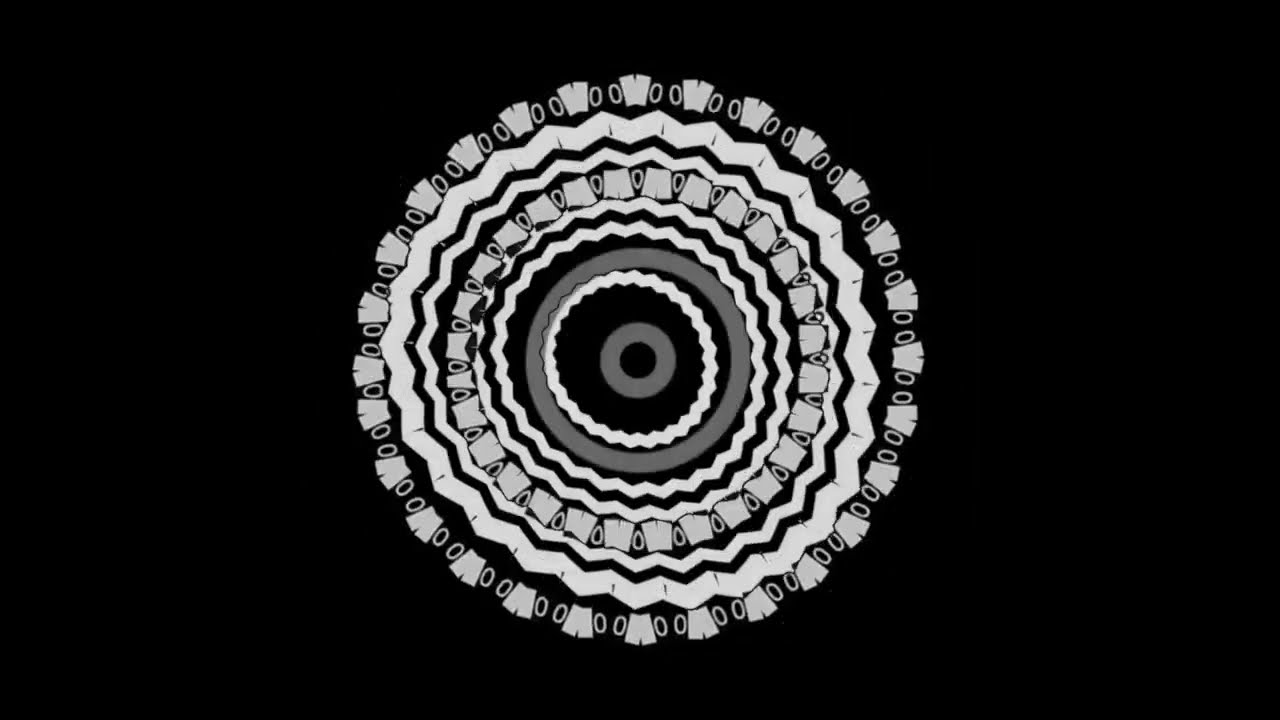
I sometimes make abstract video art, set to abstract music. For instance, I made this one last night:

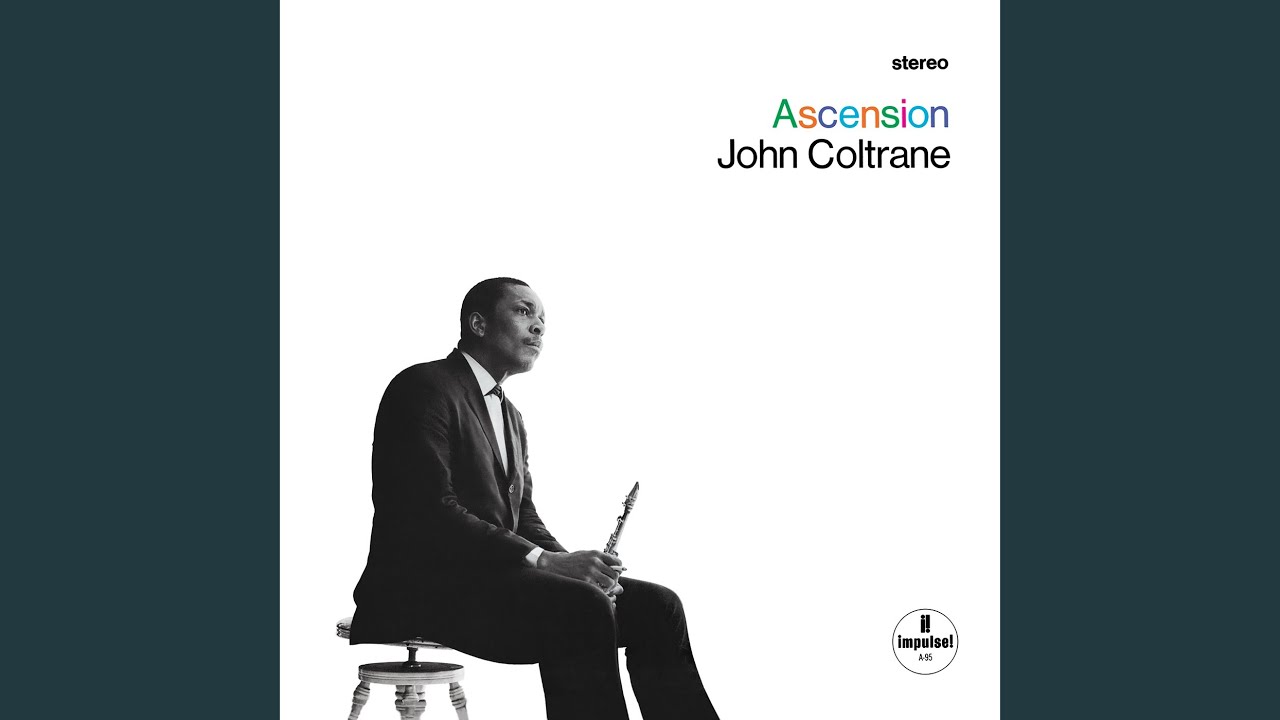
In this case, the message is a feeling. All that really matters is that I expect or hope that at least a few people will find in it what I find in it, which is pleasure. For me this piece is a metaphor for the harmonic unity of the turbulent world. The name is an allusion to Coltrane’s piece of the same name. My piece is something like an electronic analogy for his ( of course Coltrane’s is better, but I’m going for the same serene daydreaming detachment, streaked with fury and eruption ) :

The socio-historical depth is implicit in the choices the artist makes. The ideal audience has more or less the same background. They will appreciate allusions and recognize the achievement of some novelty in what is primarily an arrangement of one’s inheritance.

I should read about the ideology of cubism. I suspect that painters are fundamentally like musicians. “Feeling is first.” But there is feeling in the visual evocation of concepts, and some painters have written profound manifestoes.

Ontocubism is strongly inspired by Gadamer, and his Truth and Method is largely about the strange way that art “tells us something” about the world. One of my motives is to be honest. In the lives we actually live, art can be very important and very richly meaningful for us. Existence includes the elusive but intense “meaning” of art. So an honest foolosophy will acknowledge this and try to spell it out, weave it into a tentative story about the enduring “form” of existence.

1 Like

This scholar’s approach to Heidegger is one my favorites. Basically “ontocubism” ( following Heidegger ) understands the thing themselves to manifest with temporal depth.

1 Like

I recently discovered someone working on radical relationism, which is very close to what I’ve been trying to do with ontocubism. It was a bit uncanny but pleasant to read the linked summary.

The hard problem relies on a background assumption so widely held, most do not even realise it is there. This is that there exists a single, third-person, objective reality, a “reality-in-itself”, existing intrinsically and independently, which is what’s “really real”.

To begin with, this reality-in-itself is taken as being a third-person physical account, in terms of atoms and neurons and the like. Then, in response to the hard problem, it is common to propose adding some special substance such as “qualia” or “souls” to our idea of ultimate reality.

This is the idea that there is a single absolutely correct description of the universe, with a single true ontology, and without any limitations of perspective (it is a “view from nowhere” or a “God’s eye view”). It is a world which is at base absolute and non-relational, in which what exists “simply exists”.

Our common use of the word “real” is much more pragmatic: a thing is real if it makes a difference. A chair is real if you can sit on it and unreal if you cannot. The value of an item is real if you can actually sell it for so much. A body of water is real if your camels can drink from it and you can wash your feet in it.

The alternative I am putting forward is what I call “radical relationalism”. There is no non-relational existence. No reality-in-itself. No view from nowhere. No absolute ontology or fundamental reality (not even one consisting of relations — even relations are entirely relational). What there are are things existing entirely in relation to one another. To be is to be in relation. There is no “thing-in-itself”, there is only the “thing-in-relation”.

This gives us a non-foundationalist and pluralist view of reality. There is no one absolutely true or definitive metaphysics or ontology. But many different (and conflicting) ontologies may simultaneously be true. We do not need to say whether chairs “really” exist or not.

Rahi uses the word “true” here, which I’ve tried to avoid as likely to confuse. I think he is just trying to express in terms of “true-for-Jack” that Jack “lives” in his belief as the shape of Our-world-for-Jack.

Protagoras was taken to say something like “all beliefs are true.” But Plato, for instance, was deaf to what I’d call ( and project as ) his ontoperspectivism — or radical relationism. People “trapped in truth” can’t grok the splintering.

I’ve suggested to Rahi that he join us here. I hope he does.

1 Like

I agree. Having said that, there is also aspect that the ideal audience can find the common ground via arts they like to see, hear and appreciate. Art can be the basis or foundation for forming communities or forums with the other fans and audience from different social and ideal background.

I haven’t read Gadamer, but that sounds interesting point. I agree that creating, studying, and appreciating art is a good alternative way to perceive and understand the world. It could also be a way for transforming the world too.

When I see great works of art by painters, sculptors, and hear nice music by jazz, blues or pop musicians whose work resonate my inspiration, I am able to perceive the world differently than before - with more depth and widened scope and richness.

Arts also has power of transcendence i.e. humans are temporal, arts last more permanent and are endurable in its existence. Some musicians I used to like are no longer performing due to their disbanding, and gone their own ways doing other things. But their music still remains in youtube, available for replaying.

Painters I adore have passed away due to old age or illness, but their works still remain vibrantly as before when the artists were alive.

Art works transcend other objects and beings in the world, due to the possibility of their givenness to us via in the form of ideals rather than physical beings.

We can still mull over the images in the paintings, or play the acoustic images of the music we are familiar with, and hum away and appreciate the works of arts we like, without the actual art object existing or performing in front of us.

Arts can overcome presence, performing and existing behind the absence in the mind of the audience and spectators.

Right. You perceive differently. You feel differently. I don’t just mean in the moment. Art leaves a mark on you. The great stuff changes you.

1 Like

I agree with just about all of this. I just might say that the artists leave pieces of “themselves” behind by shaping sound and paint, which are physical or qualitative materials. I think artists and musicians aspire to put a beautiful stain on the world. To best their highest feelings and insights into sound and paint and so on. But it’s not really “in” the sound or paint. It’s in the space between them and us and the “material.” The entire context signifies, though finally relative to a particular perceiver or interpreter.

1 Like

Radical relationism, like ontocubism, finds the source of prominent confusions in the typically unquestioned postulation of an “objective reality.” We just inherit the fuzzy notion of a “true reality,” and it functions as a “truthmaker” and so as security and basis for truth-as-correspondence.

Do marks and noises “correspond” to objects in the world that are not marks and noises ? Who is eager to assert this ?

But some might say that the “meaning” of marks and noises somehow mirrors or matches “objective reality.” If meaning mirrors objective reality, then objective reality mirrors meaning. This gets us to a disavowed or overlooked idealism, where the “truth” of the world is enough like mindstuff to be matched by mindstuff.

If the scientific image is celebrated as an image of the “true world,” we get a disavowed Pythogorean mysticism of numbers in relation. I say disavowed because it’s usually a “physicalist” who tells me about a mathematically grasped objective reality. But the “physical” turns out to be the “meaning” of mathematical expressions, which is to say an arrangement of eternal platonic essences.

It’s an appealing position. But those who adopt it often declare the perceptual basis of science to be epiphenomenal internal stuff. The “serious materialist” tells me that the chair I sit on is in my brain.

“Consciousness” can be understood as the presence of physical objects for a physical organism. Instead it is approached like a strange fume that rises mysteriously from a gleaming “objective reality.”

1 Like

There seem to exist different layers of space from the painting. One is the painting itself. There is space in the painting around the figure of the girl and mandolin drawn with the paint. The space exists in the painting on the canvas as part of the painting itself. The space seems to be decorated with some shapes of colours as if it is signifying or representing something.

There is also space outside of the painting, which is invisible to us because it would depend on where the painting is hanging. If it is hanging on the wall of a museum, it would have space around the canvas. This is invisible to me, but I am inferring the space, because every object in the world exists in space. This would be physical space, and purely be contingent on the location and placement of the painting physically.

I am not sure if there would be any more space between the spectator and the painting, and if there is in what form it would be, and where about the space exists.

And where would the painter be located in the space in relation to the spectators after or before his death. Or the space you were talking about would be purely conceptual one.

“Space between the spectator and the painting” is an interesting idea or metaphor, because space has history of existence, and it could be deduced as also receptacle where new and old objects born or die, if you like, as Platonic Khora.

Perhaps somewhere in the space, we could locate the painter’s soul?

Nobody has to assert marks correspond to some non-mark object, because there’s no such object waiting across a gap for them to reach. The mark is already part of the same reality it’s supposedly touching, made what it is the same way everything else is made what it is, constituted through the same structure of difference and negation, so there’s nothing here left standing that could serve as a truthmaker for anything at all.

Take the “true reality” away, that fuzzy notion doing all the unquestioned work, and marks aren’t failing to reach it across some unbridgeable distance; they were never reaching anywhere, never needed to reach anywhere; they’re just there, one thing among the rest of things, made of the same stuff as everything else it stands beside.

So truth isn’t a mark finally touching its object across that supposed gap, isn’t correspondence or matching or mirroring — it’s the absence of any splinter between them, no difference showing up where a difference would otherwise show up, no tension where tension would betray a reach that failed.

1 Like

Marks and noises can correspond to objects in the world, but one must be clear marks and noises themselves are the objects they correspond to.

They are just marks and noises with meanings, hence we know they correspond to the objects the meanings they carry, and within the propositions they are contained.

Claiming that they are the same would be a categorical mistake and confusion.

That is obviously wrong. Chair you sit on is not in your brain. The image and concept of chair is in your brain.

Images and mirroring of the real objects definitely exist, however images and mirroring lack the properties of real objects. Conflating images in the mirror with the real objects would be a sign of lower level consciousness.

1 Like

I totally agree. Sounds and marks are things in the world along with other things. We are trained into a “representational effect.” It’s very weird that a human can belch forth sound that helps me find hidden treasure. The temptation is to imagine a “pure meaning stuff” that is “inside the sound.”

But people are more shrewd when it comes to the pointing finger. They don’t think the finger is the untied shoe. Our “sound pointing” is so complex — and so connected with imagination — that words get mystified.

The “true logic” of “God” is postulated — even by the (theo)logical positivists — which can come to look as silly as talk about “God’s” way of peeling a banana. This “God” of the logician is of course an abstract philosopher’s god. This “god” is only needed to provide a set of "pure essences (universal signifieds) " that allow philosophers to calculate “eternal truths” from their armchairs.

I was making fun of indirect realism. I used “serious materialist” to emphasize the tension between earnestness of this position — its piety toward "objective reality — and the absurd disconnection from the way we live in the world that results.

Our brains are of course needed for conversation and cooperation in the world, but I don’t think there’s a photograph of a chair in my brain.

I don’t doubt that various processes in the brain, a physical object, can be correlated with other physical objects including the signs that we use to “refer” to those objects.

But here I am talking about my brain and not a picture or concept of my brain.

If think that “foregrounding the forum” is helpful for issues like this. If there is philosophy in the first place, then world is fundamentally a forum, a space of assembly where those assembled discuss the world they share.

So it doesn’t make sense to put people in a personal illusion cave and ask them prove themselves out of it. I use “personal illusion cave” as a parody of representational realism’s tendency to say we don’t see the shared objects themselves but only a private internal icon.

1 Like